Those bursting crackers should be called ‘anti-national’: Maneka
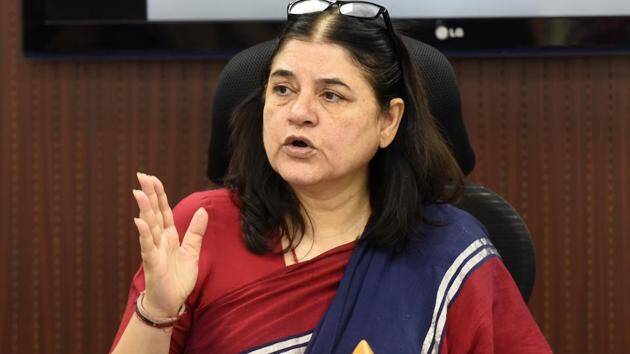
As the festive season is around the corner, the debate about firecrackers and their impact on the environment has once again gained momentum. BJP leader Maneka Gandhi has sparked a controversy by calling for a nationwide ban on firecrackers, citing the alarming levels of air pollution in New Delhi. According to Gandhi, the prime reason behind the deteriorating air quality in the national capital is the bursting of firecrackers during festivals like Diwali.
Gandhi’s statement has ignited a heated debate, with many people taking to social media to express their opinions on the matter. While some have applauded her for taking a stand against pollution, others have criticized her for trying to curb the traditional festive practices. However, Gandhi remains firm in her stance, saying that the damage caused by firecrackers to the environment and human health is too significant to be ignored.
“If you will burst firecrackers worth ₹800 crore in two nights, then what will happen to the air?” Gandhi asked, highlighting the enormity of the problem. She also emphasized that the money spent on firecrackers could be better utilized for more productive purposes, such as education or healthcare. Gandhi’s comments have resonated with many environmentalists and health experts, who have been warning about the dangers of air pollution for years.
The issue of air pollution in New Delhi is a pressing concern, with the city consistently ranking among the most polluted cities in the world. The situation worsens during the festive season, when the bursting of firecrackers releases large amounts of toxic chemicals and particulate matter into the air. These pollutants can cause a range of health problems, including respiratory diseases, cardiovascular issues, and even cancer.
Gandhi’s suggestion to brand those who burst firecrackers as “anti-national” has sparked a controversy, with some people accusing her of being overly dramatic. However, Gandhi’s intention is not to demonize individuals who burst firecrackers, but to highlight the gravity of the situation and the need for collective action. By using the term “anti-national,” Gandhi is emphasizing that the act of bursting firecrackers is not just a personal choice, but a decision that affects the well-being of the entire nation.
The impact of firecrackers on the environment is not limited to air pollution. The production and disposal of firecrackers also contribute to water and soil pollution, causing harm to wildlife and ecosystems. Moreover, the noise pollution caused by firecrackers can be traumatic for animals and humans alike, especially those with sensitive hearing.
In recent years, several cities and countries have implemented bans or restrictions on firecrackers, citing environmental and health concerns. For example, the city of Delhi has imposed a ban on the sale and use of firecrackers during Diwali, while the Chinese government has restricted the use of firecrackers in several cities.
While some people may argue that a ban on firecrackers is an overreaction, the facts suggest that it is a necessary measure to protect public health and the environment. The alternative to firecrackers is not a gloomy and joyless festive season, but a more sustainable and responsible celebration that prioritizes the well-being of all individuals and the planet.
In conclusion, Maneka Gandhi’s call for a nationwide ban on firecrackers is a timely reminder of the need for collective action to address the pressing issue of air pollution. While the suggestion to brand those who burst firecrackers as “anti-national” may be controversial, it highlights the gravity of the situation and the need for individuals to take responsibility for their actions. As the festive season approaches, it is essential for us to prioritize the well-being of our planet and our fellow citizens, and to explore more sustainable and responsible ways to celebrate.
News Source: https://repository.inshorts.com/articles/en/PTI/05dfed30-2874-4e50-8c78-37383df29516
About the Author