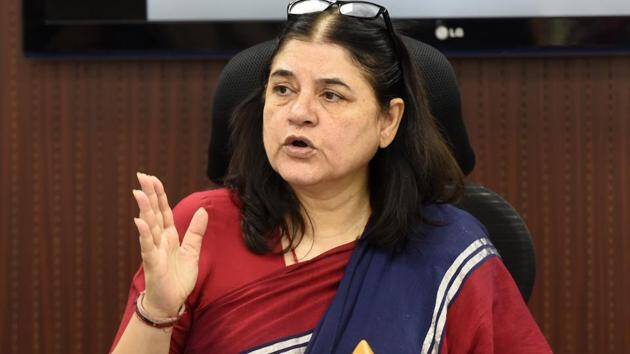
Those bursting crackers should be called ‘anti-national’: Maneka
As the festive season is around the corner, the debate on firecrackers has once again gained momentum. With the increasing concerns over air pollution, many have been advocating for a ban on firecrackers. Joining the chorus is BJP leader Maneka Gandhi, who has called for a nationwide ban on firecrackers, citing the alarming levels of air pollution in New Delhi. According to Gandhi, the prime reason behind the deteriorating air quality in the national capital is the bursting of firecrackers.
Gandhi’s statement comes at a time when the air quality in New Delhi has been a major concern. The city has been grappling with severe air pollution, and the situation worsens during the festive season when firecrackers are burst in large numbers. The BJP leader’s remarks are significant, as they highlight the need for urgent action to address the issue of air pollution.
“If you will burst firecrackers worth ₹800 crore in two nights, then what will happen to the air?” Gandhi asked, emphasizing the devastating impact of firecrackers on the environment. Her statement is a stark reminder of the harm caused by firecrackers, which not only pollute the air but also contribute to noise pollution and other environmental hazards.
Gandhi’s suggestion to brand those who burst firecrackers as “anti-national” may seem extreme, but it underscores the gravity of the situation. The term “anti-national” is often used to describe activities that are deemed harmful to the nation. In this context, Gandhi’s statement implies that bursting firecrackers is a threat to the well-being of the nation, and those who engage in such activities are compromising the health and safety of their fellow citizens.
The issue of firecrackers is a complex one, with many arguing that they are an integral part of Indian festivals and traditions. However, with the growing concerns over air pollution, it is essential to rethink our approach to firecrackers. The Supreme Court has already imposed restrictions on the sale and use of firecrackers in several states, and many cities have banned their use altogether.
Gandhi’s call for a nationwide ban on firecrackers is not without precedent. Many countries have banned or restricted the use of firecrackers due to environmental and health concerns. In India, several states have already taken steps to regulate the use of firecrackers, and it is time for the central government to take a decisive stand on the issue.
The economic argument against firecrackers is also significant. Gandhi mentioned that firecrackers worth ₹800 crore are burst in just two nights, which is a staggering amount. This money could be better spent on initiatives that promote environmental sustainability and public health.
Moreover, the impact of firecrackers on human health cannot be overstated. The toxic fumes emitted by firecrackers can cause respiratory problems, cardiovascular disease, and even cancer. Children, the elderly, and those with pre-existing medical conditions are particularly vulnerable to the harmful effects of air pollution.
In conclusion, Maneka Gandhi’s call for a nationwide ban on firecrackers is a timely reminder of the need to address the issue of air pollution. While some may argue that firecrackers are an integral part of Indian culture, it is essential to prioritize public health and environmental sustainability. As Gandhi said, those who burst firecrackers should be branded as “anti-national” because their actions are harmful to the nation. It is time for us to rethink our approach to firecrackers and work towards a more sustainable and environmentally friendly future.
The government, civil society, and individuals must come together to address the issue of air pollution and find alternative ways to celebrate festivals without harming the environment. This can include promoting eco-friendly firecrackers, organizing community events that do not involve firecrackers, and educating people about the harmful effects of air pollution.
Ultimately, the decision to ban firecrackers is a complex one that requires careful consideration of various factors. However, one thing is clear: the health and well-being of our citizens must be our top priority. As we move forward, it is essential to prioritize environmental sustainability and public health, even if it means rethinking our cultural traditions.
News Source: https://repository.inshorts.com/articles/en/PTI/05dfed30-2874-4e50-8c78-37383df29516
About the Author