Those bursting crackers should be called ‘anti-national’: Maneka
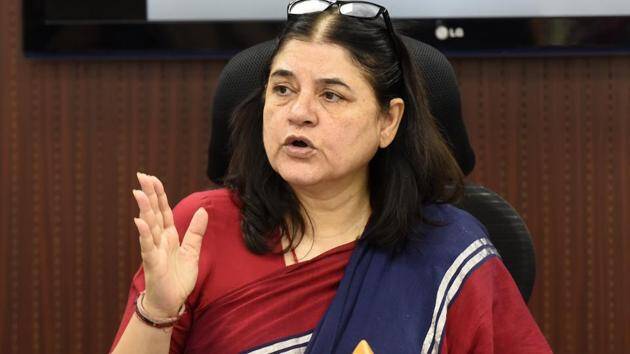
As the festive season approaches, the debate around firecrackers and their impact on the environment has once again gained momentum. BJP leader Maneka Gandhi has weighed in on the issue, calling for a nationwide ban on firecrackers and labeling those who burst them as “anti-national”. In a bold statement, Gandhi emphasized the devastating effects of firecrackers on the air quality in New Delhi, which has become a major concern in recent years.
According to Gandhi, the primary reason behind the alarming levels of air pollution in the national capital is the rampant bursting of firecrackers during festivals like Diwali. She pointed out that the sheer scale of firecracker bursting, worth a staggering ₹800 crore in just two nights, is catastrophic for the air quality. “If you will burst firecrackers worth ₹800 crore in two nights, then what will happen to the air?” she asked, highlighting the dire consequences of such actions.
Gandhi’s statement comes at a time when the air quality in New Delhi has been deteriorating rapidly, with the city consistently ranking among the most polluted in the world. The hazardous air quality has severe implications for the health and well-being of the residents, particularly children, older adults, and those with pre-existing medical conditions. The World Health Organization (WHO) has warned that air pollution is a major risk factor for a range of diseases, including respiratory and cardiovascular diseases, cancer, and even neurodegenerative diseases.
The call for a ban on firecrackers is not new, but Gandhi’s suggestion to brand those who burst them as “anti-national” has sparked a heated debate. While some have welcomed her statement, others have criticized it as an overreaction. However, Gandhi’s intention is clear: to highlight the gravity of the situation and to emphasize the need for collective action to mitigate the harm caused by firecrackers.
The environmental impact of firecrackers is well-documented. The combustion of firecrackers releases a cocktail of toxic chemicals, including particulate matter, carbon monoxide, and volatile organic compounds, into the atmosphere. These pollutants can cause significant harm to human health, wildlife, and the environment. Moreover, the noise pollution generated by firecrackers can be distressing for animals and humans alike.
In recent years, several cities and countries have implemented bans or restrictions on firecrackers to reduce air and noise pollution. For instance, the Supreme Court of India has imposed restrictions on the timing and type of firecrackers that can be used during festivals. However, the enforcement of these regulations remains a challenge, and the onus of ensuring compliance often falls on individual citizens.
Gandhi’s statement serves as a reminder that the fight against air pollution requires a collective effort. It is not just the responsibility of the government or regulatory bodies to enforce laws and regulations; individual citizens also have a crucial role to play. By making conscious choices and adopting eco-friendly practices, we can all contribute to reducing our carbon footprint and mitigating the harm caused by pollution.
In conclusion, Maneka Gandhi’s call for a nationwide ban on firecrackers and her suggestion to brand those who burst them as “anti-national” may seem drastic, but it highlights the urgency of the situation. As we approach the festive season, it is essential to remember that our actions have consequences, not just for ourselves, but for the environment and future generations. By choosing to avoid firecrackers and adopting sustainable practices, we can all do our part in reducing pollution and promoting a healthier, more sustainable future.
News Source: https://repository.inshorts.com/articles/en/PTI/05dfed30-2874-4e50-8c78-37383df29516
About the Author