Those bursting crackers should be called ‘anti-national’: Maneka
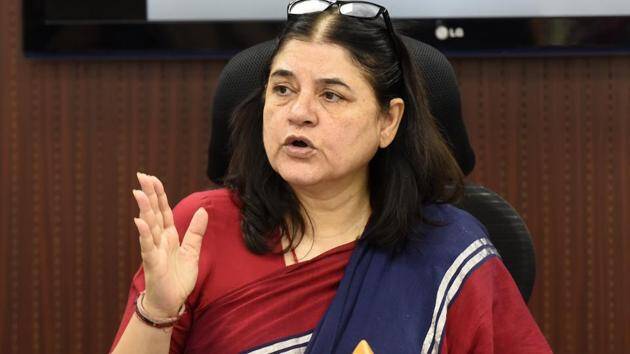
As the festive season approaches, the debate around firecrackers and their impact on the environment has once again gained momentum. BJP leader Maneka Gandhi has sparked a controversy by calling for a nationwide ban on firecrackers, stating that the primary reason behind air pollution in New Delhi is the bursting of crackers. According to Gandhi, the sheer amount of money spent on firecrackers, approximately ₹800 crore in just two nights, is a staggering figure that highlights the severity of the issue.
Gandhi’s remarks have ignited a heated discussion, with many supporting her stance on the need to curb air pollution. The BJP leader’s suggestion that those who burst firecrackers should be branded as “anti-national” has, however, raised eyebrows. The term “anti-national” is often associated with activities that are deemed to be against the interests of the country, and its application in this context has sparked debate.
The issue of air pollution in New Delhi is a pressing concern, with the city consistently ranking among the most polluted cities in the world. The air quality in the city deteriorates significantly during the festive season, with the bursting of firecrackers being a major contributor to the problem. The situation is exacerbated by the fact that the city is located in a geographical region that is prone to temperature inversions, which trap pollutants and prevent them from dissipating.
The impact of air pollution on human health is well-documented, with studies showing that prolonged exposure to poor air quality can lead to a range of health problems, including respiratory diseases, cardiovascular disease, and even cancer. The economic costs of air pollution are also significant, with estimates suggesting that the annual cost of air pollution in India is approximately ₹5 lakh crore.
In recent years, there has been a growing awareness about the need to reduce air pollution, with many cities and states implementing measures to curb the problem. The Supreme Court has also played a crucial role in addressing the issue, with the court imposing restrictions on the sale and use of firecrackers in several states.
Gandhi’s call for a nationwide ban on firecrackers is, therefore, not an isolated one. Many experts and activists have been advocating for a ban on firecrackers, citing the devastating impact of air pollution on human health and the environment. The fact that the bursting of firecrackers is a significant contributor to air pollution in cities like New Delhi makes a strong case for a ban.
However, the suggestion that those who burst firecrackers should be branded as “anti-national” is a more complex issue. While it is true that the bursting of firecrackers is a harmful activity that affects not just the individual but also the community at large, the application of the term “anti-national” is problematic.
The term “anti-national” is often used to describe activities that are deemed to be against the interests of the country, such as treason, sedition, or terrorism. Applying this term to the bursting of firecrackers dilutes its meaning and undermines the seriousness of the issue. Moreover, it is unlikely to be an effective deterrent, as many people may not be aware of the harm caused by firecrackers or may not see themselves as “anti-national” for engaging in an activity that is deeply ingrained in cultural and social traditions.
A more effective approach would be to educate people about the harm caused by firecrackers and to promote alternative ways of celebrating festivals that do not harm the environment. This could include initiatives such as community-led campaigns, awareness programs, and incentives for eco-friendly celebrations.
In conclusion, Maneka Gandhi’s call for a nationwide ban on firecrackers is a timely reminder of the need to address the issue of air pollution in India. While the suggestion that those who burst firecrackers should be branded as “anti-national” is problematic, it highlights the urgency of the issue and the need for a concerted effort to reduce air pollution. As the festive season approaches, it is essential that we prioritize the health and well-being of our citizens and take concrete steps to mitigate the harm caused by firecrackers.
Ultimately, the solution to the problem of air pollution lies in a combination of government action, community engagement, and individual responsibility. By working together, we can create a cleaner, healthier, and more sustainable environment for future generations.
News Source: https://repository.inshorts.com/articles/en/PTI/05dfed30-2874-4e50-8c78-37383df29516
About the Author