Those bursting crackers should be called ‘anti-national’: Maneka
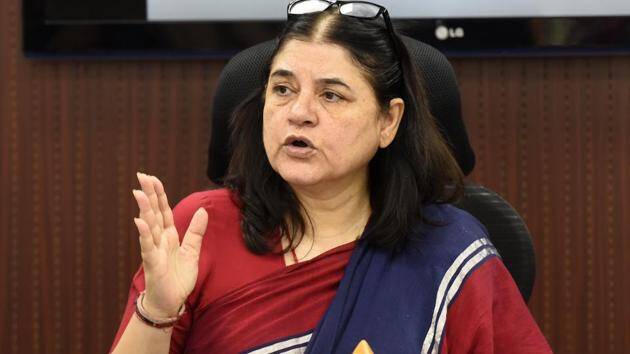
As the festive season approaches, the debate around firecrackers and their impact on the environment has once again gained momentum. BJP leader Maneka Gandhi has sparked a controversy by calling for a nationwide ban on firecrackers, citing the alarming levels of air pollution in New Delhi. According to her, the primary reason behind the deteriorating air quality in the national capital is the widespread bursting of firecrackers during festivals like Diwali.
Gandhi’s statement has ignited a heated debate, with many people taking to social media to express their opinions on the matter. While some have welcomed her suggestion, others have criticized it, arguing that firecrackers are an integral part of Indian festivals and culture. However, Gandhi remains adamant that the harmful effects of firecrackers far outweigh their cultural significance. “If you will burst firecrackers worth ₹800 crore in two nights, then what will happen to the air?” she asked, highlighting the devastating impact of firecrackers on the environment.
The BJP leader’s remarks have also sparked a discussion about the role of individual responsibility in mitigating air pollution. Gandhi believes that those who burst firecrackers should be branded as “anti-national” for their reckless disregard for the well-being of their fellow citizens and the environment. This statement has raised eyebrows, with some people accusing her of being overly dramatic and others praising her for taking a tough stance against pollution.
The issue of air pollution in New Delhi is a pressing concern that requires immediate attention. The city’s air quality has been consistently ranked among the worst in the world, with particulate matter (PM) levels often exceeding safe limits. The situation worsens during the festive season, when the bursting of firecrackers releases large amounts of toxic pollutants into the air. These pollutants can cause a range of health problems, from respiratory issues to cardiovascular disease, and even cancer.
The impact of air pollution on public health is a serious concern that cannot be ignored. According to estimates, air pollution is responsible for thousands of premature deaths in India every year. The economic costs of air pollution are also significant, with studies suggesting that it can reduce productivity, increase healthcare costs, and even affect economic growth.
In this context, Maneka Gandhi’s call for a nationwide ban on firecrackers is not unreasonable. While it is true that firecrackers are an integral part of Indian festivals, it is also important to recognize that traditions and cultural practices must evolve to accommodate changing circumstances. As our understanding of the impact of firecrackers on the environment and public health grows, it is essential that we adapt our behaviors to mitigate these effects.
Of course, a ban on firecrackers is not a simple solution, and it will require careful consideration and planning to implement effectively. The government will need to work with stakeholders, including firecracker manufacturers, vendors, and consumers, to find alternative solutions that balance cultural and economic interests with environmental and health concerns.
Ultimately, the decision to ban firecrackers or not is a complex one that requires a nuanced approach. However, one thing is clear: the status quo is unsustainable, and something needs to be done to address the alarming levels of air pollution in our cities. As Maneka Gandhi has pointed out, the bursting of firecrackers is a significant contributor to this problem, and it is time for us to rethink our habits and priorities.
In conclusion, the debate around firecrackers and air pollution is a critical one that requires our attention and action. While Maneka Gandhi’s statement may have been provocative, it has highlighted the urgent need for us to address this issue. As we move forward, it is essential that we engage in a constructive dialogue about the role of firecrackers in our festivals and the impact they have on our environment and public health. Only through a collective effort can we find a solution that balances our cultural heritage with our responsibility to protect the planet.
News source: https://repository.inshorts.com/articles/en/PTI/05dfed30-2874-4e50-8c78-37383df29516
About the Author