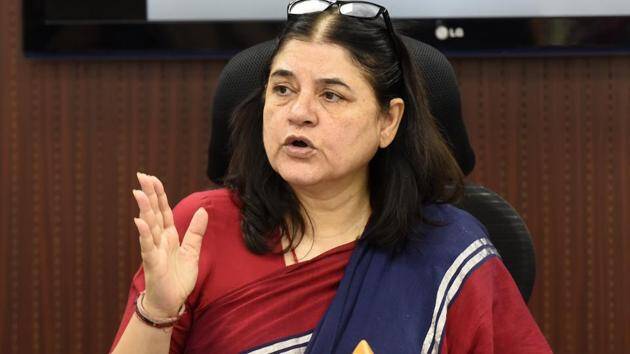
Those bursting crackers should be called ‘anti-national’: Maneka
As the festive season is upon us, the debate around firecrackers and their impact on the environment has once again gained momentum. BJP leader Maneka Gandhi has weighed in on the issue, calling for a nationwide ban on firecrackers and labeling those who burst them as “anti-national”. In a recent statement, Gandhi emphasized the severe consequences of bursting firecrackers on the air quality in New Delhi, citing the staggering amount of ₹800 crore spent on firecrackers in just two nights.
Gandhi’s statement highlights the alarming rate at which air pollution is increasing in the national capital, with firecrackers being a significant contributor to this problem. The toxic fumes emitted by firecrackers contain harmful pollutants like particulate matter, carbon monoxide, and sulfur dioxide, which can cause respiratory problems, cardiovascular disease, and even cancer. The situation is particularly dire in New Delhi, where the air quality index often exceeds hazardous levels during the festive season.
The impact of firecrackers on air quality is not limited to New Delhi alone. Many cities across India struggle with poor air quality, and the bursting of firecrackers only exacerbates the problem. The pollution caused by firecrackers can have far-reaching consequences, affecting not only human health but also the environment and wildlife. It is essential to recognize the severity of this issue and take concrete steps to address it.
Gandhi’s suggestion to brand those who burst firecrackers as “anti-national” may seem extreme, but it underscores the gravity of the situation. The term “anti-national” is often associated with activities that compromise the nation’s security or well-being. In this context, the reckless bursting of firecrackers, despite being aware of its harmful effects, can be seen as a threat to the nation’s health and environment. By using this term, Gandhi aims to convey the urgency of the situation and the need for collective action to mitigate the problem.
The economic aspect of firecracker production and sales is also worth considering. The ₹800 crore spent on firecrackers in two nights could be better utilized for more productive and sustainable purposes. The firecracker industry provides livelihoods for many people, but it is essential to explore alternative, eco-friendly options that can provide employment opportunities without harming the environment.
In recent years, there has been a growing awareness about the need to celebrate festivals in a more environmentally friendly manner. Many people have opted for eco-friendly alternatives, such as earthen diyas, paper lanterns, and biodegradable decorations. Similarly, there are many alternatives to firecrackers that can add to the festive spirit without causing harm to the environment. For instance, laser light shows, cultural events, and community gatherings can be organized to celebrate festivals without bursting firecrackers.
The government has also taken steps to address the issue of air pollution caused by firecrackers. The Supreme Court has imposed restrictions on the sale and use of firecrackers in some states, and several cities have banned the use of firecrackers altogether. However, more needs to be done to tackle this problem effectively. A nationwide ban on firecrackers, as suggested by Maneka Gandhi, could be a significant step in the right direction.
In conclusion, the issue of firecrackers and air pollution is a complex one that requires a multifaceted approach. While Gandhi’s statement may have sparked controversy, it highlights the need for urgent action to address the problem. As responsible citizens, it is essential to recognize the harm caused by firecrackers and explore alternative ways to celebrate festivals. By working together, we can create a healthier, more sustainable environment for ourselves and future generations.
News Source: https://repository.inshorts.com/articles/en/PTI/05dfed30-2874-4e50-8c78-37383df29516
About the Author