Those Bursting Crackers Should be Called ‘Anti-National’: Maneka
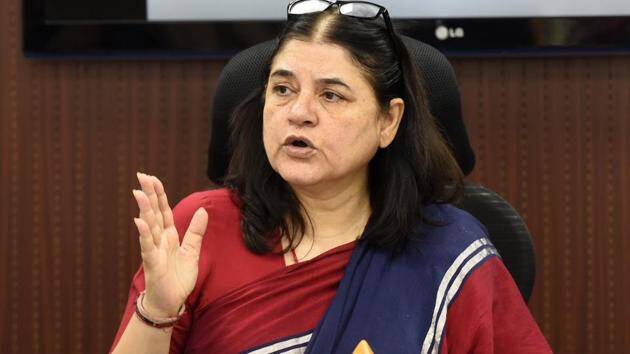
As the festive season approaches, the issue of firecrackers and their impact on the environment has once again come to the forefront. BJP leader Maneka Gandhi has sparked a debate by calling for a nationwide ban on firecrackers, stating that they are the primary cause of air pollution in New Delhi. According to Gandhi, the bursting of firecrackers is not only harmful to the environment but also to human health, and those who engage in this activity should be labeled as “anti-national”.
Gandhi’s comments come at a time when the national capital is struggling to cope with severe air pollution. The city’s air quality has been consistently rated as “very poor” or “severe” in recent weeks, with the Air Quality Index (AQI) often exceeding 400. The situation is so dire that the government has been forced to implement measures such as odd-even traffic restrictions and closures of schools to mitigate the effects of pollution.
The BJP leader’s statement highlights the significant contribution of firecrackers to air pollution in New Delhi. She pointed out that the bursting of firecrackers worth ₹800 crore in just two nights is a significant contributor to the city’s poor air quality. “If you will burst firecrackers worth ₹800 crore in two nights, then what will happen to the air?” she asked, emphasizing the need for a complete ban on firecrackers.
Gandhi’s call for a nationwide ban on firecrackers is not without precedent. Several cities in India have already banned or restricted the use of firecrackers during festivals, citing concerns over air and noise pollution. The Supreme Court has also weighed in on the issue, imposing restrictions on the sale and use of firecrackers in Delhi and other parts of the country.
The impact of firecrackers on air quality is well-documented. The combustion of firecrackers releases a cocktail of toxic gases, including particulate matter, carbon monoxide, and volatile organic compounds, into the atmosphere. These pollutants can cause a range of health problems, from respiratory issues to cardiovascular disease. Children, the elderly, and people with pre-existing medical conditions are particularly vulnerable to the effects of air pollution.
Furthermore, the bursting of firecrackers is not just an environmental issue; it is also a social and economic problem. The production and sale of firecrackers are often linked to child labor and exploitation, with many children forced to work in hazardous conditions to manufacture these products. The noise pollution caused by firecrackers can also be a significant disturbance to animals and humans alike, causing stress and disrupting sleep patterns.
Gandhi’s suggestion that those who burst firecrackers should be branded as “anti-national” may seem extreme, but it highlights the seriousness of the issue. The term “anti-national” is often used to describe activities that are perceived as being against the interests of the nation. In this context, the bursting of firecrackers can be seen as a selfish and reckless act that prioritizes personal enjoyment over the well-being of the community and the environment.
In conclusion, Maneka Gandhi’s call for a nationwide ban on firecrackers is a timely reminder of the need for collective action to address the issue of air pollution in India. The bursting of firecrackers is a significant contributor to poor air quality, and it is essential that we take steps to mitigate this problem. By labeling those who burst firecrackers as “anti-national”, Gandhi is emphasizing the need for a cultural shift in our attitude towards firecrackers and the environment. As we celebrate our festivals and traditions, it is essential that we do so in a responsible and sustainable manner that prioritizes the well-being of our communities and the environment.
Source: https://repository.inshorts.com/articles/en/PTI/05dfed30-2874-4e50-8c78-37383df29516
About the Author