T’gana Minister Slams Pawan for ‘Evil Eye’ Remark, Warns Film Ban
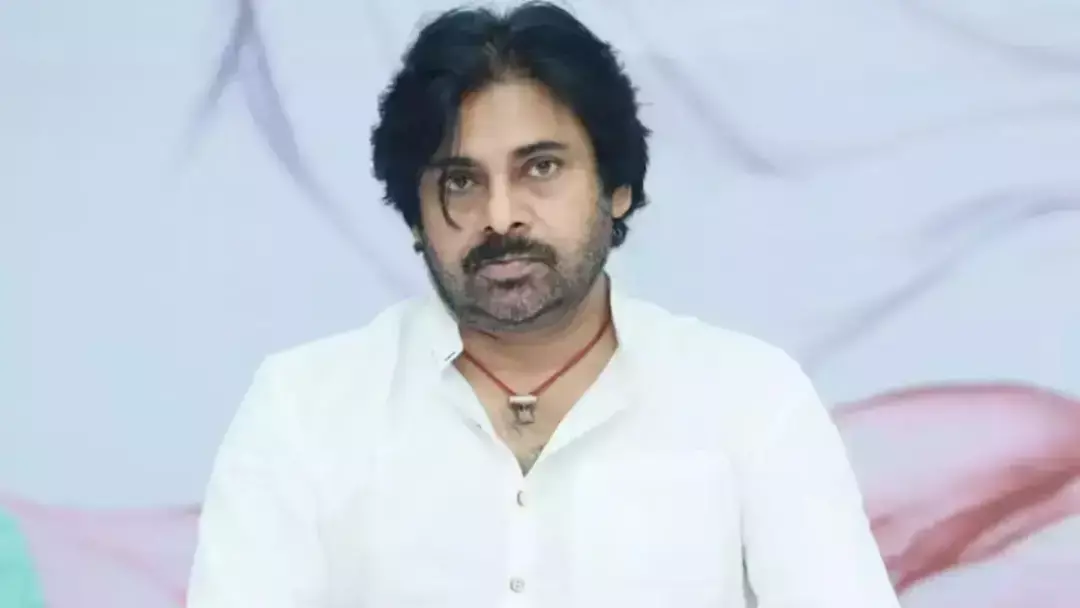
The world of politics and cinema often collide, and the latest controversy to erupt in the Indian state of Telangana is a testament to this fact. Telangana Cinematography Minister Komatireddy Venkat Reddy has demanded an apology from Deputy Chief Minister and actor Pawan Kalyan for his recent comment on the dying coconut trees in the Konaseema region. Kalyan had attributed the death of these trees to an “evil eye,” sparking outrage among the people and the government.
The comment was made by Kalyan during a visit to the Konaseema region, where he was inspecting the damage caused to the coconut trees. Instead of offering a logical explanation or solution to the problem, Kalyan resorted to superstition, stating that the trees were dying due to an “evil eye.” This remark was met with widespread criticism, with many people taking to social media to express their disappointment and anger.
Minister Komatireddy Venkat Reddy was among those who condemn Kalyan’s statement, slamming the actor for his “irresponsible” and “unscientific” remark. Reddy demanded that Kalyan apologize for his comment, warning that if he fails to do so, his films will not be allowed to release in Telangana. The minister’s warning is significant, as it could have a major impact on Kalyan’s film career.
“If Pawan Kalyan apologizes, his movies will be screened at least a couple of days, but if he fails to apologize, his films won’t release anywhere in Telangana,” Reddy warned. This statement has sent shockwaves through the film industry, with many people wondering if Kalyan will apologize and save his films from being banned.
The controversy surrounding Kalyan’s comment has sparked a debate about the role of superstition in Indian society. While some people believe that superstition has a place in Indian culture, others argue that it has no role to play in modern society. The fact that a prominent figure like Kalyan resorted to superstition to explain a natural phenomenon has been widely criticized, with many people arguing that it reflects poorly on the country’s scientific temperament.
The demand for an apology from Kalyan has also raised questions about the freedom of speech and expression in India. While Kalyan has the right to express his opinions, he also has a responsibility to be mindful of the impact of his words on others. As a public figure, Kalyan’s comments carry weight, and his remark on the “evil eye” has been seen as an attempt to deflect attention from the real issues affecting the Konaseema region.
The Konaseema region has been facing a number of environmental challenges, including the death of coconut trees, which has had a significant impact on the local economy. The region is known for its coconut plantations, and the death of these trees has affected the livelihoods of many people. Instead of addressing the root causes of the problem, Kalyan’s comment has been seen as an attempt to shift the focus away from the real issues.
The controversy surrounding Kalyan’s comment has also highlighted the complex relationship between politics and cinema in India. As an actor and a politician, Kalyan has a significant following in Telangana, and his comments carry weight. However, as a public figure, he also has a responsibility to be mindful of the impact of his words on others.
In conclusion, the controversy surrounding Pawan Kalyan’s comment on the “evil eye” has sparked a debate about the role of superstition in Indian society, the freedom of speech and expression, and the complex relationship between politics and cinema. The demand for an apology from Kalyan has also raised questions about the accountability of public figures and the impact of their words on others. As the situation unfolds, it remains to be seen if Kalyan will apologize and save his films from being banned in Telangana.
About the Author