T’gana minister slams Pawan for ‘evil eye’ remark, warns film ban
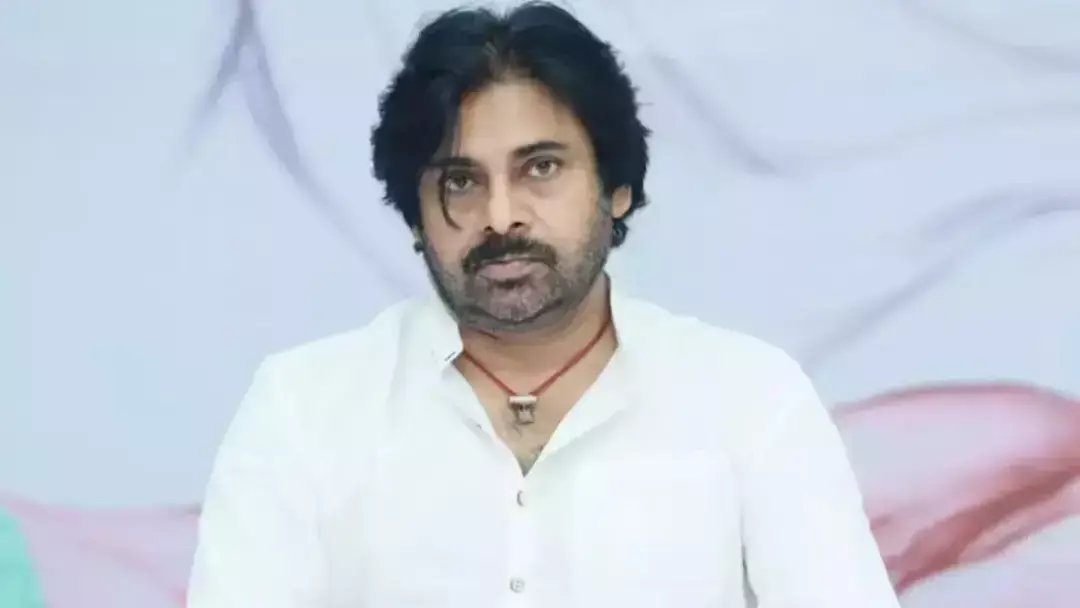
In a shocking turn of events, Telangana Cinematography Minister Komatireddy Venkat Reddy has lashed out at Deputy Chief Minister and renowned actor Pawan Kalyan for his recent comments on the dying coconut trees in the Konaseema region. The controversy began when Kalyan attributed the withering of coconut trees to “evil eye,” sparking widespread criticism and outrage. The Minister has now demanded an apology from the actor, warning that failure to do so would result in a ban on his films in Telangana.
The incident has sparked a heated debate, with many questioning Kalyan’s reasoning behind the “evil eye” remark. The Konaseema region, known for its lush coconut groves, has been facing an unprecedented crisis, with thousands of trees dying mysteriously. While the exact cause of the phenomenon is still unknown, Kalyan’s comments have been perceived as insensitive and unscientific. The actor’s statement has not only drawn flak from the public but also from the government, with Minister Komatireddy Venkat Reddy taking a strong stance against him.
In a scathing attack, Reddy condemned Kalyan’s remarks, stating that they were unacceptable and hurtful to the people of Telangana. The Minister emphasized that the dying coconut trees were a serious issue that required a scientific approach, rather than being attributed to superstition. Reddy’s warning to Kalyan is clear: if he apologizes for his comments, his movies will be allowed to screen in Telangana, albeit with a delay of a couple of days. However, if the actor fails to apologize, his films will be banned from releasing in the state altogether.
This development has significant implications for Kalyan’s film career, as Telangana is a crucial market for his movies. The actor has a massive following in the state, and a ban on his films would undoubtedly impact his box office performance. Moreover, the controversy has also raised questions about the responsibility of public figures in making statements that can influence public opinion. As a Deputy Chief Minister and a popular actor, Kalyan’s words carry weight, and his comments on the dying coconut trees have been seen as an attempt to trivialized a serious issue.
The “evil eye” remark has also sparked a debate about the role of superstition in modern society. While many people in India still believe in the concept of “evil eye” or “nazar,” others see it as an outdated superstition that has no place in contemporary discourse. Kalyan’s comments have been criticized for perpetuating this superstition, rather than encouraging a scientific approach to understanding the problem.
In the midst of this controversy, it is essential to consider the impact of public figures’ statements on the general public. As role models, they have a responsibility to be mindful of the words they choose and the opinions they express. In this case, Kalyan’s comments have been seen as insensitive and dismissive of the concerns of the people affected by the dying coconut trees. The Minister’s demand for an apology is, therefore, a reasonable one, as it seeks to hold the actor accountable for his words.
The ban on Kalyan’s films, if it were to happen, would also have significant economic implications. The film industry is a substantial contributor to the economy of Telangana, and a ban on a popular actor’s movies would undoubtedly impact the livelihoods of many people associated with the industry. Moreover, the controversy has already sparked a heated debate, with many fans of the actor coming to his defense. The situation is, therefore, a complex one, with multiple stakeholders involved and competing interests at play.
As the controversy continues to unfold, it remains to be seen how Kalyan will respond to the Minister’s demands. Will he apologize for his comments, or will he choose to stand by his statement? The outcome of this saga will have significant implications for the actor’s career, as well as the film industry in Telangana. One thing is certain, however: the “evil eye” remark has sparked a debate that goes beyond the realm of cinema, highlighting the complex interplay between politics, superstition, and science in modern India.
In conclusion, the controversy surrounding Pawan Kalyan’s “evil eye” remark is a complex one, with multiple layers and implications. As the situation continues to unfold, it is essential to consider the role of public figures in shaping public opinion and the impact of their words on the people they serve. The Minister’s demand for an apology is a reasonable one, and it remains to be seen how the actor will respond to the challenge. One thing is certain, however: the “evil eye” remark has sparked a debate that will have far-reaching consequences for the film industry, politics, and society at large.
About the Author