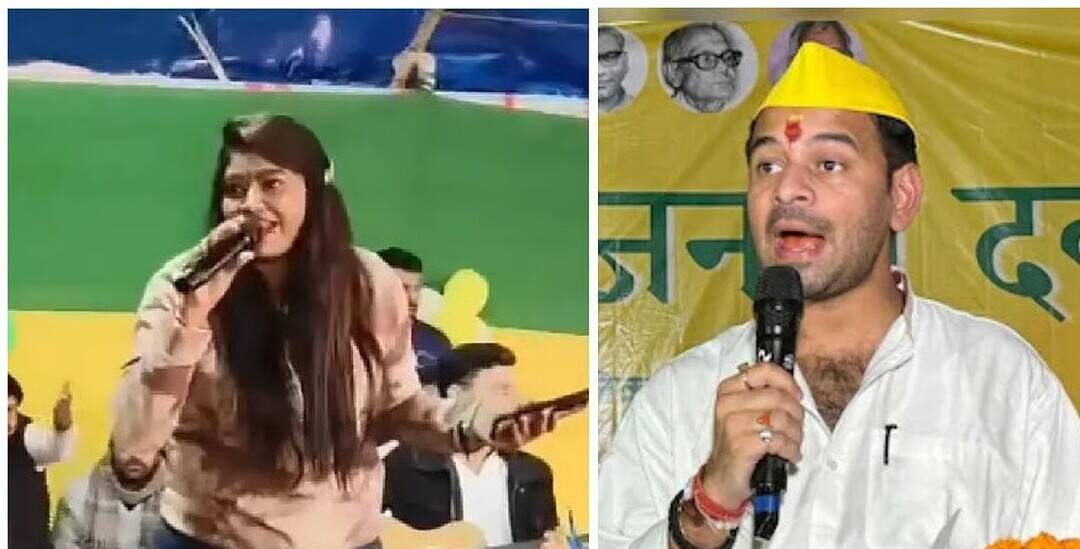
Tej Pratap asks singer to not sing ‘vulgar’ songs at Patna event
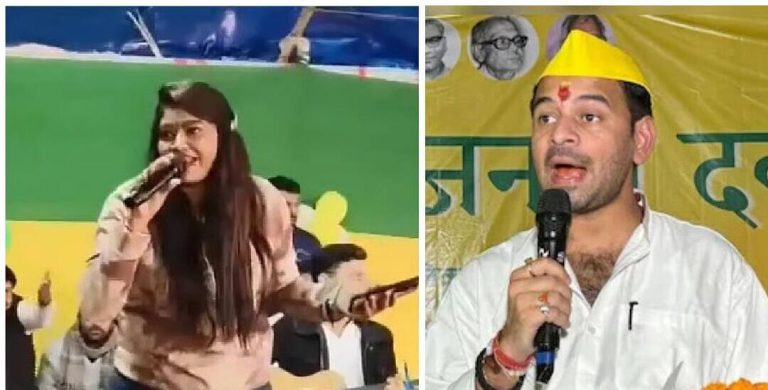
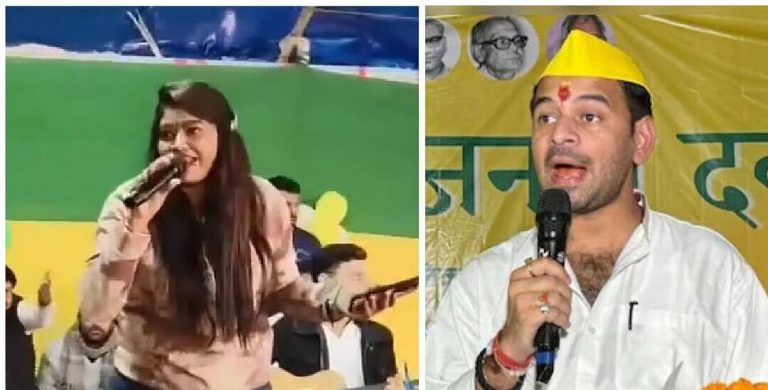
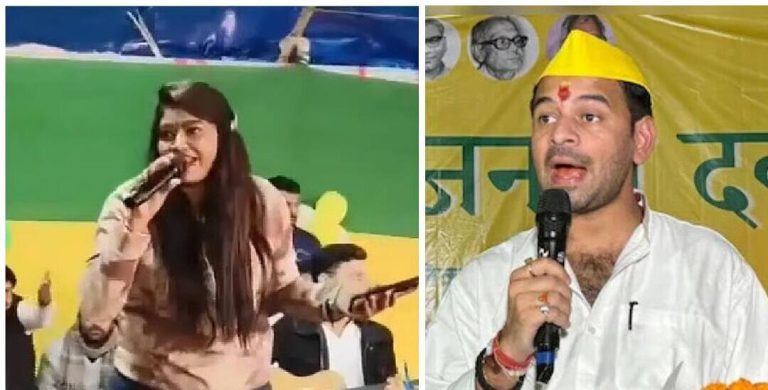
In a shocking turn of events, a video of JJD chief Tej Pratap Yadav interrupting a Bhojpuri singer in the middle of her performance has gone viral on social media. The incident occurred at a Makar Sankranti event in Patna, where Yadav was in attendance. The video shows Yadav taking the stage and telling the singer to stop singing “vulgar” songs, instead urging her to sing devotional songs.
As seen in the video, Yadav approaches the singer and says, “Krishna ji wala bhajan gaao (sing hymns of Lord Krishna).” The singer, taken aback by the sudden interruption, tries to explain herself, but Yadav remains firm in his request. The audience, too, seems divided, with some people cheering Yadav’s move, while others appear to be disappointed by the sudden interruption.
The video has sparked a heated debate on social media, with many people praising Yadav for taking a stand against “vulgar” content, while others have criticized him for interfering with the singer’s performance. Some have even accused Yadav of being a “moral police” and trying to impose his own values on others.
It’s not the first time that Yadav has made headlines for his unconventional behavior. The JJD chief has been known for his outspoken and often controversial statements, which have sparked debates and discussions across the country. However, this incident has raised questions about the role of politicians in shaping cultural norms and values.
On one hand, Yadav’s move can be seen as a genuine attempt to promote devotional music and discourage “vulgar” content. In a country where women are often objectified and misrepresented in popular culture, Yadav’s request can be seen as a step towards promoting more wholesome and respectful content.
On the other hand, the incident raises concerns about censorship and artistic freedom. The singer, who was performing at a public event, had every right to choose her own songs and perform them without interruption. Yadav’s actions, although well-intentioned, can be seen as an attempt to impose his own values and tastes on others.
Moreover, the incident highlights the complexities of Indian culture, where traditional values and modern trends often intersect. Bhojpuri music, in particular, is known for its vibrant and energetic beats, which often feature lyrics that are considered “vulgar” by some standards. However, for many people, this music is an integral part of their cultural heritage and identity.
In recent years, there has been a growing trend of politicians and social activists trying to impose their own moral standards on popular culture. While some have argued that this is necessary to promote more wholesome and respectful content, others have criticized it as an attempt to stifle artistic freedom and creativity.
Ultimately, the incident highlights the need for a more nuanced and balanced approach to promoting cultural values and norms. Rather than trying to impose our own values on others, we should strive to create a more inclusive and respectful environment, where people are free to express themselves without fear of judgment or censorship.
As we move forward, it’s essential to recognize the complexities of Indian culture and the diverse values and traditions that shape our society. By promoting more open and respectful dialogue, we can work towards creating a more harmonious and inclusive environment, where people are free to express themselves without fear of judgment or censorship.
In conclusion, the incident at the Patna event has sparked a heated debate about the role of politicians in shaping cultural norms and values. While Yadav’s move can be seen as a genuine attempt to promote devotional music, it also raises concerns about censorship and artistic freedom. As we navigate the complexities of Indian culture, it’s essential to promote more open and respectful dialogue, where people are free to express themselves without fear of judgment or censorship.
About the Author