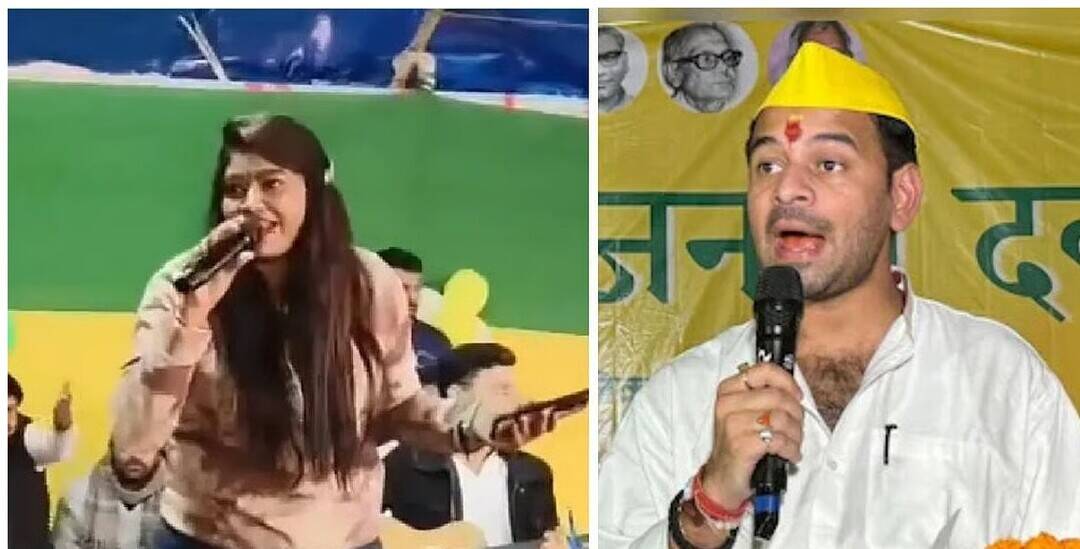
Tej Pratap asks singer to not sing ‘vulgar’ songs at Patna event
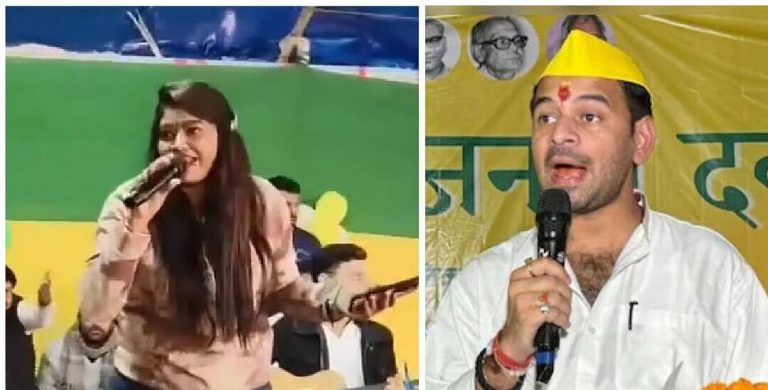
A recent incident at a Makar Sankranti event in Patna has sparked a heated debate on social media, with a video of JJD chief Tej Pratap Yadav interrupting a Bhojpuri singer in the middle of her performance going viral. The video, which has been widely shared and discussed on various platforms, shows Yadav approaching the stage and asking the singer to stop singing “vulgar” songs, instead urging her to sing devotional songs.
As seen in the video, Yadav, who is the elder son of former Bihar Chief Minister Lalu Prasad Yadav, can be heard telling the singer, “Krishna ji wala bhajan gaao (sing hymns of Lord Krishna).” The singer, who was in the middle of her performance, is seen stopping abruptly and looking taken aback by Yadav’s sudden intervention. The crowd, however, seems to be divided in their reaction, with some people cheering and applauding Yadav’s move, while others appear to be disappointed and frustrated.
The incident has raised questions about the role of politicians in shaping cultural and social norms, and whether it is appropriate for them to dictate what kind of music or art is acceptable. While some people have praised Yadav for taking a stand against “vulgar” content, others have criticized him for trying to impose his own moral standards on others.
The concept of “vulgarity” is subjective and can vary greatly from person to person. What one person considers “vulgar,” another person may see as harmless or even artistic. In the context of music, the line between what is considered “vulgar” and what is not can be particularly blurry. Bhojpuri music, in particular, is known for its bold and provocative lyrics, which often reflect the complexities and nuances of rural life.
By asking the singer to stop singing “vulgar” songs, Yadav is essentially imposing his own moral standards on the audience and the performer. While his intention may be to promote a more wholesome and family-friendly environment, his approach can be seen as heavy-handed and dictatorial. Art and music are meant to be expressive and creative, and censorship or restrictions can stifle the very essence of these forms of expression.
Moreover, the incident highlights the larger issue of moral policing and the tendency of some individuals to impose their own values and beliefs on others. In a democratic society, people have the right to make their own choices and decisions, including what kind of music they want to listen to or perform. By trying to dictate what kind of music is acceptable, Yadav is essentially undermining this fundamental right.
The video of the incident has sparked a lively debate on social media, with many people weighing in on the issue. While some have praised Yadav for taking a stand against “vulgarity,” others have criticized him for being overly restrictive and moralistic. Some have also pointed out that Yadav’s own party, the JJD, has been accused of promoting “vulgar” content in the past, which has led to allegations of hypocrisy.
In conclusion, the incident at the Makar Sankranti event in Patna highlights the complex and often contentious issue of moral policing and censorship. While Tej Pratap Yadav’s intention may be to promote a more wholesome and family-friendly environment, his approach can be seen as heavy-handed and dictatorial. The incident serves as a reminder of the importance of respecting individual choices and decisions, and the need to promote a more nuanced and inclusive understanding of art and music.
As the debate continues to rage on social media, it is essential to consider the broader implications of this incident. The role of politicians in shaping cultural and social norms is a critical one, and it is essential to ensure that they do not overstep their bounds. By promoting a more open and inclusive environment, we can foster a more vibrant and diverse cultural landscape, where artists and performers are free to express themselves without fear of censorship or restriction.
About the Author