Tej Pratap asks singer to not sing ‘vulgar’ songs at Patna event
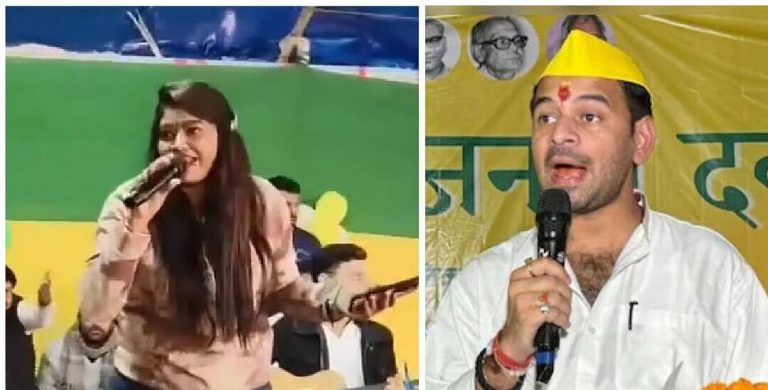
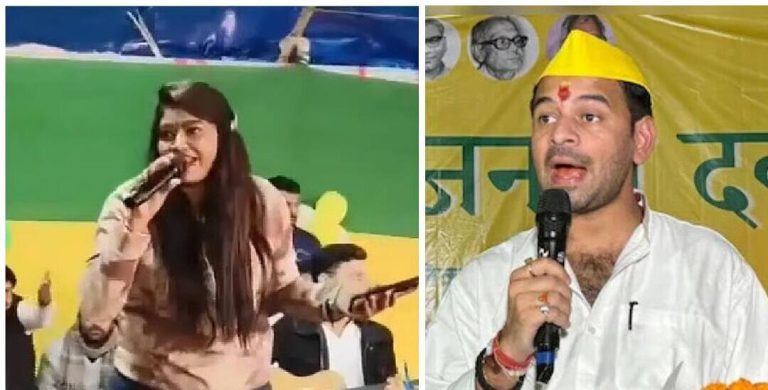
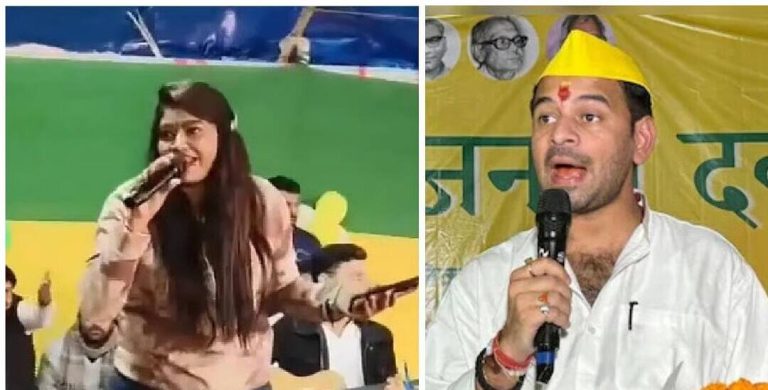
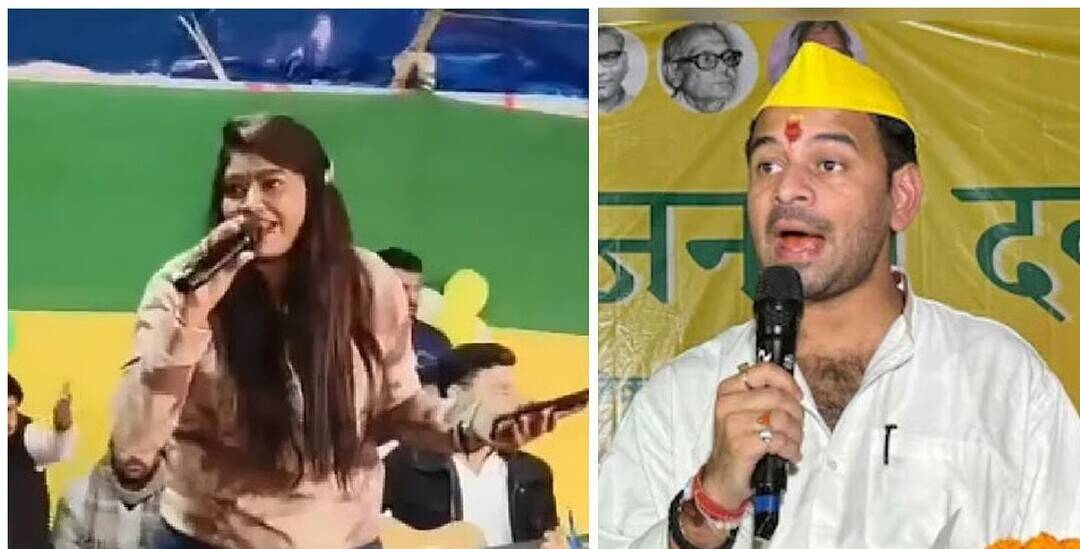
A recent incident at a Makar Sankranti event in Patna has sparked controversy and debate on social media. A video of Jan Adhikar Party (JAP) chief Tej Pratap Yadav interrupting a Bhojpuri singer in the middle of her performance has gone viral, with many weighing in on the issue. The video shows Yadav, who is also the son of former Bihar Chief Minister Lalu Prasad Yadav, telling the singer to stop singing “vulgar” songs and instead sing devotional songs.
As per the video, Yadav can be heard saying, “Krishna ji wala bhajan gaao (sing hymns of Lord Krishna).” The singer, who was in the middle of her performance, was taken aback by Yadav’s sudden interruption. The audience, too, seemed surprised by the unexpected turn of events. While some people in the crowd cheered and applauded Yadav’s request, others seemed to be enjoying the singer’s performance and were disappointed by the interruption.
The incident has sparked a debate on social media, with many people weighing in on the issue. Some have praised Yadav for his efforts to promote cultural and moral values, while others have criticized him for interfering with the singer’s performance. Some have also questioned Yadav’s definition of “vulgar” and what constitutes a “devotional” song.
The issue of vulgarity and obscenity in music is a complex one, and opinions on the matter tend to vary greatly. While some people believe that certain types of music are corrupting and have a negative influence on society, others argue that music is a form of artistic expression and should not be censored or restricted.
In recent years, there have been several instances of politicians and social leaders attempting to dictate what type of music is acceptable and what is not. Such attempts at censorship have often been met with resistance and criticism from artists and fans alike.
In this case, the singer who was interrupted by Yadav has not spoken publicly about the incident. However, many of her fans have taken to social media to express their support and solidarity with her. Some have also criticized Yadav for his behavior, saying that he had no right to dictate what type of music the singer should perform.
The incident has also raised questions about the role of politicians in shaping cultural and artistic norms. While some argue that politicians have a responsibility to promote and protect cultural values, others believe that they should not interfere with artistic expression and creativity.
In Bihar, where the incident took place, there is a long tradition of folk music and dance. Bhojpuri music, in particular, is a popular genre that is known for its energetic and lively rhythms. While some Bhojpuri songs may be considered risqué or vulgar by some standards, they are also an important part of the state’s cultural heritage.
As the debate surrounding the incident continues, it is clear that there are no easy answers. While some people may appreciate Yadav’s efforts to promote devotional music, others may see his actions as an attempt to impose his own moral values on others.
Ultimately, the question of what constitutes “vulgar” or “devotional” music is a matter of personal opinion. Rather than trying to dictate what type of music is acceptable, it may be more productive to focus on promoting diversity and inclusivity in the arts.
By allowing artists to express themselves freely and without censorship, we can create a more vibrant and dynamic cultural landscape. This, in turn, can help to promote greater understanding and appreciation of different perspectives and values.
In conclusion, the incident at the Makar Sankranti event in Patna highlights the complex and often contentious issue of vulgarity and obscenity in music. While some may praise Yadav’s efforts to promote cultural values, others may see his actions as an attempt to impose his own moral standards on others.
As we move forward, it is essential to prioritize diversity, inclusivity, and artistic freedom. By doing so, we can create a more vibrant and dynamic cultural landscape that reflects the diversity and complexity of our society.
About the Author