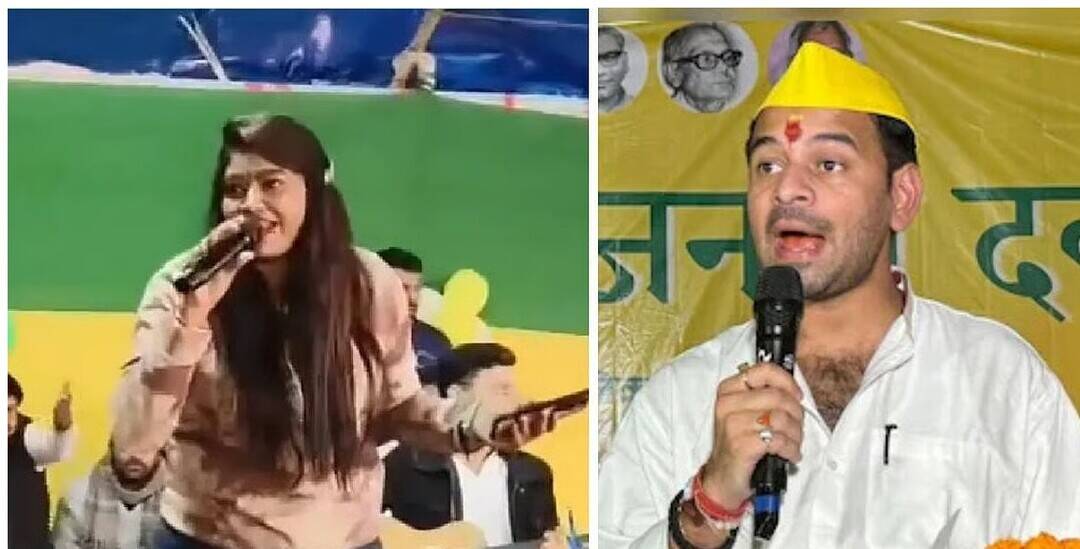
Tej Pratap asks singer to not sing ‘vulgar’ songs at Patna event
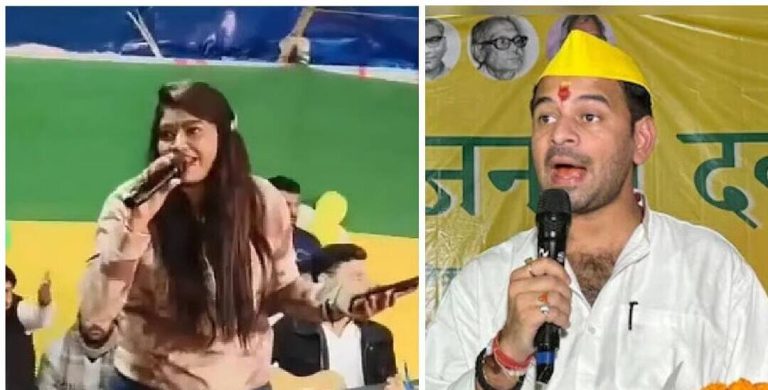
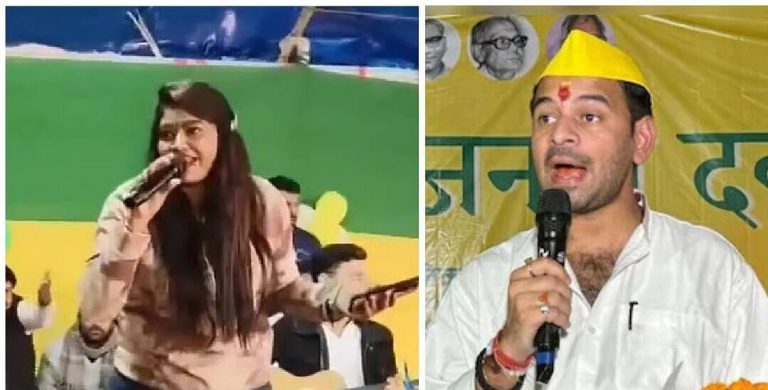
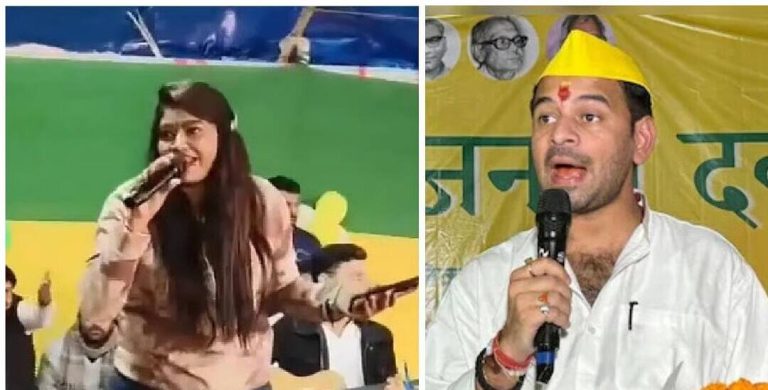
In a shocking turn of events, a video has surfaced on social media showing Jan Adhikar Party (JAP) chief Tej Pratap Yadav interrupting a Bhojpuri singer in the middle of her performance at a Makar Sankranti event in Patna. The video, which has gone viral, shows Yadav taking the stage and telling the singer to stop singing “vulgar” songs and instead sing devotional songs.
As per the video, Yadav, who is the older son of former Bihar Chief Minister Lalu Prasad Yadav, can be heard saying, “Krishna ji wala bhajan gaao (sing hymns of Lord Krishna).” The singer, who was in the middle of her performance, was taken aback by Yadav’s sudden interruption. The audience, too, seemed surprised by the unexpected turn of events.
The incident has sparked a debate on social media, with many people questioning Yadav’s actions. While some have praised Yadav for promoting devotional music and discouraging “vulgar” content, others have criticized him for interfering with the singer’s performance and imposing his personal preferences on others.
It’s worth noting that Bhojpuri music, which is a popular genre in Bihar and other parts of eastern India, often features lyrics that are considered bold or suggestive by some standards. However, the genre also has a rich cultural heritage and is an important part of the region’s folk music tradition.
Yadav’s actions have also raised questions about censorship and artistic freedom. Should politicians or individuals have the right to dictate what kind of music is acceptable or not? Or should artists be free to create and perform the kind of music they want, as long as it’s not harming anyone?
The incident has also sparked a discussion about the role of politicians in promoting or discouraging certain types of art or culture. While some argue that politicians should use their influence to promote positive and uplifting content, others believe that they should stay out of artistic matters and focus on more pressing issues.
In recent years, there have been several instances of politicians and self-proclaimed moral guardians trying to dictate what kind of music or art is acceptable. For example, some politicians have called for bans on certain types of music or films, citing concerns about obscenity or vulgarity.
However, such attempts at censorship often backfire, as they can end up promoting the very thing they’re trying to ban. Moreover, they can also stifle artistic expression and creativity, which is essential for a healthy and vibrant cultural landscape.
In the case of Tej Pratap Yadav, it’s unclear what motivated him to interrupt the singer’s performance and ask her to sing devotional songs instead. Was he genuinely concerned about the content of the music, or was he trying to score political points by taking a moralistic stance?
Whatever the reason, the incident has sparked an important debate about artistic freedom, censorship, and the role of politicians in promoting or discouraging certain types of art or culture. As the video continues to go viral on social media, it’s likely that the discussion will continue, with many people weighing in on the issue.
In conclusion, the incident involving Tej Pratap Yadav and the Bhojpuri singer has highlighted the complexities of artistic freedom, censorship, and the role of politicians in promoting or discouraging certain types of art or culture. While some may praise Yadav for promoting devotional music, others will criticize him for interfering with the singer’s performance and imposing his personal preferences on others.
Ultimately, the debate surrounding this incident will continue, with many people sharing their opinions and perspectives on social media and other platforms. As we move forward, it’s essential to consider the importance of artistic freedom and the need to promote a vibrant and diverse cultural landscape, where artists are free to create and express themselves without fear of censorship or retribution.
About the Author