Tej Pratap asks singer to not sing ‘vulgar’ songs at Patna event
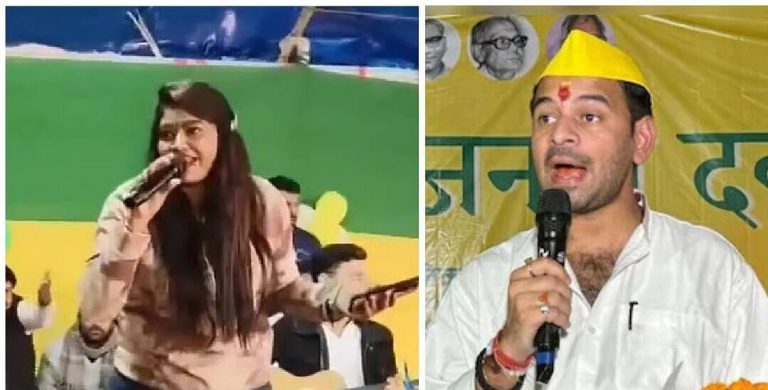
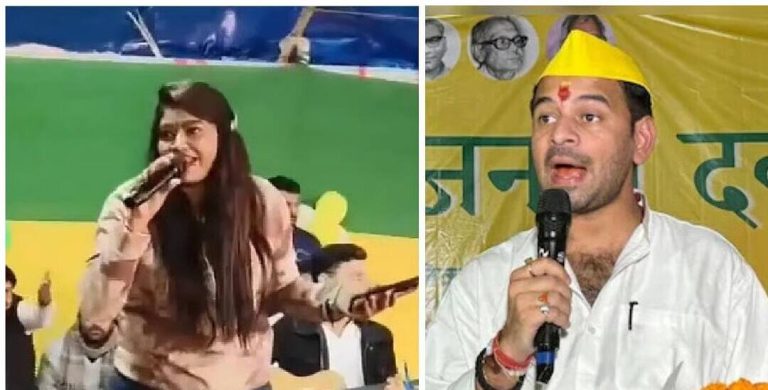
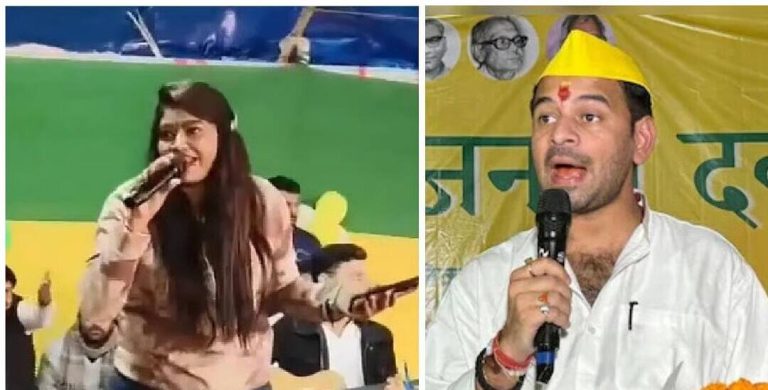
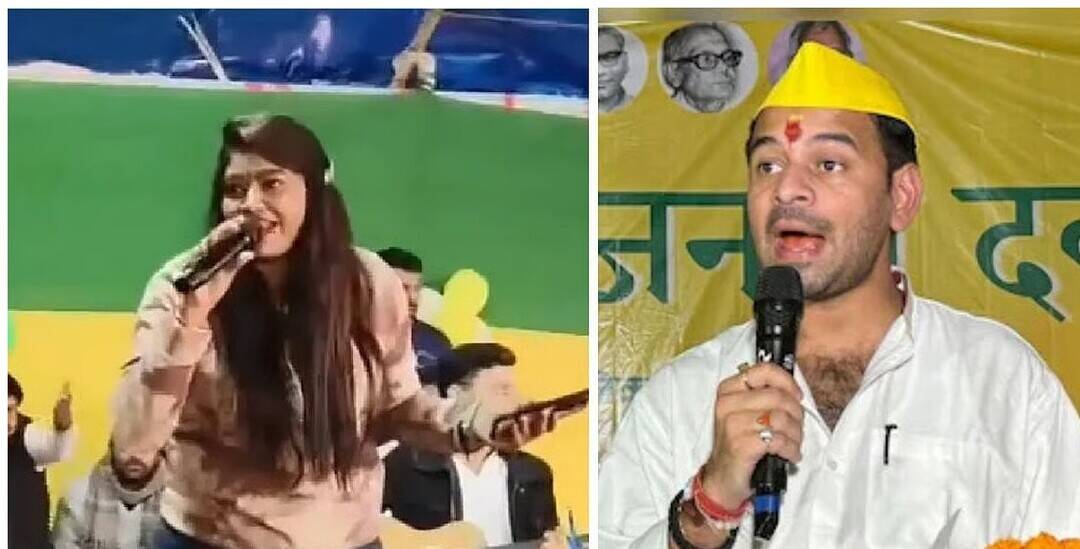
A recent incident involving Tej Pratap Yadav, the chief of the Janata Jalajhari Dal (JJD), has sparked a heated debate on social media. A video of Yadav interrupting a Bhojpuri singer during her performance at a Makar Sankranti event in Patna has gone viral, with many users weighing in on the matter. In the video, Yadav can be heard telling the singer to stop singing “vulgar” songs and instead sing devotional songs.
The video, which has been widely shared on social media platforms, shows Yadav walking up to the stage and asking the singer to change her song. “Krishna ji wala bhajan gaao (sing hymns of Lord Krishna),” he can be heard saying. The singer, who appears to be taken aback by the sudden interruption, tries to explain herself, but Yadav remains firm in his request.
The incident has sparked a debate about the role of politicians in dictating what kind of music is acceptable and what is not. While some have praised Yadav for taking a stand against “vulgar” content, others have criticized him for trying to impose his own moral standards on others.
The issue of vulgarity in music is a complex one, and opinions on the matter tend to vary widely. Some argue that music is a form of artistic expression and that it is up to the individual to decide what kind of music they want to listen to. Others argue that certain types of music can have a corrupting influence on society and that it is the responsibility of politicians and other leaders to take a stand against such content.
In this case, Yadav’s actions have been seen as an attempt to impose his own moral standards on the singer and the audience. While his intentions may have been good, his methods have been questioned by many. Some have argued that instead of interrupting the singer, Yadav could have simply chosen not to attend the event or expressed his disapproval in a more private manner.
The incident has also raised questions about the role of politicians in shaping cultural norms and values. Should politicians be involved in dictating what kind of music is acceptable and what is not? Or should they focus on more pressing issues such as economic development, education, and healthcare?
The answer to these questions is not a simple one. On the one hand, politicians have a responsibility to represent the values and interests of their constituents. If a significant number of people in a particular community are offended by certain types of music, it is the responsibility of their elected representatives to take their concerns into account.
On the other hand, politicians must also be careful not to impose their own moral standards on others. In a democratic society, individuals have the right to freedom of expression and the right to make their own choices about the kind of music they want to listen to.
In the end, the incident involving Tej Pratap Yadav and the Bhojpuri singer serves as a reminder of the complex and often contentious nature of cultural politics. While there may be no easy answers to the questions raised by this incident, it is clear that politicians, musicians, and the general public must all work together to create a cultural environment that is respectful, inclusive, and tolerant of diverse perspectives and values.
As the debate surrounding this incident continues to unfold, it will be interesting to see how Yadav and other politicians respond to the criticism and praise they have received. Will they continue to take a strong stance against “vulgar” content, or will they choose to focus on other issues?
One thing is certain, however: the incident has sparked an important conversation about the role of politicians in shaping cultural norms and values. As we move forward, it is essential that we prioritize respect, inclusivity, and tolerance in our cultural discourse, and that we work together to create a society that values diversity and creative expression.
About the Author