Tata Group donates ₹758 crore to BJP, weeks after approval for semiconductor units: Report
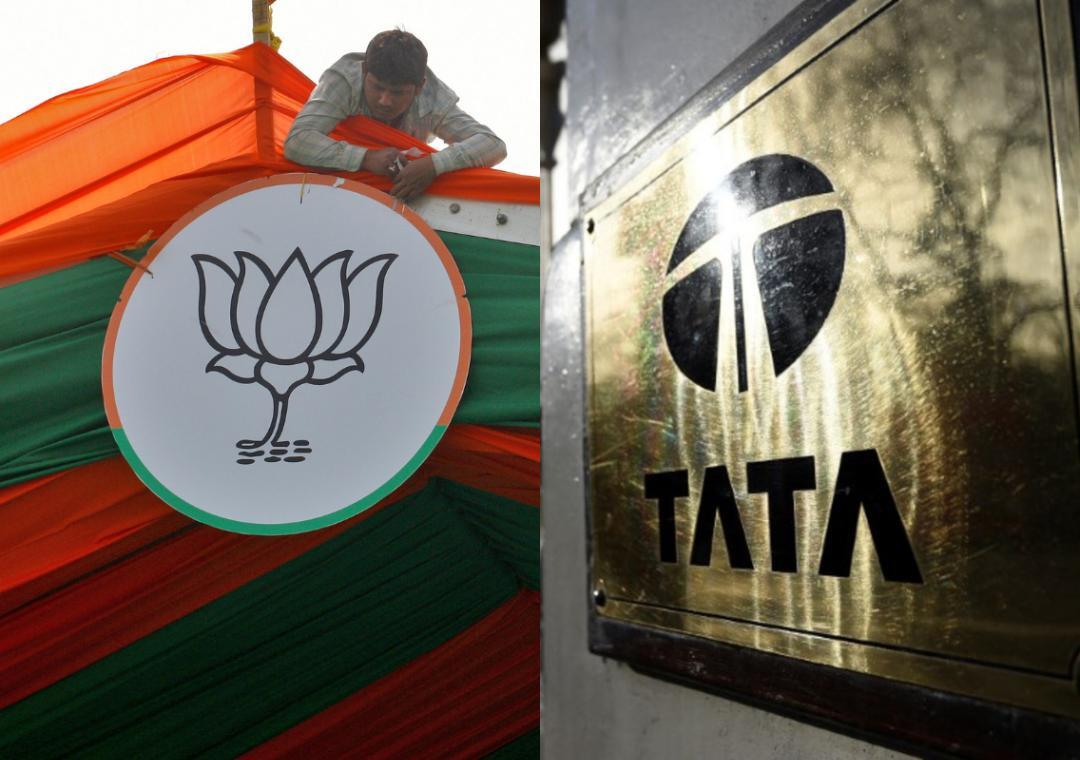
In a shocking revelation, the Tata Group, one of India’s largest conglomerates, has donated a staggering ₹758 crore to the Bharatiya Janata Party (BJP) in April 2024. This massive donation comes just weeks after the group received approval for two of its semiconductor units, with subsidies totaling ₹44,000 crore. The timing of this donation, made just days before the 2024 Lok Sabha elections, has raised eyebrows and sparked intense debate about the relationship between corporate India and the ruling party.
According to reports, the donations made by the Tata Group accounted for nearly 83% of the group’s total contributions, with the Congress party receiving a mere 8.4%. The donations were sourced from 15 different Tata companies, highlighting the group’s extensive reach and influence across various sectors. This significant contribution to the BJP’s coffers has led many to question the motivations behind such a large donation, especially given the proximity to the elections.
The approval for the semiconductor units, announced just weeks prior to the donation, is a significant development for the Tata Group. The ₹44,000-crore subsidies will undoubtedly provide a major boost to the group’s plans to establish itself as a major player in the semiconductor industry. With the Indian government’s push for self-reliance and domestic manufacturing, the semiconductor sector is poised for rapid growth, and the Tata Group is well-positioned to capitalize on this opportunity.
However, the timing of the donation has raised concerns about the potential quid pro quo between the Tata Group and the BJP. While there is no conclusive evidence to suggest any wrongdoing, the sheer size of the donation and its proximity to the elections have sparked allegations of favoritism and crony capitalism. The opposition parties have been quick to pounce on this revelation, accusing the BJP of receiving undue benefits from corporate India.
The Tata Group’s donation to the BJP is not an isolated incident. In recent years, there have been numerous instances of large corporations making significant contributions to political parties, often with questionable timing. This has led to a growing perception that corporate India is exerting undue influence over the political establishment, with many fearing that this could compromise the integrity of the democratic process.
The issue of corporate donations to political parties is a complex one, with many arguing that it is a necessary evil in the absence of adequate state funding for elections. However, the lack of transparency and accountability in these donations has created an environment where corruption and favoritism can thrive. The Election Commission of India has been pushing for greater transparency in political funding, but the progress has been slow, and the loopholes in the system continue to be exploited.
In the context of the Tata Group’s donation to the BJP, it is essential to examine the broader implications of such large contributions. While the donation may have been made with the intention of supporting the ruling party, it is crucial to consider the potential consequences of such a significant influx of funds. Will this donation influence the BJP’s policy decisions, particularly with regard to the semiconductor industry? Will it create an uneven playing field, where other companies are at a disadvantage due to their inability to make similar contributions?
As the 2024 Lok Sabha elections approach, the issue of corporate donations to political parties is likely to gain greater traction. The Tata Group’s donation to the BJP will undoubtedly be scrutinized, and the opposition parties will likely use this as a rallying cry to attack the ruling party. However, it is essential to look beyond the partisan politics and examine the deeper issues at play.
In conclusion, the Tata Group’s donation of ₹758 crore to the BJP, weeks after the approval for its semiconductor units, has raised important questions about the relationship between corporate India and the ruling party. While the donation may have been made with the intention of supporting the BJP, it is crucial to consider the potential consequences of such a significant influx of funds. As the debate around corporate donations to political parties continues to grow, it is essential to push for greater transparency and accountability in the system. Only then can we ensure that the democratic process is not compromised by the influence of corporate India.
About the Author