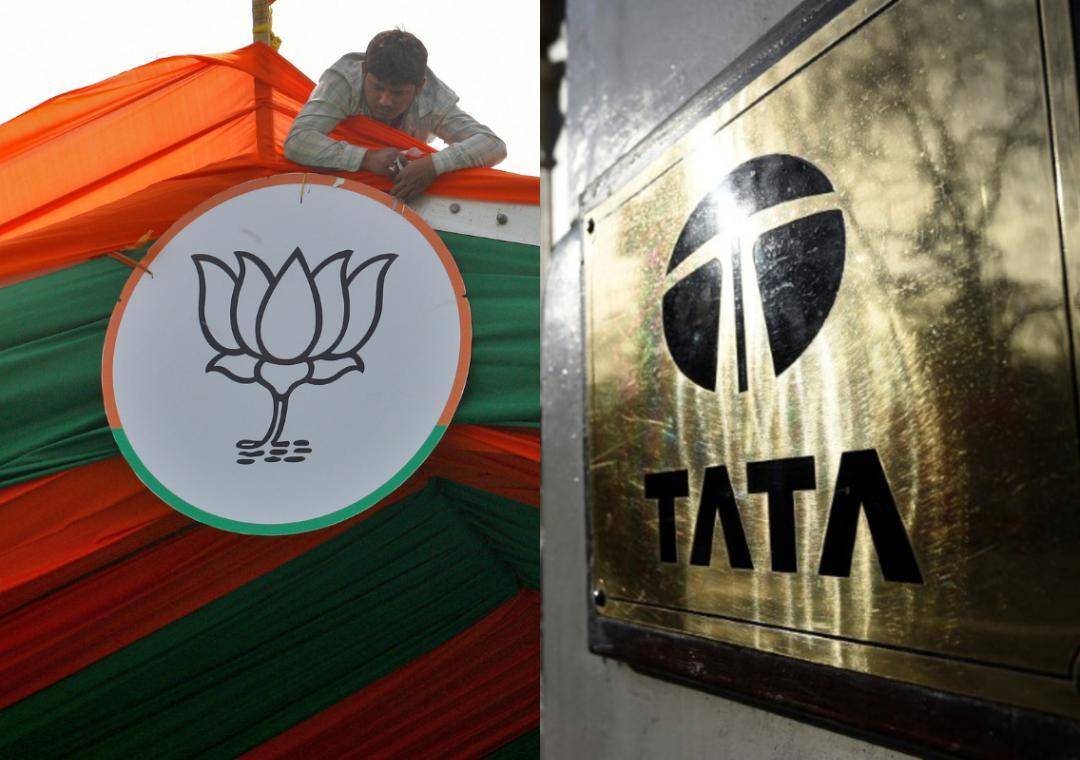
Tata Group donates ₹758 crore to BJP, weeks after approval for semiconductor units: Report
In a shocking revelation, the Tata Group, one of India’s largest conglomerates, donated a staggering ₹758 crore to the Bharatiya Janata Party (BJP) in April 2024, just weeks after receiving approval for two of its semiconductor units. The donations, made just days before the 2024 Lok Sabha elections, have raised eyebrows and sparked debate about the close ties between corporate giants and political parties.
According to reports, the Tata Group’s donation of ₹758 crore accounted for nearly 83% of the group’s total contributions, with the Congress party receiving a paltry 8.4%. The donations were sourced from 15 Tata companies, highlighting the conglomerate’s deep pockets and its willingness to use its financial muscle to influence politics.
The timing of the donation is particularly significant, as it came just weeks after the Tata Group received ₹44,000-crore subsidies for two of its semiconductor units. The subsidies, which were approved by the government, are seen as a major boost to the conglomerate’s plans to set up a semiconductor manufacturing facility in India.
The semiconductor industry is a critical sector for India’s economic growth, and the government has been keen to attract investments in this area. The approval of subsidies for the Tata Group’s semiconductor units is seen as a major victory for the conglomerate, and the subsequent donation to the BJP has raised questions about the quid pro quo.
While the Tata Group has not commented on the donations, the BJP has maintained that the contributions were made voluntarily and in accordance with the law. However, opposition parties have been quick to criticize the donation, alleging that it is a clear case of crony capitalism.
The Congress party, in particular, has been vocal in its criticism of the donation, accusing the BJP of using its ties with corporate giants to fund its election campaigns. The party has also demanded that the government come clean on the details of the subsidies approved for the Tata Group’s semiconductor units.
The donation has also sparked debate about the role of corporate funding in Indian politics. While the BJP has maintained that the donations were made voluntarily, critics argue that such large contributions can have a disproportionate influence on the outcome of elections.
The fact that the Tata Group’s donation accounted for nearly 83% of the group’s total contributions has also raised questions about the conglomerate’s intentions. Is the Tata Group trying to curry favor with the ruling party, or is it simply trying to support a party that it believes is good for business?
The answer to this question is not clear, but one thing is certain: the donation has raised questions about the close ties between corporate giants and political parties in India. As the country prepares for the 2024 Lok Sabha elections, the issue of corporate funding is likely to become a major talking point.
In recent years, there has been a growing trend of corporate giants donating large sums of money to political parties. While some argue that this is a legitimate way for companies to support parties that align with their business interests, others argue that it can lead to undue influence and crony capitalism.
The Tata Group’s donation to the BJP is just the latest example of this trend, and it highlights the need for greater transparency and accountability in corporate funding of politics. As India’s economy continues to grow and evolve, it is essential that the country’s political system is free from the influence of corporate giants.
In conclusion, the Tata Group’s donation of ₹758 crore to the BJP has raised important questions about the role of corporate funding in Indian politics. While the donation may have been made voluntarily, it has sparked debate about the close ties between corporate giants and political parties. As the country prepares for the 2024 Lok Sabha elections, it is essential that the issue of corporate funding is addressed and that greater transparency and accountability are brought to the system.
About the Author