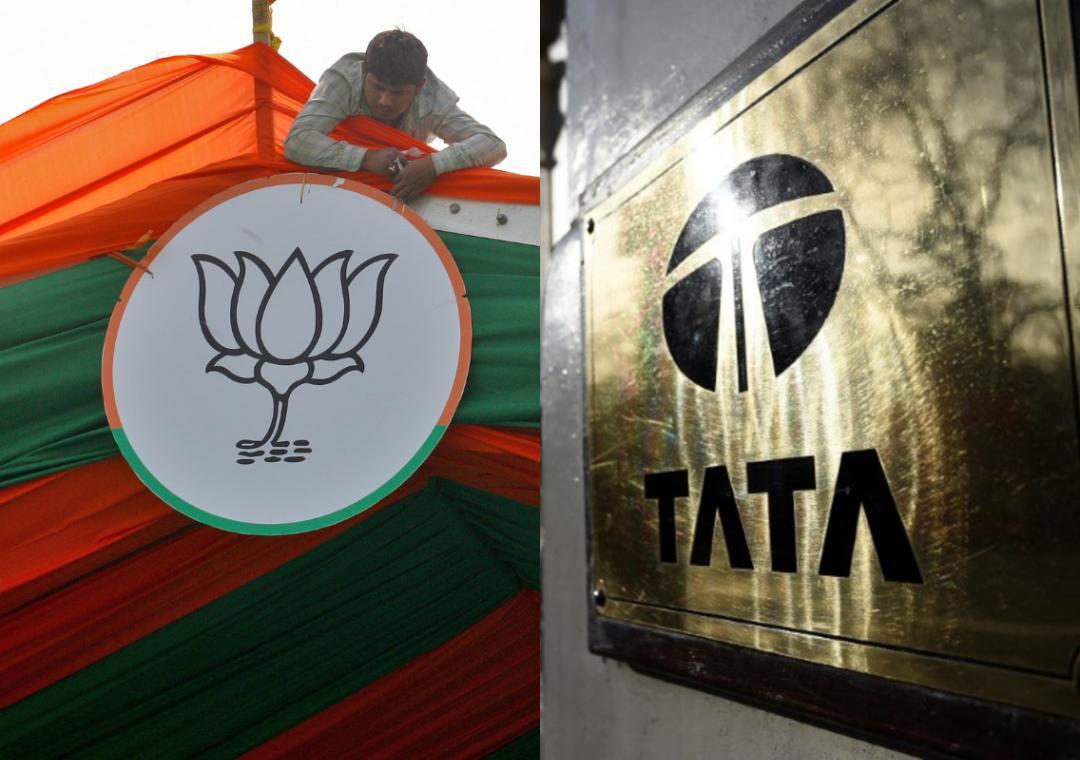
Tata Group donates ₹758 crore to BJP, weeks after approval for semiconductor units: Report
In a shocking revelation, the Tata Group has been reported to have donated a staggering ₹758 crore to the Bharatiya Janata Party (BJP) in April 2024, just weeks after the conglomerate received a massive ₹44,000-crore subsidy for two of its semiconductor units. This donation, made just days before the 2024 Lok Sabha elections, has raised eyebrows and sparked controversy, with many questioning the timing and implications of such a large contribution.
According to reports, the donations made by the Tata Group accounted for nearly 83% of the group’s total contributions, with the Indian National Congress receiving a mere 8.4%. The donations were sourced from 15 different Tata companies, highlighting the vast reach and influence of the conglomerate. This significant contribution to the BJP has led to speculation about the potential benefits and favors that the Tata Group may receive in return, particularly in light of the recent approval for its semiconductor units.
The approval for the semiconductor units is a significant development, as it marks a major milestone in the Indian government’s efforts to promote domestic manufacturing and reduce dependence on foreign technology. The ₹44,000-crore subsidy is a substantial investment, and it is likely that the Tata Group will play a crucial role in shaping the country’s semiconductor industry. However, the timing of the donation has raised concerns about the potential for crony capitalism and the blurring of lines between business and politics.
The Tata Group is one of India’s largest and most respected conglomerates, with a diverse portfolio of businesses that span industries such as automotive, steel, hospitality, and technology. The group has a long history of philanthropy and corporate social responsibility, and its donations to political parties are not uncommon. However, the sheer scale of the recent donation to the BJP has sparked debate and controversy, with many questioning the motivations behind such a large contribution.
One of the key concerns is the potential for quid pro quo, where the Tata Group may receive favorable treatment or benefits from the government in return for its donation. The approval for the semiconductor units, which was granted just weeks before the donation, has led to speculation about the possible connections between the two events. While there is no concrete evidence to suggest any wrongdoing, the timing of the donation has raised eyebrows and sparked concerns about the integrity of the political process.
Another concern is the potential impact on the democratic process, where large corporate donations can influence the outcome of elections and undermine the principles of fair competition. The fact that the Tata Group’s donation accounted for nearly 83% of its total contributions, with the Congress receiving a mere 8.4%, has raised concerns about the disproportionate influence of corporate interests on political parties. This can lead to a situation where political parties become beholden to their corporate donors, rather than serving the interests of the broader electorate.
The controversy surrounding the Tata Group’s donation has also sparked a wider debate about the need for greater transparency and regulation in political financing. In India, political parties are not required to disclose the sources of their funding, which can lead to a lack of accountability and transparency. This has led to calls for greater reform and regulation, including the introduction of stricter disclosure norms and limits on corporate donations.
In conclusion, the Tata Group’s donation of ₹758 crore to the BJP has sparked controversy and debate, with many questioning the timing and implications of such a large contribution. While the conglomerate’s philanthropic efforts are commendable, the sheer scale of the donation has raised concerns about the potential for crony capitalism and the blurring of lines between business and politics. As India continues to navigate the complexities of political financing and corporate influence, it is essential to prioritize transparency, accountability, and reform to ensure that the democratic process remains fair and equitable for all.
About the Author