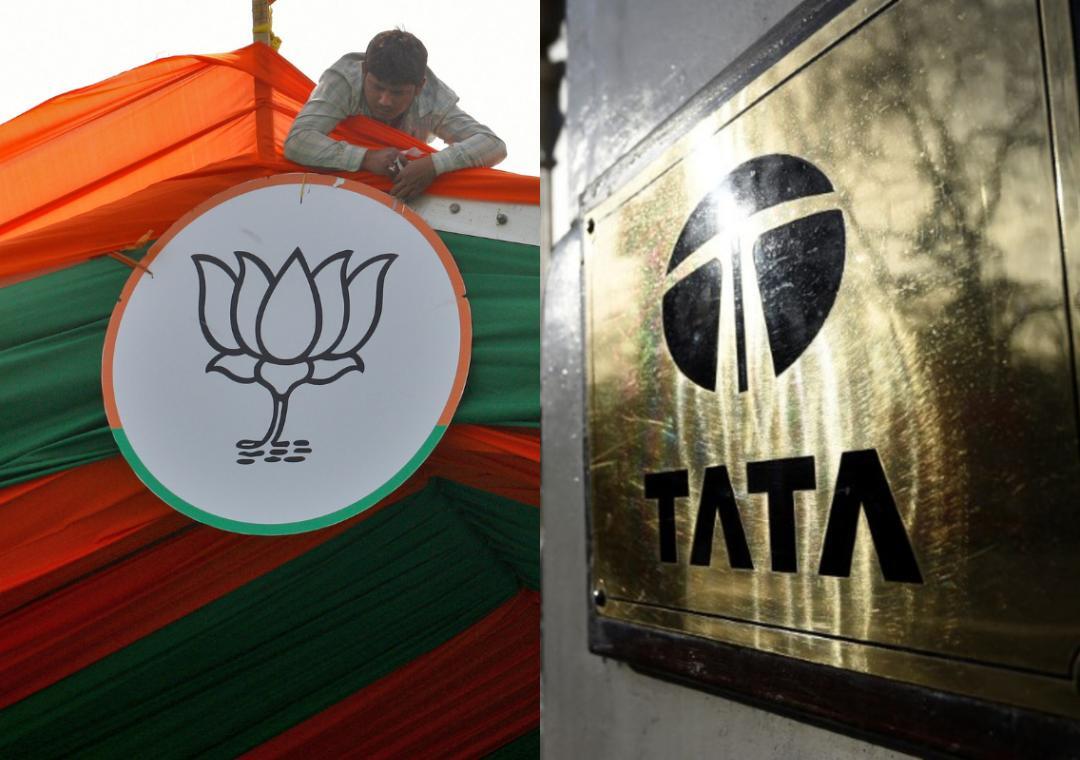
Tata Group donates ₹758 crore to BJP, weeks after approval for semiconductor units: Report
The Tata Group, one of India’s largest conglomerates, has been in the news recently for its significant donation to the Bharatiya Janata Party (BJP). According to reports, the group donated a staggering ₹758 crore to the BJP in April 2024, just weeks after receiving a massive subsidy of ₹44,000 crore for two of its semiconductor units. This donation, made just days before the 2024 Lok Sabha elections, has raised eyebrows and sparked debate about the relationship between big business and politics in India.
The donations, which accounted for nearly 83% of the group’s total contributions, were sourced from 15 different Tata companies. The Congress party, on the other hand, received a mere 8.4% of the total donations, highlighting the significant disparity in funding between the two major parties. This disparity has led to questions about the influence of corporate donations on the electoral process and the potential for favoritism in government policies.
The approval for the semiconductor units, which was granted just weeks before the donation, has also raised suspicions about the timing and motivations behind the donation. The ₹44,000-crore subsidy is one of the largest ever granted to a private company in India, and it has been seen as a significant vote of confidence in the Tata Group’s plans to establish itself as a major player in the semiconductor industry.
The semiconductor industry is a critical sector in the Indian economy, with the potential to create thousands of jobs and drive economic growth. The government’s decision to grant the subsidy to the Tata Group has been seen as a strategic move to promote the development of the sector and attract foreign investment. However, the proximity of the donation to the approval of the subsidy has led to allegations of quid pro quo and has raised concerns about the integrity of the decision-making process.
The Tata Group has a long history of philanthropy and corporate social responsibility, and its donations to political parties are not unusual. However, the scale and timing of this donation have sparked controversy and raised questions about the group’s motivations. The company has not commented publicly on the donation, but it is likely that the issue will be the subject of intense scrutiny and debate in the coming days and weeks.
The donation has also sparked a wider debate about the role of corporate donations in Indian politics. The country’s electoral laws allow companies to donate up to 7.5% of their average net profit over the past three years to political parties, but the lack of transparency and accountability in the system has led to concerns about the potential for corruption and undue influence.
In recent years, there have been several instances of corporate donations being linked to favorable government policies or contracts. The issue has been the subject of controversy and debate, with many arguing that the current system is ripe for abuse and that stricter regulations are needed to prevent the undue influence of corporate interests on the electoral process.
The donation has also highlighted the significant disparity in funding between the BJP and other parties. The BJP has consistently been the largest recipient of corporate donations, and its war chest is significantly larger than that of its rivals. This disparity has led to concerns about the ability of smaller parties to compete with the BJP on a level playing field and has raised questions about the impact of corporate donations on the democratic process.
In conclusion, the Tata Group’s donation of ₹758 crore to the BJP has sparked controversy and raised questions about the relationship between big business and politics in India. The proximity of the donation to the approval of the subsidy for the semiconductor units has led to allegations of quid pro quo and has raised concerns about the integrity of the decision-making process. The issue has also highlighted the need for greater transparency and accountability in the system of corporate donations and has sparked a wider debate about the role of money in Indian politics.
About the Author