Tata Group donates ₹758 crore to BJP, weeks after approval for semiconductor units: Report
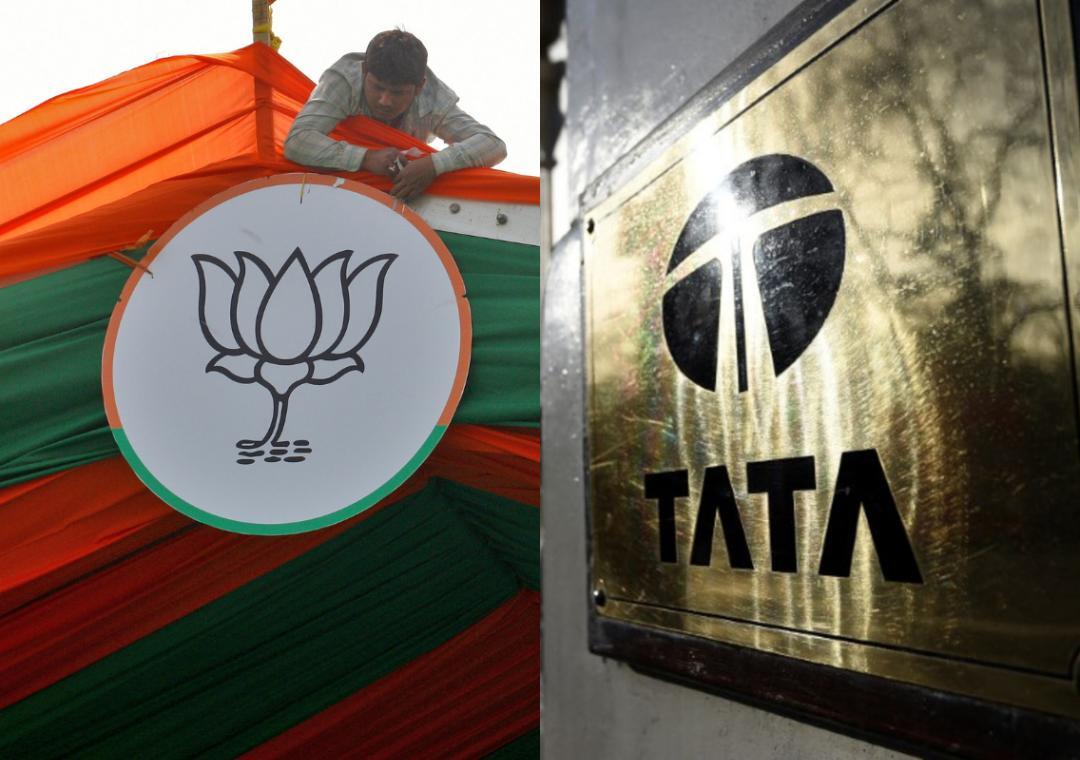
In a shocking revelation, the Tata Group, one of India’s largest conglomerates, has donated a staggering ₹758 crore to the Bharatiya Janata Party (BJP) in April 2024, just weeks after receiving approval for two of its semiconductor units. This massive donation, made on the eve of the 2024 Lok Sabha elections, has raised eyebrows and sparked concerns about the cozy relationship between big business and politics in India.
According to reports, the Tata Group’s donation to the BJP accounted for nearly 83% of the group’s total contributions, with the Congress party receiving a paltry 8.4%. The donations were sourced from 15 Tata companies, highlighting the group’s deep pockets and its willingness to use its financial muscle to influence the political landscape.
The timing of the donation is particularly noteworthy, coming as it did just weeks after the Tata Group received ₹44,000-crore subsidies for two of its semiconductor units. This raises questions about the quid pro quo nature of the donation, with many wondering if the Tata Group’s generosity was a way of expressing its gratitude to the ruling party for the favorable treatment it received.
The semiconductor units in question are part of the Indian government’s efforts to boost domestic manufacturing and reduce dependence on foreign imports. The subsidies awarded to the Tata Group are a significant boost to the company’s plans to set up a robust semiconductor ecosystem in the country. However, the fact that the company chose to donate such a large sum to the BJP so soon after receiving the subsidies has led to allegations of impropriety and crony capitalism.
The Tata Group’s donation to the BJP is not just significant in terms of its amount, but also in terms of its implications for the country’s democratic process. The fact that a single company can donate such a large sum to a political party raises concerns about the influence of big money in politics and the potential for undue influence on policy decisions.
In India, there are no laws that prohibit companies from donating to political parties, but there are rules in place that require companies to disclose their donations. However, these rules are often flouted, and the true extent of corporate donations to political parties remains a mystery. The Tata Group’s donation to the BJP is a rare instance where the details of the donation have become public, thanks to the efforts of investigative journalists and transparency activists.
The donation has also sparked a debate about the role of corporate philanthropy in Indian politics. While companies like the Tata Group often justify their donations as a way of supporting the democratic process, critics argue that such donations can create an uneven playing field and undermine the integrity of the electoral process.
In recent years, there has been a growing trend of corporate donations to political parties in India, with many companies choosing to donate to the ruling party in the hope of currying favor and securing favorable treatment. This has led to concerns about the capture of the state by corporate interests and the erosion of democratic institutions.
The Tata Group’s donation to the BJP is a stark reminder of the need for greater transparency and accountability in Indian politics. The fact that a single company can donate such a large sum to a political party without facing any scrutiny or oversight is a sign of the weaknesses in the country’s regulatory framework.
As India gears up for the 2024 Lok Sabha elections, the Tata Group’s donation to the BJP is a timely reminder of the need for voters to be aware of the influence of big money in politics. The donation has sparked a debate about the role of corporate philanthropy in Indian politics and the need for greater transparency and accountability in the country’s democratic process.
In conclusion, the Tata Group’s donation of ₹758 crore to the BJP is a shocking revelation that highlights the cozy relationship between big business and politics in India. The donation, made just weeks after the company received approval for two of its semiconductor units, raises concerns about the quid pro quo nature of the donation and the potential for undue influence on policy decisions. As India navigates the complex landscape of corporate philanthropy and political donations, it is essential to ensure that the country’s democratic institutions remain intact and that the influence of big money is curbed.
About the Author