Tata Group donates ₹758 crore to BJP, weeks after approval for semiconductor units: Report
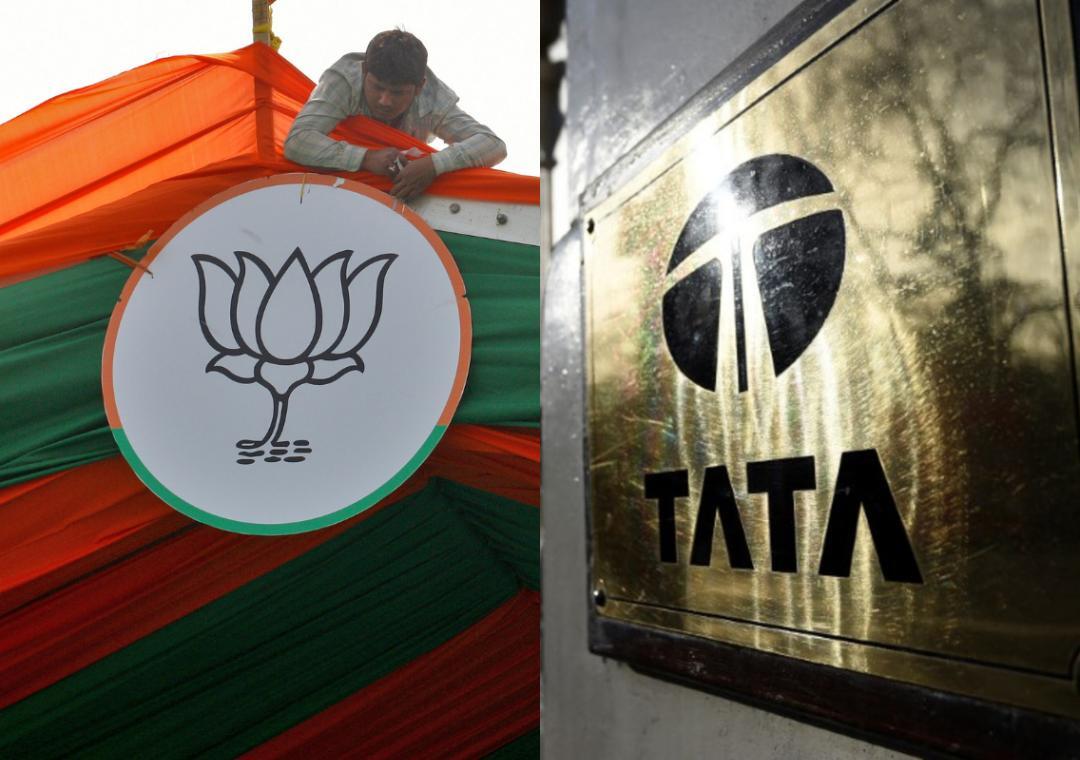
In a shocking revelation, the Tata Group, one of India’s largest conglomerates, has donated a staggering ₹758 crore to the Bharatiya Janata Party (BJP) in April 2024. This massive donation comes just weeks after the group received approval for two of its semiconductor units, with subsidies worth ₹44,000 crore. The donations, made just days before the 2024 Lok Sabha elections, have raised eyebrows and sparked controversy, with many questioning the timing and motivations behind such a large contribution.
According to reports, the donations accounted for nearly 83% of the group’s total contributions, with the Indian National Congress receiving a mere 8.4%. The donations were sourced from 15 Tata companies, highlighting the depth and breadth of the group’s involvement in Indian politics. This significant contribution has sparked debate about the influence of corporate donations on Indian politics and the potential for favoritism and crony capitalism.
The Tata Group’s donation to the BJP is not unprecedented, but the sheer scale of this contribution has raised concerns about the group’s intentions. The conglomerate has a long history of philanthropy and corporate social responsibility, but such a large donation to a single political party has sparked speculation about the group’s motives. Is this donation a genuine attempt to support the BJP’s vision for India, or is it a calculated move to curry favor with the ruling party and secure future business opportunities?
The approval for the Tata Group’s semiconductor units, which came just weeks before the donation, has also raised questions about the timing and potential quid pro quo. The subsidies worth ₹44,000 crore are a significant investment in the group’s future, and it is natural to wonder whether this donation is a way of expressing gratitude or securing future favors. The Indian government’s decision to approve the subsidies and the Tata Group’s subsequent donation to the BJP have created a perception of a cozy relationship between the government and the conglomerate.
The impact of corporate donations on Indian politics is a complex and contentious issue. On one hand, donations can provide much-needed funding for political parties and help them campaign effectively. On the other hand, large donations from corporate entities can create a sense of obligation and influence, undermining the democratic process and leading to crony capitalism. The fact that the Tata Group’s donation accounts for nearly 83% of its total contributions raises concerns about the potential for undue influence and favoritism.
The Indian National Congress, which received a mere 8.4% of the Tata Group’s donations, has been quick to criticize the BJP and the conglomerate. The party has accused the BJP of receiving “suitcase-sized” donations and has demanded greater transparency in political funding. The Congress has also questioned the timing of the donation, suggesting that it may be an attempt to influence the outcome of the 2024 Lok Sabha elections.
The Tata Group’s donation to the BJP has also sparked debate about the need for greater transparency and regulation in political funding. The current system, which allows for anonymous donations and lacks strict disclosure requirements, has been criticized for being opaque and vulnerable to abuse. The Election Commission of India has been pushing for greater transparency and reform, but the pace of change has been slow.
In conclusion, the Tata Group’s donation of ₹758 crore to the BJP has raised significant questions about the influence of corporate donations on Indian politics. The timing of the donation, just weeks after the approval for the group’s semiconductor units, has sparked speculation about the motivations behind such a large contribution. The fact that the donation accounts for nearly 83% of the group’s total contributions has raised concerns about the potential for undue influence and favoritism. As India continues to grapple with the challenges of corruption and crony capitalism, it is essential to have a more transparent and regulated system of political funding.
The controversy surrounding the Tata Group’s donation to the BJP is a reminder that the intersection of business and politics can be complex and contentious. As India continues to grow and develop, it is essential to have a system that promotes transparency, accountability, and fairness. The Tata Group’s donation may be just the tip of the iceberg, and it is crucial to have a more nuanced and informed discussion about the role of corporate donations in Indian politics.
About the Author