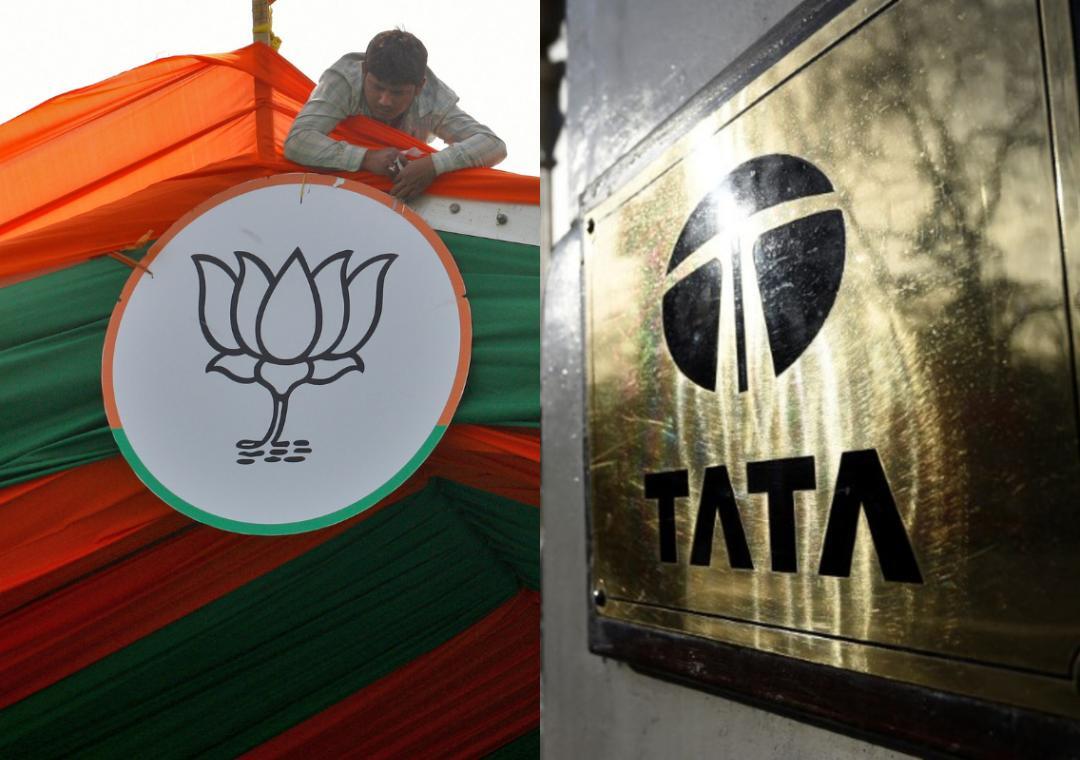
Tata Group donates ₹758 crore to BJP, weeks after approval for semiconductor units: Report
In a shocking revelation, the Tata Group, one of India’s largest conglomerates, has donated a staggering ₹758 crore to the Bharatiya Janata Party (BJP) in April 2024, just weeks after receiving approval for two of its semiconductor units. The donation, which accounts for nearly 83% of the group’s total contributions, has raised eyebrows and sparked debate about the close ties between corporate giants and political parties in India.
According to reports, the Tata Group made the donations just days before the 2024 Lok Sabha elections, with the bulk of the funds coming from 15 Tata companies. The Congress party, on the other hand, received a mere 8.4% of the total donations made by the Tata Group. The massive disparity in donations has led to allegations of favoritism and crony capitalism, with many questioning the timing and motivations behind the Tata Group’s generous contributions to the BJP.
The Tata Group’s donation to the BJP is particularly noteworthy given the recent approval for two of its semiconductor units. In a significant boost to the Indian electronics industry, the government had announced subsidies worth ₹44,000 crore for the two units, which are expected to create thousands of jobs and stimulate economic growth. The approval came just weeks before the Tata Group made its massive donation to the BJP, leading many to speculate about the possible quid pro quo.
The close ties between corporate giants and political parties are not new in India. For years, companies have been making large donations to political parties, often in exchange for favorable policies and regulatory approvals. However, the sheer scale of the Tata Group’s donation to the BJP has raised concerns about the impact of such donations on the country’s democratic processes.
The fact that the Tata Group’s donation accounts for nearly 83% of its total contributions has also sparked debate about the group’s political leanings. While the company has maintained that its donations are made in accordance with the law and are intended to promote the interests of the Indian economy, many have questioned the lack of transparency and accountability in the donation process.
The donation has also led to allegations of bias and favoritism, with many pointing out that the BJP has been instrumental in promoting the interests of corporate giants like the Tata Group. The party’s economic policies, including the recent approval for the semiconductor units, have been seen as favorable to big business, leading many to speculate about the possible quid pro quo.
The Congress party, which received a mere 8.4% of the Tata Group’s donations, has been quick to criticize the BJP for its close ties with corporate giants. The party has alleged that the BJP is promoting crony capitalism and favoring big business at the expense of the common man. The Congress has also demanded greater transparency and accountability in the donation process, calling for stricter regulations to prevent the abuse of power and influence.
The Tata Group’s donation to the BJP has also sparked debate about the role of corporate giants in Indian politics. While companies like the Tata Group have been instrumental in driving economic growth and creating jobs, their increasing influence on politics has raised concerns about the impact on democracy. Many have argued that corporate giants should focus on their core business activities rather than trying to influence political outcomes through large donations.
In conclusion, the Tata Group’s donation of ₹758 crore to the BJP has raised significant concerns about the close ties between corporate giants and political parties in India. The massive disparity in donations, the timing of the approval for the semiconductor units, and the lack of transparency and accountability in the donation process have all contributed to allegations of favoritism and crony capitalism. As India continues to grow and develop, it is essential that the country promotes transparency, accountability, and fairness in its democratic processes, ensuring that the interests of all citizens are protected and promoted.
About the Author