Tata Group donates ₹758 crore to BJP, weeks after approval for semiconductor units: Report
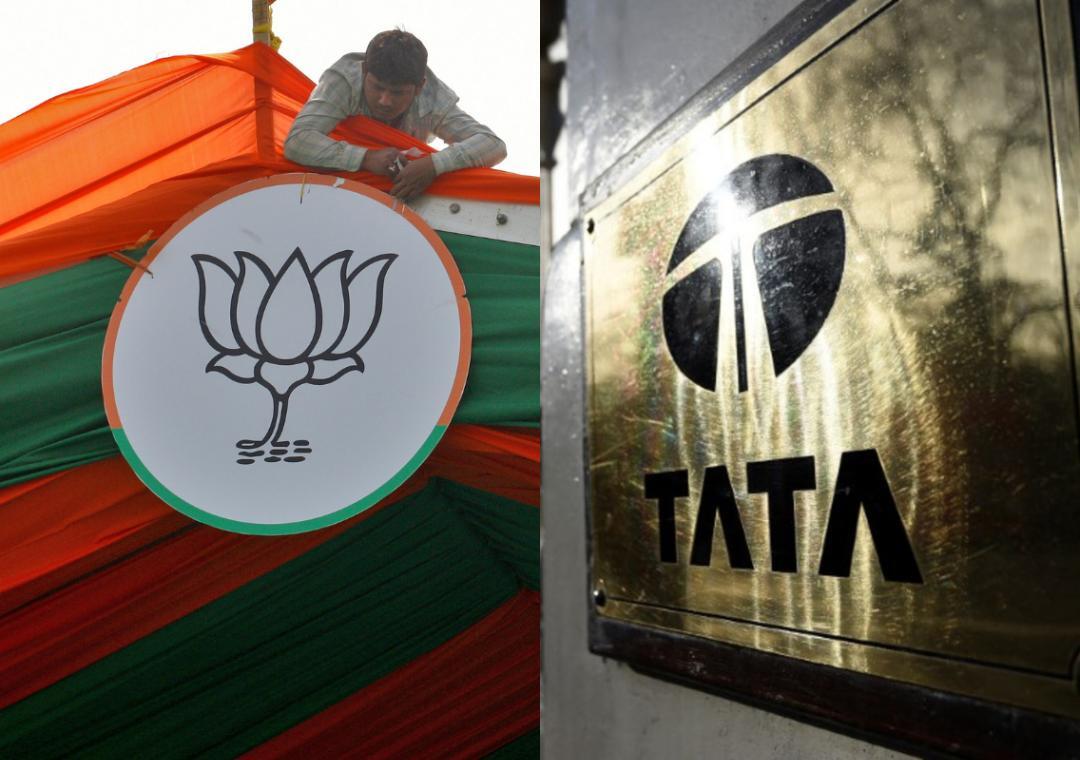
In a shocking revelation, the Tata Group, one of India’s largest conglomerates, has been reported to have donated a staggering ₹758 crore to the Bharatiya Janata Party (BJP) in April 2024. This massive donation came just weeks after the group received a substantial subsidy of ₹44,000 crore for two of its semiconductor units. The timing of this donation, made just days before the 2024 Lok Sabha elections, has raised eyebrows and sparked controversy.
According to reports, the Tata Group’s donation of ₹758 crore accounted for nearly 83% of the group’s total contributions, with the Congress party receiving a meager 8.4%. The donations were sourced from 15 different Tata companies, highlighting the group’s deep pockets and extensive influence. This significant donation has sparked debates about the implications of corporate funding in Indian politics and the potential quid pro quo involved.
The Tata Group’s semiconductor units, which received the substantial subsidy, are part of the government’s efforts to boost India’s manufacturing sector and reduce dependence on foreign imports. The subsidy, worth ₹44,000 crore, is one of the largest ever given to a private company in India. The fact that the Tata Group donated such a large amount to the BJP just weeks after receiving this subsidy has raised questions about the relationship between the government and corporate entities.
The donation has also sparked concerns about the potential impact on the electoral process. With the 2024 Lok Sabha elections just around the corner, the massive donation by the Tata Group could potentially influence the outcome of the elections. The fact that the BJP received nearly 83% of the group’s total contributions has led to allegations of favoritism and bias.
The Tata Group’s donation is not an isolated incident, but rather part of a larger trend of corporate funding in Indian politics. In recent years, there has been a significant increase in corporate donations to political parties, with many companies donating large sums to various parties. While corporate funding is not inherently wrong, the lack of transparency and accountability in the process has raised concerns about the potential for corruption and undue influence.
In India, the rules governing corporate donations to political parties are relatively lax, allowing companies to donate large sums without disclosing the source of the funds. This lack of transparency has made it difficult to track the flow of money and identify potential conflicts of interest. The Tata Group’s donation, while not necessarily illegal, has highlighted the need for greater transparency and accountability in corporate funding.
The implications of the Tata Group’s donation extend beyond the realm of politics, with potential consequences for the Indian economy and society as a whole. The fact that a single company can donate such a large amount to a political party raises questions about the concentration of economic power and the potential for undue influence. The subsidy given to the Tata Group’s semiconductor units, while intended to boost the manufacturing sector, may also be seen as a form of corporate welfare, with taxpayers’ money being used to benefit a private company.
In conclusion, the Tata Group’s donation of ₹758 crore to the BJP, weeks after receiving a substantial subsidy for its semiconductor units, has raised significant concerns about the relationship between corporate entities and political parties in India. The lack of transparency and accountability in corporate funding has sparked debates about the potential for corruption and undue influence. As India continues to grow and develop, it is essential to address these concerns and ensure that the electoral process is free from the influence of corporate interests.
The Indian government must take steps to increase transparency and accountability in corporate funding, including requiring companies to disclose the source of their funds and ensuring that donations are made in a fair and transparent manner. Additionally, the government must ensure that subsidies and other forms of corporate welfare are given in a fair and equitable manner, without favoring specific companies or individuals.
Ultimately, the Tata Group’s donation is a reminder of the complex and often opaque relationships between corporate entities and political parties in India. As the country continues to navigate the challenges of economic growth and development, it is essential to address these concerns and ensure that the electoral process is free from the influence of corporate interests.
About the Author