Tata Group donates ₹758 crore to BJP, weeks after approval for semiconductor units: Report
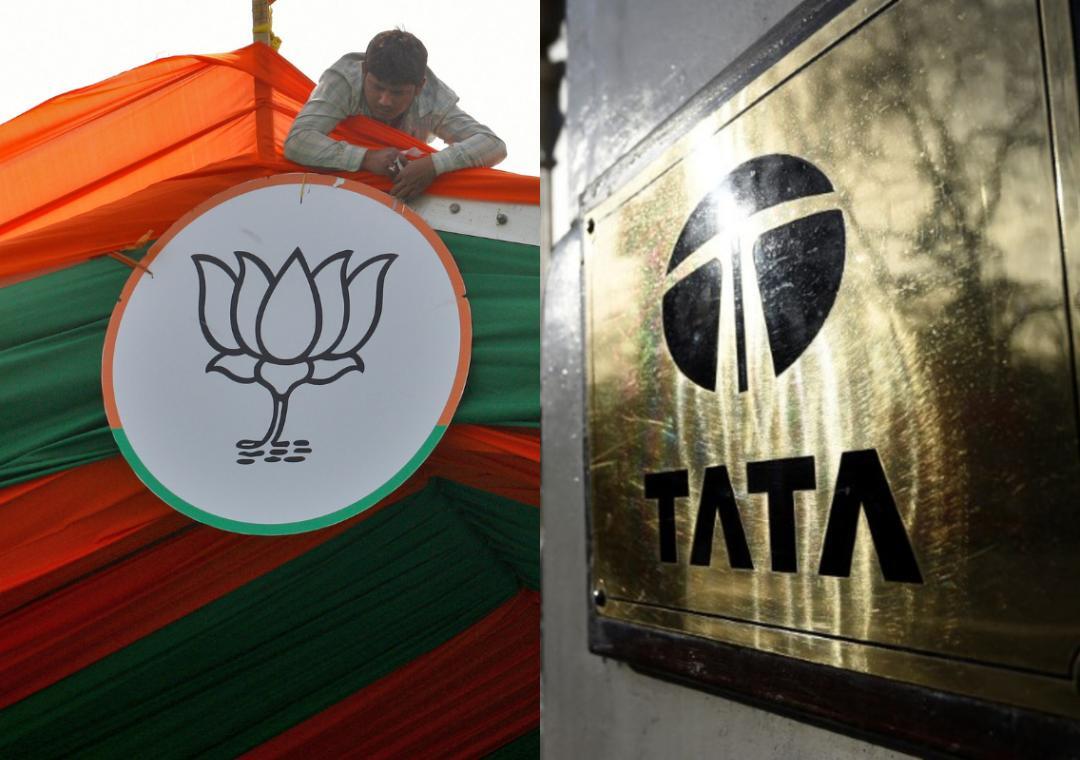
In a shocking revelation, the Tata Group has been reported to have donated a staggering ₹758 crore to the Bharatiya Janata Party (BJP) in April 2024, just weeks after the conglomerate received a massive ₹44,000-crore subsidy for two of its semiconductor units. This donation, made just days before the 2024 Lok Sabha elections, has raised eyebrows and sparked intense debate about the nexus between big business and politics in India.
According to reports, the donations made by the Tata Group accounted for nearly 83% of the group’s total contributions, with the Indian National Congress receiving a paltry 8.4%. What’s more, these donations were sourced from no less than 15 different Tata companies, highlighting the depth and breadth of the group’s involvement in political funding.
The timing of these donations is particularly noteworthy, coming as they did just weeks after the Tata Group received approval for its semiconductor units. The ₹44,000-crore subsidy granted to the group for these units is one of the largest such allocations in recent memory, and has been seen by many as a clear example of the government’s willingness to support big business.
The question on everyone’s mind, of course, is what prompted the Tata Group to make such a massive donation to the BJP. Was it a genuine expression of support for the party’s ideology, or was it a more calculated move designed to curry favor with the ruling party? The answer, unfortunately, may never be known for certain.
What is clear, however, is that the Tata Group’s donation has significant implications for the state of politics in India. The fact that a single business group can donate such a massive amount to a political party raises serious concerns about the influence of money in politics, and the potential for corruption and crony capitalism.
It’s also worth noting that the Tata Group’s donation is not an isolated incident. In recent years, there have been numerous instances of big business groups donating large sums to political parties, often with questionable motives. This has led to a growing perception that politics in India is increasingly being driven by the interests of big business, rather than the needs and concerns of ordinary citizens.
The role of the Election Commission of India (ECI) in regulating political funding is also under scrutiny. While the ECI has introduced various measures to increase transparency in political funding, such as the introduction of electoral bonds, much more needs to be done to prevent the kind of large-scale donations that the Tata Group has made.
In the end, the Tata Group’s donation to the BJP is a stark reminder of the deep-seated problems that afflict Indian politics. Until we can create a more transparent and accountable system of political funding, we will continue to see instances of big business exerting undue influence over politics, and the interests of ordinary citizens being ignored.
As we move forward, it’s essential that we have a nuanced and informed discussion about the role of money in politics, and the steps that can be taken to prevent the kind of crony capitalism that the Tata Group’s donation represents. Only by working together to create a more just and equitable system can we ensure that the interests of all Indians are represented, rather than just those of big business.
About the Author