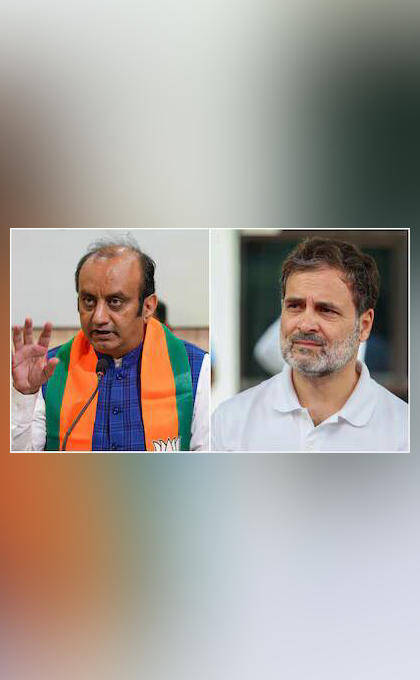
Rahul’s Vietnam visit will be as ‘guest of anti-India people’: BJP
The Bharatiya Janata Party (BJP) has launched a scathing attack on Congress leader Rahul Gandhi, alleging that his recent foreign visits are aimed at spewing venom against India. BJP leader Sudhanshu Trivedi claimed that Gandhi’s visit to Vietnam will be as a “guest of some anti-India people” and that he will make anti-India statements during his trip. This comes after Gandhi returned from a visit to Germany, where the BJP alleged that he met with “enemies of India”.
Trivedi’s statement is a clear indication of the escalating tensions between the BJP and the Congress party. The BJP has been critical of Gandhi’s foreign visits, accusing him of criticizing India on foreign soil. The party has also alleged that Gandhi’s visits are sponsored by anti-India elements, who are trying to undermine the country’s reputation globally.
Gandhi’s visit to Germany had sparked controversy, with the BJP alleging that he met with people who are inimical to India’s interests. The party claimed that Gandhi’s meetings with these individuals were aimed at spreading anti-India propaganda and damaging the country’s reputation. The BJP also accused Gandhi of making anti-India statements during his visit, which they claimed were aimed at appeasing his hosts.
The BJP’s allegations against Gandhi are not new. The party has been critical of the Congress leader’s foreign visits, accusing him of using these opportunities to criticize India and its government. The BJP has also alleged that Gandhi’s visits are part of a larger conspiracy to undermine the country’s reputation and create unrest among its citizens.
However, the Congress party has dismissed the BJP’s allegations, calling them baseless and motivated. The party has accused the BJP of trying to divert attention from the real issues facing the country, such as unemployment, poverty, and corruption. The Congress has also alleged that the BJP is trying to stifle dissent and criticism, and that Gandhi’s foreign visits are a legitimate exercise of his right to free speech.
Despite the controversy surrounding his foreign visits, Gandhi remains a prominent figure in Indian politics. His visits have sparked intense debate and discussion, with many Indians taking to social media to express their opinions on the matter. While some have criticized Gandhi for his alleged anti-India statements, others have defended him, arguing that he has the right to express his opinions and that his visits are an opportunity for India to engage with the global community.
The BJP’s allegations against Gandhi have also sparked a wider debate about the role of opposition parties in Indian politics. The BJP has accused the Congress and other opposition parties of being unpatriotic and anti-national, alleging that they are working to undermine the country’s interests. However, the opposition parties have dismissed these allegations, arguing that they are simply doing their job of holding the government accountable and representing the interests of their constituents.
In conclusion, the controversy surrounding Rahul Gandhi’s foreign visits is a complex and multifaceted issue. While the BJP has alleged that Gandhi’s visits are aimed at spewing venom against India, the Congress party has dismissed these allegations as baseless and motivated. The debate surrounding Gandhi’s visits has sparked intense discussion and debate, with many Indians taking to social media to express their opinions on the matter. As the controversy continues to unfold, it remains to be seen how it will impact Indian politics and the reputation of the country globally.
The BJP’s allegations against Gandhi have also raised questions about the role of opposition parties in Indian politics. The party’s accusations of unpatriotic and anti-national behavior have sparked a wider debate about the responsibilities of opposition parties and their relationship with the government. As the debate continues, it is essential to consider the implications of these allegations and the impact they may have on Indian democracy.
Furthermore, the controversy surrounding Gandhi’s visits has also highlighted the importance of free speech and the right to criticize the government. The BJP’s allegations against Gandhi have sparked concerns about the stifling of dissent and the limits of free speech in India. As the country continues to grapple with these issues, it is essential to consider the importance of protecting free speech and the role of opposition parties in holding the government accountable.
In the end, the controversy surrounding Rahul Gandhi’s foreign visits is a complex issue that requires careful consideration and nuanced analysis. While the BJP’s allegations against Gandhi are serious, they must be evaluated in the context of the broader debate about free speech, opposition parties, and the role of criticism in Indian democracy. As the debate continues to unfold, it is essential to consider the implications of these allegations and the impact they may have on Indian politics and the country’s reputation globally.
News Source: https://repository.inshorts.com/articles/en/PTI/2ea66af0-d391-4b15-b095-5b63f4789282
About the Author