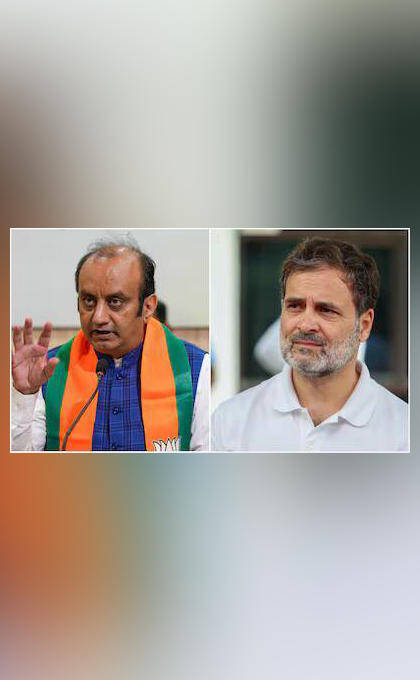
Rahul’s Vietnam visit will be as ‘guest of anti-India people’: BJP
The Bharatiya Janata Party (BJP) has launched a scathing attack on Congress leader Rahul Gandhi, alleging that his recent visit to Vietnam is as a “guest of some anti-India people”. This comes after Gandhi’s visit to Germany, where he allegedly met with individuals who are considered “enemies of India”. BJP leader Sudhanshu Trivedi claimed that Gandhi’s trips abroad are primarily aimed at “spewing venom” against India, and that his statements are often laced with anti-India sentiment.
According to Trivedi, Rahul Gandhi’s visit to Vietnam is a continuation of his efforts to criticize and demean India on the global stage. The BJP leader alleged that Gandhi’s hosts in Vietnam are individuals who have a history of being opposed to India’s interests, and that his interactions with them would only serve to further tarnish the country’s image. Trivedi’s comments are a clear indication of the deep-seated mistrust and animosity that exists between the BJP and the Congress party, with each side often accusing the other of being unpatriotic and anti-national.
The BJP’s allegations against Rahul Gandhi are not new, and the party has consistently accused him of being soft on issues related to national security and sovereignty. The Congress party, on the other hand, has vehemently denied these allegations, and has instead accused the BJP of trying to deflect attention from its own failures and shortcomings. The war of words between the two parties has been ongoing for several years now, and shows no signs of abating anytime soon.
Rahul Gandhi’s visit to Germany had sparked a major controversy, with the BJP alleging that he had met with individuals who were opposed to India’s interests. The Congress party had denied these allegations, and had instead claimed that Gandhi’s visit was aimed at promoting India’s interests and fostering greater cooperation between the two countries. However, the BJP’s allegations had sparked a major row, with several party leaders accusing Gandhi of being a “traitor” and a “threat to national security”.
The BJP’s attack on Rahul Gandhi’s visit to Vietnam is likely to escalate the ongoing war of words between the two parties. The Congress party is likely to hit back at the BJP, accusing it of trying to politicize Gandhi’s foreign visits and undermine his efforts to promote India’s interests abroad. The row is likely to continue for several days, with each side trading accusations and counter-accusations.
It is worth noting that Rahul Gandhi’s foreign visits have often been the subject of controversy and debate. The BJP has consistently accused him of being soft on issues related to national security and sovereignty, and has alleged that his statements abroad are often laced with anti-India sentiment. The Congress party, on the other hand, has denied these allegations, and has instead claimed that Gandhi’s visits are aimed at promoting India’s interests and fostering greater cooperation between India and other countries.
The ongoing row between the BJP and the Congress party is a reflection of the deep-seated mistrust and animosity that exists between the two parties. The BJP’s allegations against Rahul Gandhi are likely to escalate the ongoing war of words, and may have significant implications for the upcoming elections. The Congress party is likely to hit back at the BJP, accusing it of trying to undermine Gandhi’s efforts to promote India’s interests abroad.
In conclusion, the BJP’s attack on Rahul Gandhi’s visit to Vietnam is a clear indication of the deep-seated mistrust and animosity that exists between the two parties. The allegations against Gandhi are likely to escalate the ongoing war of words, and may have significant implications for the upcoming elections. The Congress party is likely to hit back at the BJP, accusing it of trying to politicize Gandhi’s foreign visits and undermine his efforts to promote India’s interests abroad.
The ongoing row between the BJP and the Congress party is a reflection of the intense polarization that exists in Indian politics today. The two parties have fundamentally different visions for the country, and their differences are often reflected in their approach to issues related to national security, sovereignty, and foreign policy. The BJP’s allegations against Rahul Gandhi are likely to be seen as an attempt to undermine his credibility and reputation, and may have significant implications for the upcoming elections.
As the war of words between the two parties continues to escalate, it is worth noting that the Indian electorate is increasingly becoming polarized. The BJP’s allegations against Rahul Gandhi are likely to resonate with its core support base, which is largely composed of individuals who are deeply nationalist and patriotic. On the other hand, the Congress party’s defense of Gandhi is likely to resonate with its own support base, which is largely composed of individuals who are opposed to the BJP’s brand of nationalism and patriotism.
In the end, the ongoing row between the BJP and the Congress party is a reflection of the deep-seated divisions that exist in Indian society today. The two parties have fundamentally different visions for the country, and their differences are often reflected in their approach to issues related to national security, sovereignty, and foreign policy. As the war of words between the two parties continues to escalate, it is worth noting that the Indian electorate is increasingly becoming polarized, and that the upcoming elections are likely to be fiercely contested.
News Source: https://repository.inshorts.com/articles/en/PTI/2ea66af0-d391-4b15-b095-5b63f4789282
About the Author