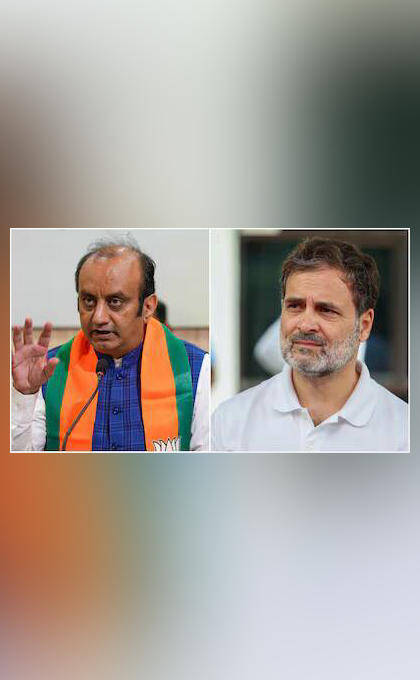
Rahul’s Vietnam visit will be as ‘guest of anti-India people’: BJP
The Bharatiya Janata Party (BJP) has launched a scathing attack on Congress leader Rahul Gandhi, alleging that his recent visit to Germany and upcoming visit to Vietnam are attempts to undermine India’s interests and reputation on the global stage. According to BJP leader Sudhanshu Trivedi, Gandhi’s trip to Vietnam will be as a “guest of some anti-India people”, where he will likely make anti-India statements.
Trivedi’s remarks come after Gandhi returned from a visit to Germany, where he allegedly met with individuals and groups that are inimical to India’s interests. The BJP has claimed that Gandhi’s foreign trips are not intended to promote India’s image or engage in constructive diplomacy, but rather to “spew venom” against the country and its government.
The BJP’s allegations against Gandhi are not new, but they have gained renewed attention in light of his recent foreign visits. The party has long accused Gandhi of being a “part-time politician” who is more interested in criticizing the Indian government and its policies than in working towards the country’s development and progress.
Trivedi’s statement suggests that the BJP believes Gandhi’s visit to Vietnam will be a continuation of his efforts to undermine India’s interests and reputation abroad. By alleging that Gandhi will be a “guest of anti-India people” in Vietnam, the BJP is implying that he will be fraternizing with individuals and groups that are hostile to India, and that his statements and actions will be detrimental to the country’s image and interests.
The BJP’s accusations against Gandhi are likely to escalate the ongoing war of words between the two parties, with the Congress likely to hit back at the BJP’s allegations and defend Gandhi’s right to engage in foreign travel and diplomacy. However, the controversy surrounding Gandhi’s foreign visits highlights the deepening divisions and polarization in Indian politics, where even the most mundane issues can become fodder for bitter partisan debates.
It is worth noting that Gandhi’s visit to Germany was intended to promote India’s economic and cultural ties with the European country, and to engage with the Indian diaspora community in Germany. However, the BJP’s allegations suggest that Gandhi’s true intentions were more sinister, and that he used the visit as an opportunity to criticize the Indian government and its policies.
The controversy surrounding Gandhi’s foreign visits also raises questions about the role of opposition leaders in Indian politics. While opposition leaders like Gandhi have a legitimate right to criticize the government and its policies, they also have a responsibility to promote India’s interests and reputation abroad. The BJP’s allegations against Gandhi suggest that he has failed to meet this responsibility, and that his actions and statements have been detrimental to India’s image and interests.
In conclusion, the BJP’s allegations against Rahul Gandhi’s Vietnam visit highlight the deepening divisions and polarization in Indian politics. While Gandhi has the right to engage in foreign travel and diplomacy, the BJP’s accusations suggest that his actions and statements have been detrimental to India’s interests and reputation. As the controversy surrounding Gandhi’s foreign visits continues to unfold, it remains to be seen how the Congress will respond to the BJP’s allegations, and how the issue will play out in the broader context of Indian politics.
News Source: https://repository.inshorts.com/articles/en/PTI/2ea66af0-d391-4b15-b095-5b63f4789282
About the Author