Rahul’s Vietnam visit will be as ‘guest of anti-India people’: BJP
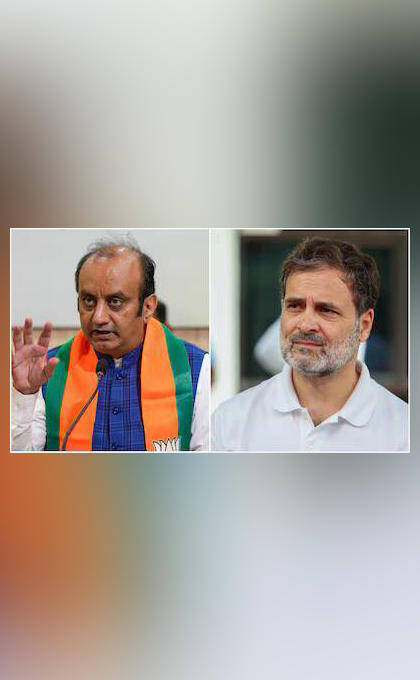
The Bharatiya Janata Party (BJP) has launched a scathing attack on Congress leader Rahul Gandhi, alleging that his recent visits abroad are nothing but an attempt to defame India on the global stage. BJP leader Sudhanshu Trivedi has claimed that Gandhi’s upcoming visit to Vietnam will be as a “guest of some anti-India people” and that he will make anti-India statements during his trip.
This is not the first time that the BJP has targeted Rahul Gandhi for his foreign visits. Recently, Gandhi returned from a visit to Germany, where he allegedly met with “enemies of India”. The BJP has been quick to pounce on this, claiming that Gandhi travels abroad to “spew venom” against India. According to Trivedi, Gandhi’s visits abroad are not for the benefit of the country, but rather to further his own interests and to belittle India on the global stage.
The BJP’s allegations against Gandhi are not new, but they have gained significant traction in recent times. The party has been accusing Gandhi of being a “part-time politician” who is more interested in traveling abroad than in addressing the concerns of the Indian people. The BJP has also claimed that Gandhi’s foreign visits are funded by “anti-India forces” that are bent on destabilizing the country.
Trivedi’s comments on Gandhi’s Vietnam visit are the latest in a series of attacks on the Congress leader. The BJP has been trying to portray Gandhi as a leader who is out of touch with the Indian people and who is more interested in pleasing foreign audiences than in addressing the concerns of his own countrymen. The party has also been trying to capitalize on Gandhi’s statements abroad, claiming that they are anti-India and that they reflect his lack of patriotism.
However, the Congress party has hit back at the BJP, accusing it of trying to distract attention from the real issues facing the country. The party has claimed that the BJP is trying to create a controversy over Gandhi’s foreign visits in order to avoid discussing the pressing issues of unemployment, inflation, and economic slowdown that are affecting the country.
Despite the BJP’s allegations, Rahul Gandhi remains a popular figure in Indian politics. His foreign visits have been seen as an attempt to project himself as a global leader and to increase his visibility on the international stage. Gandhi’s speeches abroad have been widely reported in the Indian media, and he has been praised for his articulate and nuanced views on global issues.
However, the BJP’s attacks on Gandhi’s foreign visits have raised important questions about the role of Indian politicians on the global stage. Should Indian politicians be allowed to travel abroad and make statements that may be perceived as anti-India? Or should they be more mindful of their words and actions abroad, given the potential impact on India’s global reputation?
The answer to these questions is complex and depends on a variety of factors. On the one hand, Indian politicians have the right to free speech and to express their views on global issues. On the other hand, they also have a responsibility to protect India’s interests abroad and to avoid making statements that may be perceived as anti-India.
In the end, the controversy over Rahul Gandhi’s foreign visits is likely to continue, with the BJP and the Congress party exchanging allegations and counter-allegations. However, it is important to remember that the real issue at stake is not Gandhi’s foreign visits, but rather the impact of his statements on India’s global reputation.
As India continues to emerge as a major global power, it is essential that its politicians are mindful of their words and actions abroad. They must be careful to avoid making statements that may be perceived as anti-India, and must instead work to promote India’s interests and to project a positive image of the country on the global stage.
In conclusion, the BJP’s allegations against Rahul Gandhi’s foreign visits have raised important questions about the role of Indian politicians on the global stage. While Gandhi has the right to free speech and to express his views on global issues, he also has a responsibility to protect India’s interests abroad and to avoid making statements that may be perceived as anti-India. As the controversy over Gandhi’s foreign visits continues, it is essential to remember the importance of promoting India’s interests abroad and of projecting a positive image of the country on the global stage.
News Source: https://repository.inshorts.com/articles/en/PTI/2ea66af0-d391-4b15-b095-5b63f4789282
About the Author