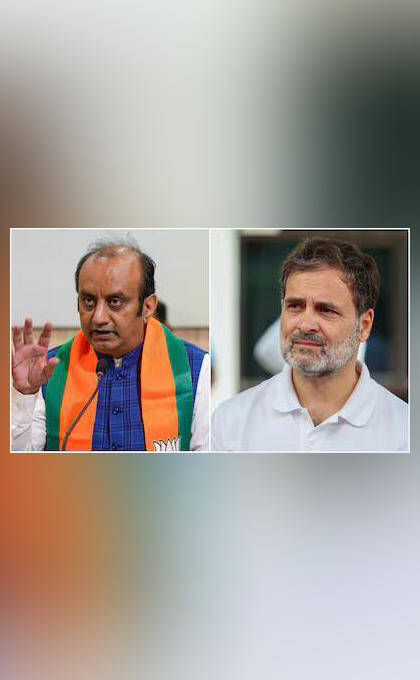
Rahul’s Vietnam visit will be as ‘guest of anti-India people’: BJP
The Bharatiya Janata Party (BJP) has launched a scathing attack on Congress leader Rahul Gandhi, alleging that his recent visit to Germany and upcoming visit to Vietnam are attempts to undermine India’s interests. BJP leader Sudhanshu Trivedi claimed that Gandhi’s visit to Vietnam is as a “guest of some anti-India people” and that he would make anti-India statements during his trip.
Trivedi’s comments come after Gandhi returned from a visit to Germany, where he allegedly met with individuals who are “enemies of India”. The BJP has been critical of Gandhi’s foreign trips, accusing him of traveling abroad to “spew venom” against India. According to Trivedi, Gandhi’s actions are a betrayal of the country’s trust and demonstrate his lack of commitment to India’s interests.
The BJP’s allegations against Gandhi are not new. The party has consistently accused him of being a “part-time politician” who is more interested in traveling abroad than in engaging with the issues facing India. However, the latest allegations suggest that the BJP is trying to portray Gandhi as a threat to India’s national interests.
Gandhi’s visit to Germany was marked by controversy, with the BJP accusing him of meeting with individuals who are hostile to India. The party claimed that Gandhi’s meetings were an attempt to undermine the Indian government’s efforts to promote the country’s interests abroad. The BJP also alleged that Gandhi’s statements during his visit were anti-India and demonstrated his lack of patriotism.
The BJP’s allegations against Gandhi have been denied by the Congress party, which has accused the BJP of trying to distract attention from the real issues facing India. The Congress has argued that Gandhi’s foreign trips are an attempt to promote India’s interests and to engage with the global community.
Despite the denials, the BJP’s allegations against Gandhi have sparked a heated debate about the role of opposition leaders in promoting India’s interests abroad. While some have argued that opposition leaders have a responsibility to promote India’s interests, others have claimed that they should not criticize the government while abroad.
The debate highlights the complexities of India’s foreign policy and the role of opposition leaders in promoting the country’s interests. On the one hand, opposition leaders have a responsibility to hold the government accountable for its actions and to promote India’s interests abroad. On the other hand, they must also be mindful of the need to avoid criticizing the government in a way that undermines India’s national interests.
In the case of Gandhi’s visit to Vietnam, the BJP’s allegations suggest that the party is trying to portray him as a threat to India’s national interests. However, it is also possible that Gandhi’s visit is an attempt to promote India’s interests and to engage with the global community.
As India continues to navigate the complexities of global politics, the role of opposition leaders in promoting the country’s interests will remain a topic of debate. While the BJP’s allegations against Gandhi are likely to spark a heated debate, they also highlight the need for opposition leaders to be mindful of the need to promote India’s interests abroad.
In conclusion, the BJP’s allegations against Rahul Gandhi’s visit to Vietnam as a “guest of anti-India people” are a serious issue that highlights the complexities of India’s foreign policy. While the allegations are likely to spark a heated debate, they also demonstrate the need for opposition leaders to be mindful of the need to promote India’s interests abroad.
As the debate continues, it is essential to consider the implications of Gandhi’s visit to Vietnam and the role of opposition leaders in promoting India’s interests. The BJP’s allegations against Gandhi may be an attempt to undermine his credibility, but they also highlight the need for opposition leaders to be responsible and patriotic in their actions.
Ultimately, the outcome of the debate will depend on the ability of opposition leaders to promote India’s interests abroad while also being mindful of the need to avoid criticizing the government in a way that undermines the country’s national interests.
Source: https://repository.inshorts.com/articles/en/PTI/2ea66af0-d391-4b15-b095-5b63f4789282
About the Author