Paijaan’s jalwa in Pak: BJP on AI video showing Gogoi as Akshaye in ‘Fa9la’ song
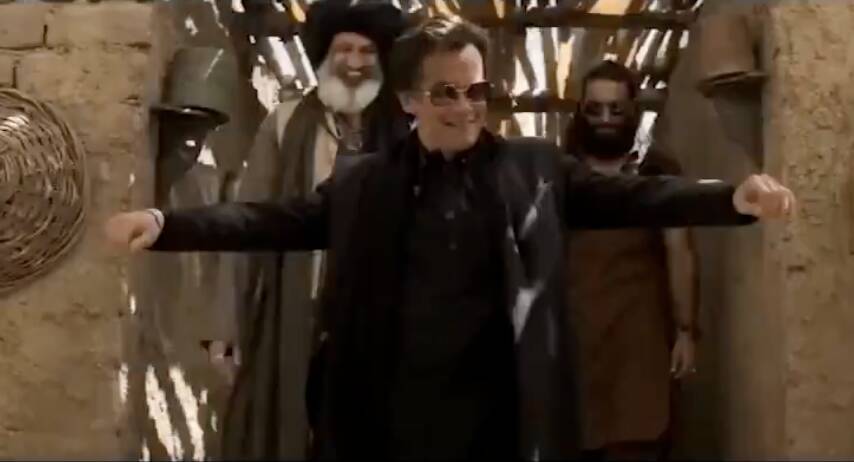
In a bizarre incident, the Bharatiya Janata Party’s (BJP) Assam unit has shared a manipulated video on social media platform X, showcasing a scene from the movie ‘Dhurandhar’ where the character Rehman Dakait, played by Akshaye Khanna, has been edited to resemble Congress leader Gaurav Gogoi. The video, which has sparked controversy, shows Gogoi’s face superimposed on Akshaye Khanna’s, dancing to the popular song ‘Fa9la’ in a Pakistani setting. The caption accompanying the video reads, “Jalwa hain Paaijaan ka Pakistan mein,” which translates to “Paijaan’s grandeur is in Pakistan.”
The video has been met with widespread criticism, with many questioning the authenticity and intent behind the manipulated clip. The BJP, however, has defended its actions, stating that the video is a satirical representation of the alleged links between Gaurav Gogoi and Pakistan. The party has previously made similar allegations against the Congress leader, claiming that he has ties with Pakistani nationals and has engaged in anti-India activities.
The video, which has been viewed by thousands on X, has sparked a heated debate on social media, with many users condemning the BJP’s actions as “desperate” and “misleading.” Others have come to the party’s defense, stating that the video is a legitimate form of satire and that the BJP has the right to express its opinions.
The use of artificial intelligence (AI) to create manipulated videos has become increasingly common in recent years, with many politicians and public figures falling victim to such tactics. The proliferation of deepfake technology has raised concerns about the spread of misinformation and the potential for such videos to be used as a tool for character assassination.
In this case, the BJP’s use of AI to create a manipulated video of Gaurav Gogoi has been widely criticized, with many arguing that it is a blatant attempt to discredit the Congress leader. The party’s actions have been seen as a desperate attempt to divert attention from its own shortcomings and to create a sense of controversy around its political opponents.
The controversy surrounding the video has also raised questions about the role of social media platforms in spreading misinformation. X, the platform on which the video was shared, has faced criticism for its handling of manipulated content, with many arguing that it does not do enough to prevent the spread of false information.
As the debate surrounding the video continues to rage on, it is clear that the use of AI to create manipulated content is a serious issue that needs to be addressed. The proliferation of deepfake technology has the potential to undermine trust in institutions and to create a sense of confusion and mistrust among the public.
In the meantime, the BJP’s Assam unit has faced criticism for its actions, with many calling for the party to apologize for sharing the manipulated video. The party, however, has refused to back down, stating that it will continue to use satire and other forms of expression to criticize its political opponents.
As the situation continues to unfold, it is clear that the controversy surrounding the video is far from over. The use of AI to create manipulated content is a serious issue that needs to be addressed, and it is up to social media platforms and politicians to ensure that such tactics are not used to spread misinformation and undermine trust in institutions.
In conclusion, the BJP’s decision to share a manipulated video of Gaurav Gogoi on social media has sparked a heated debate about the use of AI to create fake content. The party’s actions have been widely criticized, with many arguing that it is a desperate attempt to discredit the Congress leader. As the controversy continues to rage on, it is clear that the use of AI to create manipulated content is a serious issue that needs to be addressed.
News Source: https://x.com/BJP4Assam/status/2007750036869005660
About the Author