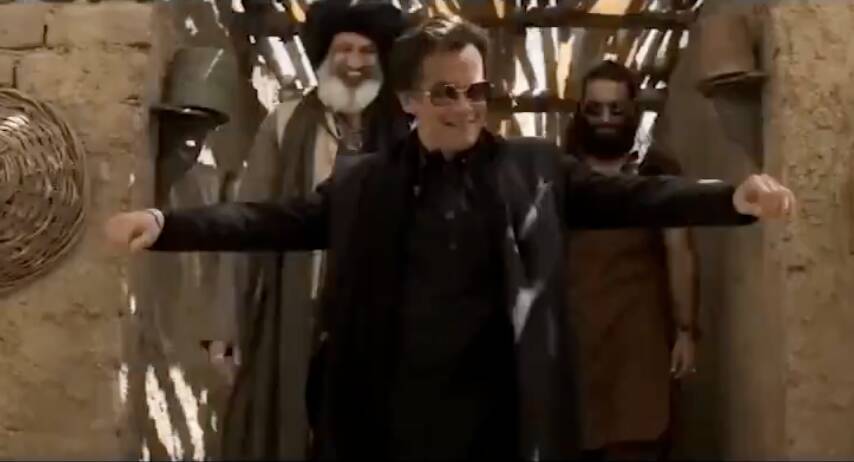
Paijaan’s jalwa in Pak: BJP on AI video showing Gogoi as Akshaye in ‘Fa9la’ song
In a bizarre incident, the Bharatiya Janata Party’s (BJP) Assam unit has shared a video on social media platform X, which has sparked a controversy. The video shows a character from a movie, Rehman Dakait, played by Akshaye Khanna in the film ‘Dhurandhar’, with the actor’s face edited to resemble Congress leader Gaurav Gogoi. The edited video shows Gogoi dancing to the song ‘Fa9la’ in Pakistan, with the caption “Jalwa hain Paaijaan ka Pakistan mein” which translates to “Paijaan’s grandeur is in Pakistan”.
The video, which appears to be created using artificial intelligence (AI), has raised eyebrows and has been widely shared on social media. The BJP has previously alleged links between Gaurav Gogoi and Pakistan, and this video seems to be an attempt to further push this narrative. However, the authenticity and intent behind the video have been questioned by many, with some calling it a cheap gimmick to tarnish Gogoi’s image.
The song ‘Fa9la’ is a popular Pakistani song, and the video shows Gogoi’s face superimposed on the character of Rehman Dakait, dancing to the tune. The editing is quite seamless, and it’s difficult to distinguish between the original and the edited version. The video has been viewed thousands of times, and the comments section is filled with reactions ranging from amusement to outrage.
The BJP’s Assam unit has been actively using social media to push its agenda and to target its opponents. This video is just the latest example of how the party is using technology to create content that can go viral and grab attention. However, the question remains whether such tactics are effective in convincing voters or if they simply end up being a distraction from real issues.
Gaurav Gogoi, the Congress leader, has not responded to the video yet, but it’s likely that he will come out strongly against the BJP for this stunt. The Congress party has been critical of the BJP’s use of social media to spread misinformation and to attack its opponents. This incident is likely to further escalate the tensions between the two parties.
The use of AI to create such videos raises important questions about the ethics of using technology in politics. While AI can be a powerful tool for creating engaging content, it can also be used to spread misinformation and to manipulate public opinion. As social media continues to play a larger role in shaping public discourse, it’s essential to have a nuanced understanding of the impact of such technologies on our democracy.
In recent years, the BJP has been at the forefront of using social media to push its agenda. The party has a large army of volunteers and supporters who create and share content on various platforms. While this has helped the party to reach out to a larger audience, it has also led to allegations of spreading misinformation and propaganda.
The incident has also sparked a debate about the role of social media in politics. While social media can be a powerful tool for connecting with voters and for spreading awareness about important issues, it can also be used to spread hate and misinformation. As the use of social media in politics continues to evolve, it’s essential to have a clear understanding of the risks and benefits associated with it.
In conclusion, the video shared by the BJP’s Assam unit is a classic example of how social media can be used to create controversy and to push a particular narrative. While the video may have been created to amuse or to provoke, it raises important questions about the use of technology in politics and the ethics of spreading misinformation. As the election season approaches, it’s essential to be aware of such tactics and to critically evaluate the information that we consume on social media.
News source: https://x.com/BJP4Assam/status/2007750036869005660
About the Author