Paijaan’s jalwa in Pak: BJP on AI video showing Gogoi as Akshaye in ‘Fa9la’ song
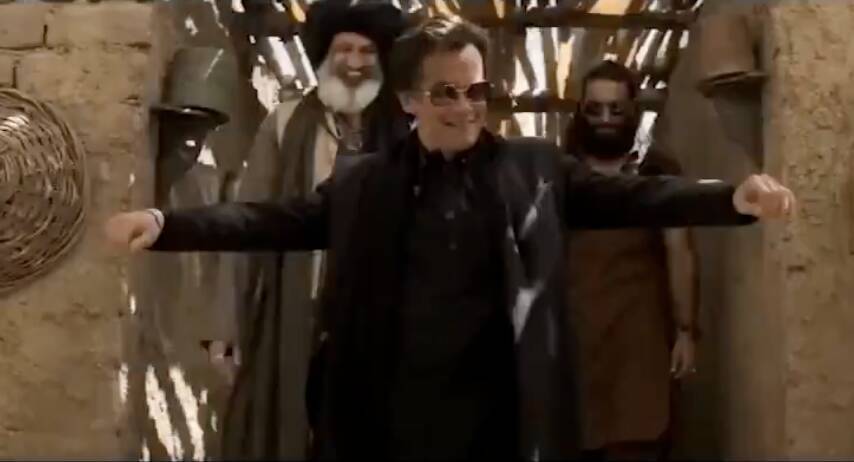
In a bizarre incident, the Assam unit of the Bharatiya Janata Party (BJP) has shared a video on social media platform X, which has sparked a heated controversy. The video, created using artificial intelligence (AI), shows Congress leader Gaurav Gogoi’s face superimposed on the body of actor Akshaye Khanna, who played the role of Rehman Dakait in the movie ‘Dhurandhar’. The AI-generated video features Gogoi dancing to the popular song ‘Fa9la’ in a Pakistani setting.
The video, which has gone viral on social media, was captioned, “Jalwa hain Paaijaan ka Pakistan mein,” which roughly translates to “Paijaan’s grandeur in Pakistan.” The caption is a clear reference to the alleged links between Gogoi and Pakistan, which the BJP has been highlighting for some time now. The use of the term “Paijaan” is also significant, as it is a colloquial term used to refer to someone who is perceived as being close to Pakistan.
The BJP’s Assam unit has been actively sharing the video on social media, with many party leaders and supporters sharing and retweeting it. The video has been viewed millions of times, and the hashtag #PaijaanKaJalwa has been trending on X. While some people have found the video amusing and entertaining, others have criticized the BJP for using AI technology to create a misleading and fake video.
The Congress party has responded strongly to the video, with many leaders condemning the BJP for its “despicable” and “unethical” behavior. Gogoi himself has not commented on the video, but his supporters have been quick to defend him, saying that the video is a clear example of the BJP’s “dirty politics.”
The use of AI technology to create fake videos has become a growing concern in recent times. With the advancement of technology, it has become easier to create realistic and convincing videos that can be used to mislead and deceive people. The BJP’s use of AI technology to create a fake video of Gogoi has raised questions about the ethics of using such technology for political purposes.
The BJP has previously alleged links between Gogoi and Pakistan, citing his supposed connections with Pakistani leaders and his criticism of the Indian government’s policies towards Pakistan. However, these allegations have been consistently denied by Gogoi and the Congress party. The sharing of the AI-generated video is seen as an attempt by the BJP to revive these allegations and to undermine Gogoi’s credibility.
The incident has also raised questions about the role of social media in politics. While social media can be a powerful tool for political parties to connect with their supporters and to disseminate their message, it can also be used to spread misinformation and to create confusion. The sharing of fake and misleading content on social media can have serious consequences, and it is essential for political parties and social media platforms to take steps to prevent the spread of such content.
In conclusion, the BJP’s sharing of an AI-generated video showing Gogoi as Akshaye Khanna in the song ‘Fa9la’ has sparked a heated controversy. While the video may have been intended as a joke or a satire, it has raised serious questions about the use of AI technology for political purposes and the ethics of creating fake and misleading content. The incident highlights the need for political parties and social media platforms to be responsible and to take steps to prevent the spread of misinformation.
Source: https://x.com/BJP4Assam/status/2007750036869005660
About the Author