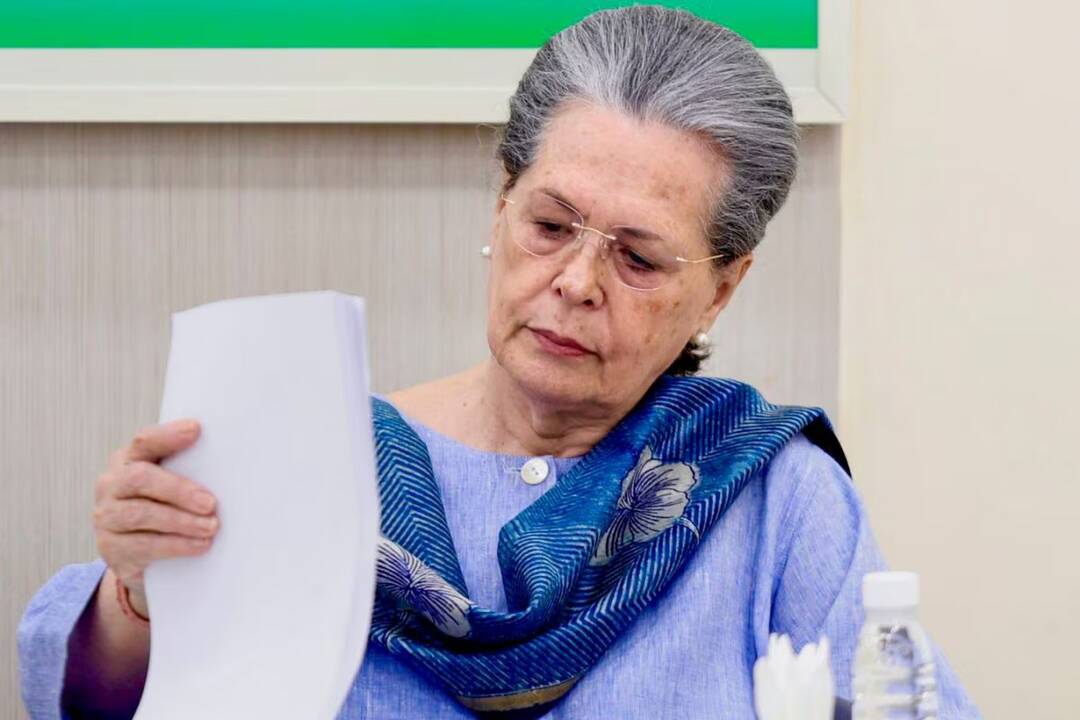
Nehru’s letters not private property, told Sonia Gandhi to return them: Govt
The Ministry of Culture has sparked a significant debate by stating that the letters of former Prime Minister Jawaharlal Nehru are not private property. In a recent announcement, the ministry revealed that they have asked Sonia Gandhi, the widow of former Prime Minister Rajiv Gandhi, to return the letters. The ministry’s stance is that these letters are an integral part of the nation’s documentary heritage, and as such, they should be preserved and made accessible to the public.
According to the Ministry of Culture, the letters in question are a vital part of India’s history, and their significance extends beyond the personal sphere. The ministry has argued that these letters provide valuable insights into the country’s past, shedding light on the thoughts, ideas, and decisions of one of India’s most influential leaders. By returning the letters, the government aims to ensure that they are properly preserved, cataloged, and made available to researchers, historians, and the general public.
The ministry stated that they have written two letters to Sonia Gandhi, one in January 2025 and another in July 2025, requesting the return of the letters. The move is seen as an effort to assert the government’s claim over the documents, which are considered national treasures. The Ministry of Culture has emphasized that the letters are not the personal property of any individual or family but rather a part of the country’s collective heritage.
This development has sparked a heated discussion about the ownership and accessibility of historical documents. While some argue that the letters are an integral part of the Nehru-Gandhi family’s personal history, others contend that they belong to the nation and should be preserved and made accessible to the public. The government’s stance on this issue highlights the complexities surrounding the ownership and preservation of historical documents.
The Ministry of Culture’s request to Sonia Gandhi has also raised questions about the management and preservation of historical documents in India. The government has been criticized in the past for its handling of historical archives, with many documents being lost, damaged, or inaccessible to the public. The ministry’s efforts to retrieve the Nehru letters demonstrate a renewed commitment to preserving the country’s documentary heritage.
The significance of the Nehru letters cannot be overstated. As a prominent leader, Jawaharlal Nehru played a pivotal role in shaping India’s history, and his letters provide a unique glimpse into his thoughts, ideas, and decisions. The letters are likely to contain valuable insights into the country’s struggle for independence, its early years as a nation, and the challenges faced by the government during that period.
The government’s request to Sonia Gandhi has also sparked a debate about the role of the Nehru-Gandhi family in Indian politics. While the family has been instrumental in shaping the country’s history, their personal archives have often been seen as private and inaccessible to the public. The Ministry of Culture’s assertion that the Nehru letters are not private property challenges this notion and highlights the need for greater transparency and accessibility in the preservation of historical documents.
In conclusion, the Ministry of Culture’s request to Sonia Gandhi to return the Nehru letters highlights the complexities surrounding the ownership and preservation of historical documents. The government’s stance on this issue demonstrates a commitment to preserving the country’s documentary heritage and making it accessible to the public. As the debate surrounding the Nehru letters continues, it is essential to consider the significance of these documents and the importance of preserving them for future generations.
The Ministry of Culture’s efforts to retrieve the Nehru letters are a step in the right direction, and it is hoped that this move will pave the way for greater transparency and accessibility in the preservation of historical documents. As India continues to evolve and grow, it is essential to preserve its rich history and make it accessible to the public. The Nehru letters are a vital part of this history, and their preservation is crucial for understanding the country’s past, present, and future.
About the Author