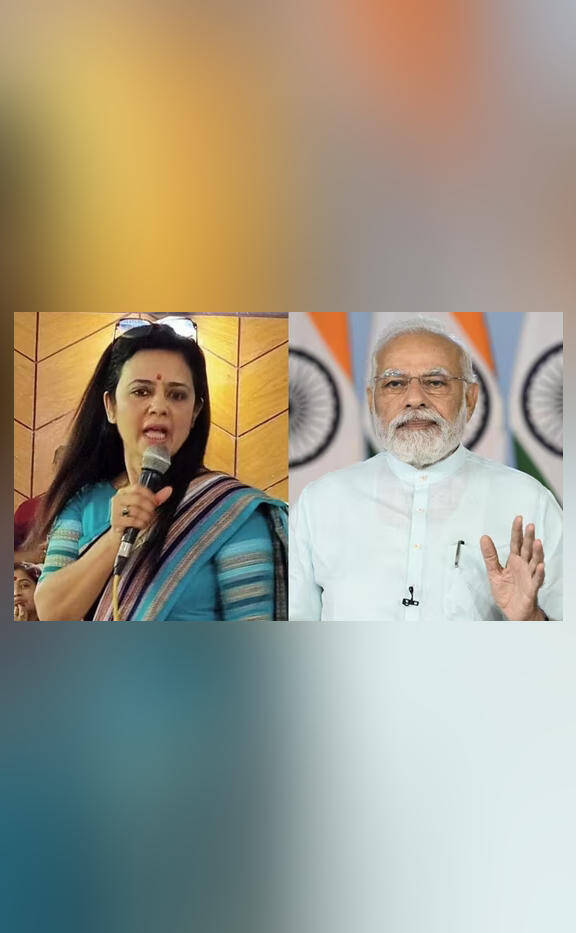
Mahua wrongly corrects PM Modi, calls Sarojini Bose ‘Sarojini Naidu’
In a recent address to the Parliament, Prime Minister Narendra Modi mentioned the courageous story of Sarojini Bose, who vowed not to wear her gold bangles until the ban on ‘Vande Mataram’ was lifted in the early 1900s. However, his statement was met with a misguided attempt at correction by TMC MP Mahua Moitra, who shouted, “Naidu, sir.” This incident has sparked a debate about the knowledge of historical figures among politicians and the importance of accuracy in public discourse.
For those who may not be familiar, ‘Vande Mataram’ is a patriotic song that was written by Bankim Chandra Chattopadhyay in 1870 and was a symbol of the Indian independence movement. The song was banned by the British colonial government, and it was during this time that Sarojini Bose made her courageous vow. Sarojini Bose was a prominent figure in the Indian independence movement, known for her bravery and dedication to the cause.
On the other hand, Sarojini Naidu was also a prominent figure in the Indian independence movement, but she was a different person altogether. Born in 1879, Sarojini Naidu was a poet, politician, and women’s rights activist. She was one of the first Indian women to become a part of the Indian National Congress and played a significant role in the country’s struggle for independence.
It is surprising that Mahua Moitra, a member of the Indian Parliament, would confuse these two historical figures. Her attempt to correct the Prime Minister was not only incorrect but also reflects a lack of knowledge about India’s rich history and the women who played a significant role in shaping it.
BJP’s Pradeep Bhandari was quick to point out Mahua Moitra’s mistake on X, saying, “She doesn’t know Bose and Naidu were two different women…she should pick up a book.” This statement highlights the importance of being well-informed and knowledgeable about historical figures and events. It is essential for public figures, especially those in positions of power, to be accurate and respectful when discussing historical events and figures.
This incident also raises questions about the state of historical education in India. If a member of the Parliament can confuse two prominent historical figures, it is likely that many others may also be unaware of the correct information. This lack of knowledge can have far-reaching consequences, as it can lead to the distortion of historical facts and the erosion of cultural heritage.
In recent years, there has been a growing concern about the lack of emphasis on historical education in India. Many historians and educators have argued that the current education system does not provide adequate attention to the country’s rich history and cultural heritage. This can lead to a lack of understanding and appreciation for the sacrifices made by historical figures like Sarojini Bose and Sarojini Naidu.
To address this issue, it is essential to revamp the education system to include a more comprehensive and accurate curriculum on Indian history. This can include incorporating stories of historical figures like Sarojini Bose and Sarojini Naidu, who played a significant role in shaping the country’s history.
In addition to education, it is also essential for public figures to be mindful of the information they share and to verify facts before speaking. This can help to prevent the spread of misinformation and ensure that historical events and figures are represented accurately.
In conclusion, the incident involving Mahua Moitra’s attempt to correct Prime Minister Modi highlights the importance of accuracy and knowledge in public discourse. It is essential for public figures to be well-informed and respectful when discussing historical events and figures. By promoting historical education and awareness, we can work towards creating a more informed and appreciative society that values its rich cultural heritage.
News source: https://x.com/pradip103/status/1997964203391410410
About the Author