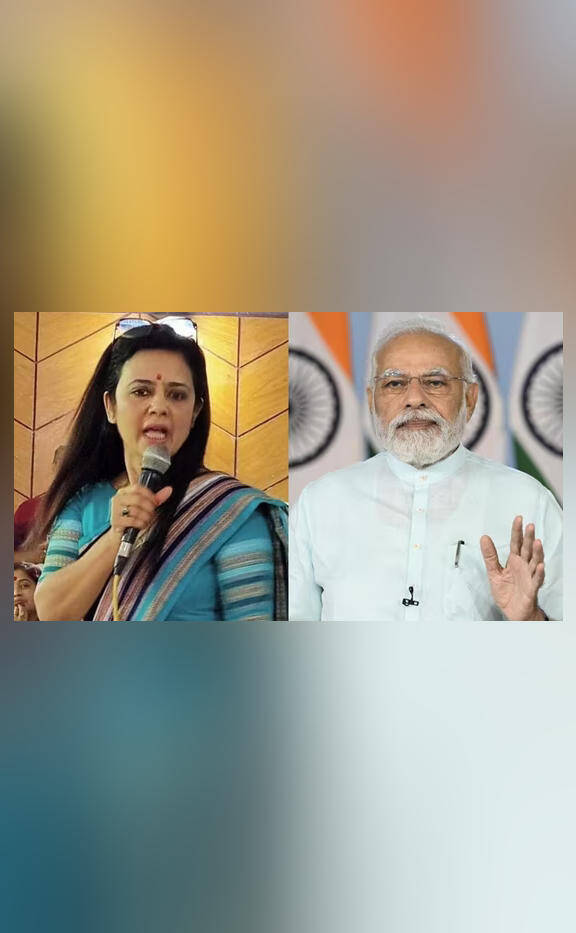
Mahua wrongly corrects PM Modi, calls Sarojini Bose ‘Sarojini Naidu’
In a recent address to the Parliament, Prime Minister Narendra Modi spoke about a significant event in Indian history, highlighting the bravery and determination of Sarojini Bose. He mentioned how she had vowed not to wear her gold bangles until the ban on ‘Vande Mataram’ was lifted in the early 1900s. However, his statement was met with an unexpected interruption from Trinamool Congress (TMC) MP Mahua Moitra, who attempted to correct the Prime Minister.
In a surprising display of historical ignorance, Mahua Moitra shouted, “Naidu, sir,” implying that the Prime Minister had gotten the name wrong. Her intention was to correct PM Modi, suggesting that he was referring to Sarojini Naidu, a prominent figure in the Indian independence movement. However, her correction was misplaced, and she ended up exposing her own lack of knowledge about two distinct women who played important roles in Indian history.
Sarojini Bose and Sarojini Naidu were indeed two different women, each with their own unique contributions to the country’s struggle for independence. While Sarojini Naidu was a renowned poet, politician, and women’s rights activist, Sarojini Bose was a freedom fighter and the wife of Subhas Chandra Bose, a prominent leader in the Indian independence movement.
BJP’s Pradeep Bhandari was quick to point out Mahua Moitra’s mistake on X, saying, “She doesn’t know Bose and Naidu were two different women…she should pick up a book.” His comment highlights the importance of being well-versed in history, especially for public figures who are expected to be knowledgeable about the country’s past.
The incident has sparked a debate about the need for politicians to be well-informed about historical events and figures. It is essential for leaders to have a deep understanding of the country’s history, as it shapes their perspective and decision-making. In this case, Mahua Moitra’s attempt to correct the Prime Minister not only showcased her own lack of knowledge but also undermined the significance of Sarojini Bose’s contribution to the Indian independence movement.
The early 1900s were a pivotal time in Indian history, marked by the Swadeshi movement and the struggle against British colonial rule. The ban on ‘Vande Mataram’ was a symbol of the British government’s attempt to suppress Indian nationalism, and Sarojini Bose’s vow not to wear her gold bangles until the ban was lifted was a powerful statement of defiance.
Sarojini Naidu, on the other hand, was a prominent figure in the Indian independence movement, known for her poetry and her advocacy for women’s rights. She was a close associate of Mahatma Gandhi and played a key role in the Quit India Movement. While both women were important figures in Indian history, they were distinct individuals with their own unique contributions.
The incident has also raised questions about the role of social media in highlighting historical inaccuracies. Pradeep Bhandari’s comment on X was widely shared, and it sparked a conversation about the importance of historical knowledge among politicians. Social media platforms have become an essential tool for fact-checking and correcting misinformation, and this incident is a prime example of how they can be used to promote historical accuracy.
In conclusion, Mahua Moitra’s attempt to correct Prime Minister Modi was a misguided effort that ended up exposing her own lack of knowledge about Indian history. The incident highlights the importance of being well-informed about historical events and figures, especially for public figures. It is essential for politicians to have a deep understanding of the country’s past, as it shapes their perspective and decision-making. As Pradeep Bhandari said, “She should pick up a book” and learn about the distinct contributions of Sarojini Bose and Sarojini Naidu.
News source: https://x.com/pradip103/status/1997964203391410410
About the Author