Look forward to welcome Brazil’s Prez Lula da Silva to India: PM Modi
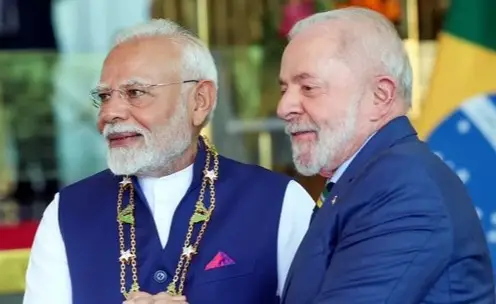
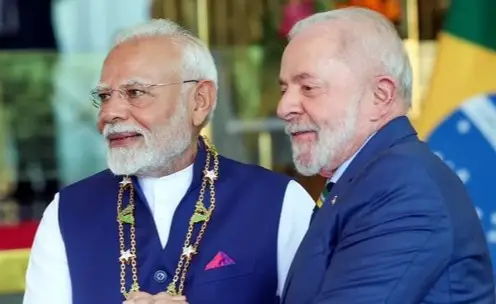
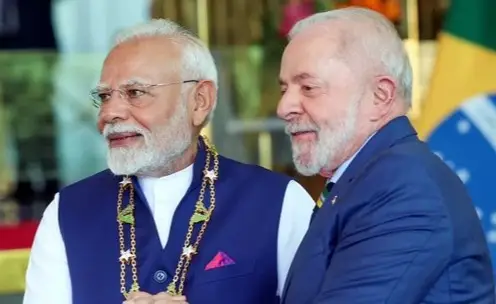
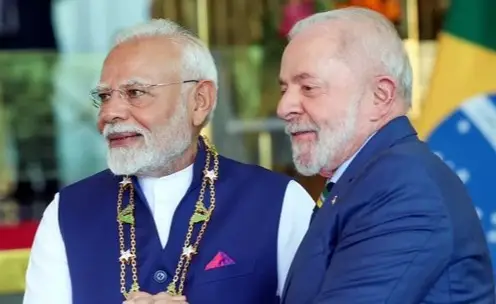
In a significant development, Prime Minister Narendra Modi spoke to Brazil’s President Luiz Inácio Lula da Silva on Thursday, expressing his enthusiasm to welcome the Brazilian leader to India. The conversation between the two leaders highlighted the strong momentum in the India-Brazil Strategic Partnership and underscored the importance of their close cooperation in advancing the shared interests of the Global South.
According to PM Modi, the discussion with President Lula da Silva reviewed the robust bilateral relations between India and Brazil, with a focus on strengthening their strategic partnership. “We reviewed the strong momentum in the India-Brazil Strategic Partnership…Our close cooperation is vital for advancing the shared interests of the Global South,” PM Modi said. This statement emphasizes the significance of the India-Brazil partnership in promoting the interests of emerging economies and developing nations.
The India-Brazil Strategic Partnership has been gaining momentum in recent years, with both countries collaborating on various sectors such as trade, investment, defense, and climate change. The partnership is built on the principles of mutual respect, trust, and cooperation, with a focus on promoting sustainable development, social justice, and human rights.
Both India and Brazil are facing tariff-related tensions with the United States, which has created a sense of urgency for the two countries to strengthen their bilateral ties. The US has imposed tariffs on certain Indian and Brazilian products, citing concerns over trade deficits and intellectual property rights. In response, India and Brazil have been exploring ways to diversify their trade relationships and reduce their dependence on the US market.
The conversation between PM Modi and President Lula da Silva assumes significance in this context, as it highlights the need for India and Brazil to work together to address common challenges and promote their shared interests. By strengthening their strategic partnership, India and Brazil can leverage each other’s strengths and expertise to drive economic growth, promote social development, and enhance their global influence.
The India-Brazil partnership has significant potential for cooperation in areas such as agriculture, energy, and infrastructure development. Brazil is a major producer of soybeans, sugarcane, and beef, while India is a significant producer of textiles, pharmaceuticals, and automotive components. By promoting trade and investment in these sectors, India and Brazil can create new opportunities for economic growth and job creation.
In addition to economic cooperation, India and Brazil are also collaborating on defense and security issues. The two countries have been engaged in joint military exercises and have signed agreements on defense cooperation, including the production of defense equipment and the sharing of military technology.
The visit of President Lula da Silva to India is expected to further strengthen the bilateral relations between the two countries. PM Modi’s invitation to the Brazilian leader reflects the importance that India attaches to its relationship with Brazil, which is a key player in the Latin American region. The visit is likely to focus on issues such as trade, investment, defense cooperation, and climate change, with a emphasis on promoting sustainable development and social justice.
In conclusion, the conversation between PM Modi and President Lula da Silva highlights the strong momentum in the India-Brazil Strategic Partnership and the importance of their close cooperation in advancing the shared interests of the Global South. As India and Brazil prepare to welcome President Lula da Silva to India, there is a sense of optimism and excitement about the potential for deeper cooperation and collaboration between the two countries. By working together, India and Brazil can promote economic growth, social development, and environmental sustainability, and contribute to a more just and equitable world order.
About the Author