Kharge stopped from quoting book in Rajya Sabha, Opp’n walks out
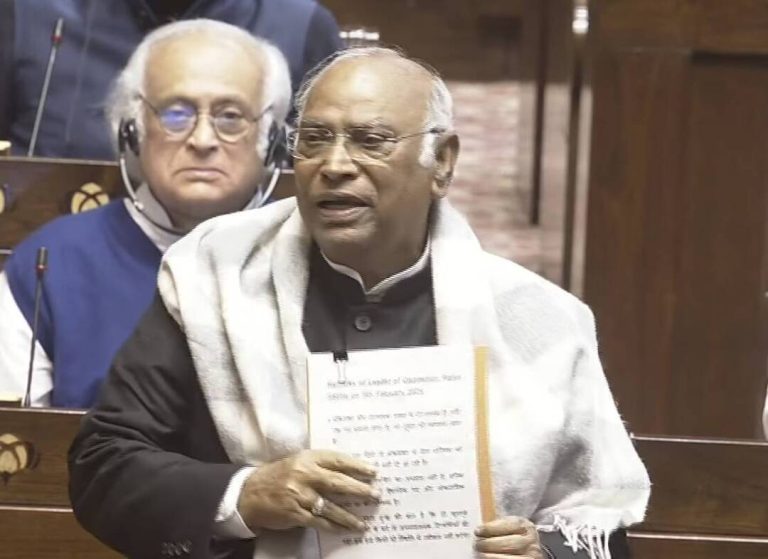
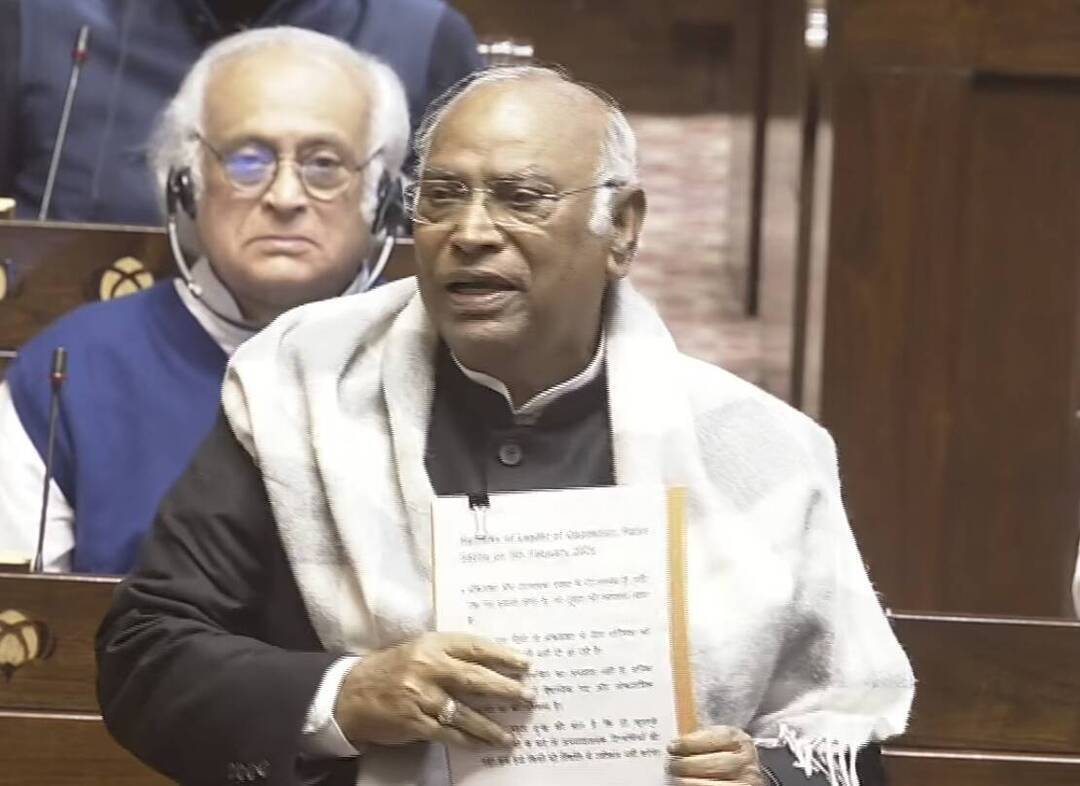
The Indian Parliament has once again been at the center of controversy, with the latest incident involving Congress MP Mallikarjun Kharge being stopped from quoting an unpublished memoir by former Army Chief General Manoj Mukund Naravane in the Rajya Sabha. This incident led to a walkout by Opposition MPs, who were protesting against the restriction on quoting the book.
The controversy began when Congress MP Rahul Gandhi was not allowed to quote the same book in the Lok Sabha. Kharge, who is also the Leader of Opposition in the Rajya Sabha, raised this issue in the Upper House, questioning the reasoning behind not allowing Gandhi to quote from the book. However, before he could proceed further, Rajya Sabha Chairman CP Radhakrishnan intervened and stopped him from quoting the book.
The unpublished memoir by General Naravane has been making headlines in recent days, with several MPs attempting to quote from it in both the Lok Sabha and the Rajya Sabha. However, the government has been resistant to allowing quotes from the book, citing that it is unpublished and therefore cannot be used as a reference in parliamentary debates.
The Opposition, however, has been arguing that the book is relevant to several important issues being discussed in the Parliament, including national security and defense. By not allowing MPs to quote from the book, the government is attempting to stifle debate and discussion on these critical issues, the Opposition claims.
The walkout by Opposition MPs is a clear indication of their frustration and disappointment with the government’s stance on this issue. The Opposition has been accusing the government of trying to suppress dissenting voices and restricting the freedom of speech in the Parliament. The incident involving Kharge and the unpublished memoir is seen as another example of this trend.
The role of the Chairman of the Rajya Sabha has also come under scrutiny in this incident. While the Chairman has the authority to regulate the proceedings of the House, the Opposition has questioned whether he has the power to restrict MPs from quoting from a particular book. The Opposition has argued that the Chairman’s decision to stop Kharge from quoting the book was arbitrary and unfair.
The incident has also raised questions about the relevance of parliamentary rules and procedures in the modern era. With the increasing use of social media and other digital platforms, the traditional rules of parliamentary debate may need to be re-examined. The fact that an unpublished memoir can become a point of contention in the Parliament highlights the need for a more nuanced approach to regulating parliamentary debates.
In recent years, the Indian Parliament has been witnessing increased polarization and confrontation between the government and the Opposition. The incident involving Kharge and the unpublished memoir is just the latest example of this trend. The Opposition has been accusing the government of trying to undermine democratic institutions and stifle dissent, while the government has been arguing that the Opposition is trying to disrupt parliamentary proceedings.
As the Parliament continues to debate and discuss critical issues, the role of the Opposition in holding the government accountable will be crucial. The incident involving Kharge and the unpublished memoir highlights the importance of a free and fair debate in the Parliament, where MPs are allowed to express their views and opinions without restriction.
In conclusion, the incident involving Kharge and the unpublished memoir by General Naravane has highlighted the ongoing tensions between the government and the Opposition in the Indian Parliament. The walkout by Opposition MPs is a clear indication of their frustration and disappointment with the government’s stance on this issue. As the Parliament continues to debate and discuss critical issues, it is essential that MPs are allowed to express their views and opinions freely, without restriction.
The government must reconsider its stance on this issue and allow MPs to quote from the unpublished memoir, if it is relevant to the debate. The Opposition must also ensure that they are not disrupting parliamentary proceedings, but rather engaging in a constructive and meaningful debate. Ultimately, the Indian Parliament must remain a platform for free and fair debate, where all MPs are allowed to express their views and opinions without fear of restriction or retribution.
News Source: https://x.com/PTI_News/status/2019299438746091906
About the Author