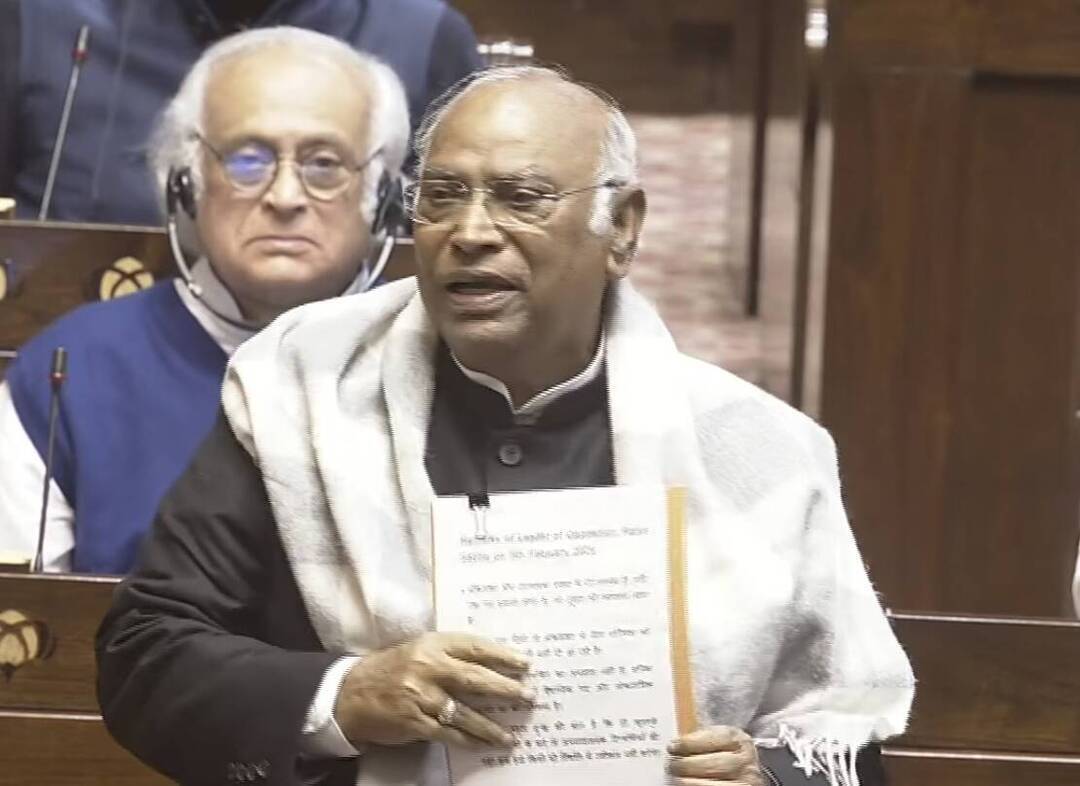
Kharge stopped from quoting book in Rajya Sabha, Opp’n walks out
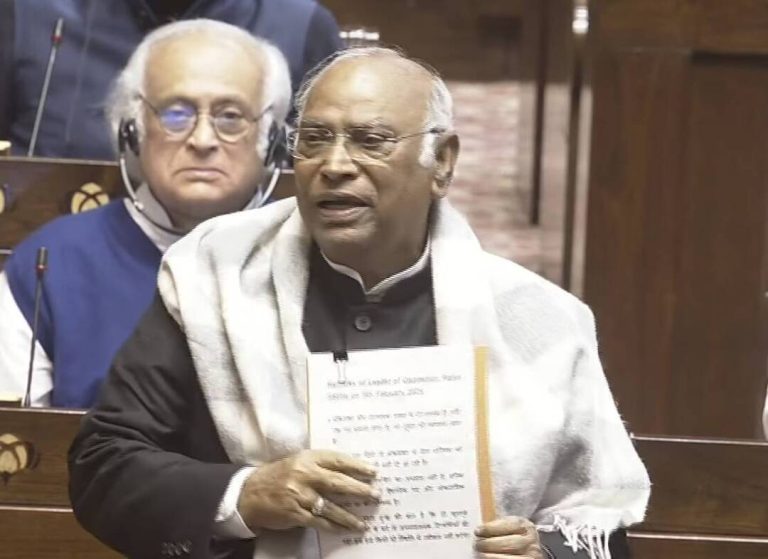
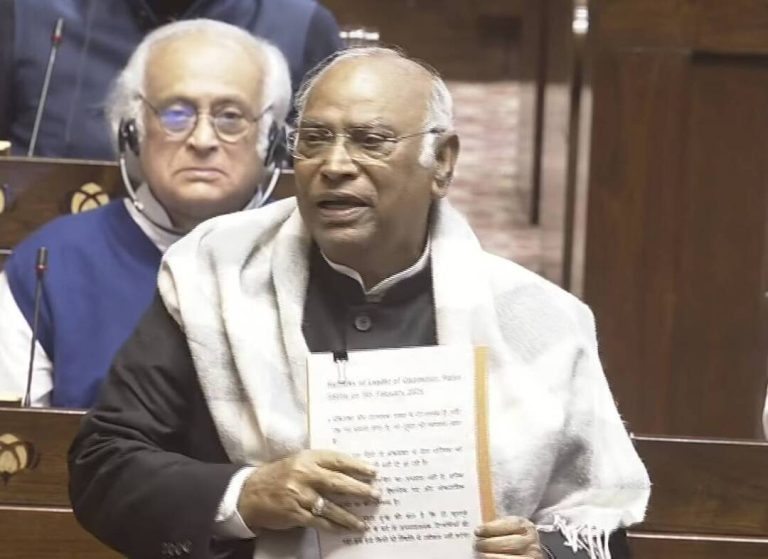
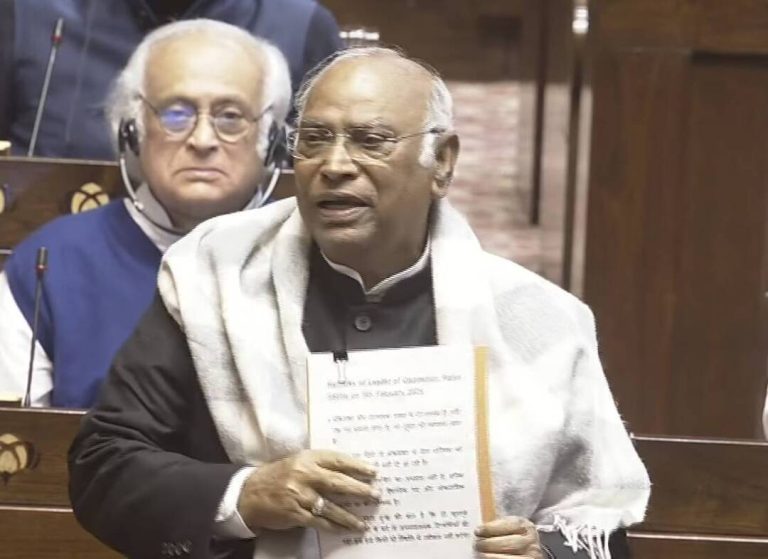
In a dramatic turn of events, Congress MP Mallikarjun Kharge was stopped from quoting an unpublished memoir by former Army Chief General Manoj Mukund Naravane in the Rajya Sabha. This incident led to a walkout by Opposition MPs, who were protesting against the restriction imposed on Kharge. The controversy began when Kharge raised the issue of Congress MP Rahul Gandhi not being allowed to quote the same book in the Lok Sabha.
The unpublished memoir, written by General Naravane, has been making headlines in recent days, with several MPs attempting to quote from it in both the Lok Sabha and the Rajya Sabha. However, the government has been adamant that the book cannot be quoted, as it is still unpublished and has not been officially released. This has led to a standoff between the government and the Opposition, with the latter accusing the former of trying to suppress crucial information.
Kharge, who is a senior Congress leader, attempted to quote from the book during a discussion in the Rajya Sabha. However, he was stopped by Rajya Sabha Chairman CP Radhakrishnan, who cited the rule that only published works can be quoted in the House. Kharge argued that the book was relevant to the discussion and that the government was trying to hide something by not allowing it to be quoted.
Despite Kharge’s protests, the Chairman refused to budge, leading to a heated exchange between the two. The Opposition MPs, who were supporting Kharge, then decided to stage a walkout in protest against the restriction. The walkout was led by Kharge himself, who was joined by other senior Opposition leaders.
The incident has sparked a major controversy, with the Opposition accusing the government of trying to suppress freedom of speech in Parliament. The Congress party has been particularly vocal in its criticism, with several leaders condemning the government’s actions. “This is a clear attempt to muzzle the Opposition and prevent us from raising important issues,” said a Congress spokesperson.
The government, on the other hand, has defended its actions, saying that the rule about quoting only published works is a long-standing one. “The rule is clear, and it applies to all MPs,” said a government spokesperson. “We cannot allow unpublished works to be quoted in Parliament, as it could lead to misinformation and chaos.”
The incident has also raised questions about the role of the Chairman in regulating debates in the Rajya Sabha. While the Chairman has the power to regulate the debate and enforce the rules, the Opposition has accused him of being biased towards the government. “The Chairman should be impartial and allow MPs to raise important issues,” said an Opposition leader.
The controversy surrounding the unpublished memoir has also highlighted the issue of censorship in India. The government has been accused of trying to suppress information and prevent critical voices from being heard. The incident has sparked a wider debate about the role of the government in regulating free speech and the importance of protecting freedom of expression.
In conclusion, the incident in the Rajya Sabha highlights the ongoing tensions between the government and the Opposition. The restriction on quoting the unpublished memoir has sparked a major controversy, with the Opposition accusing the government of trying to suppress freedom of speech. The incident has also raised questions about the role of the Chairman and the importance of protecting freedom of expression. As the debate continues, it remains to be seen how the government will respond to the Opposition’s demands and whether the unpublished memoir will be allowed to be quoted in Parliament.
The incident has also sparked a wider debate about the role of the media in reporting on such controversies. The media has a crucial role to play in highlighting the issues and holding those in power accountable. In this case, the media has been quick to report on the incident and provide analysis and commentary.
The Opposition’s walkout has also been seen as a strategic move to put pressure on the government. By walking out, the Opposition is able to draw attention to the issue and put the government on the back foot. The government, on the other hand, will have to respond to the Opposition’s demands and provide a justification for its actions.
As the controversy continues to unfold, it remains to be seen how the government will respond to the Opposition’s demands. The incident has highlighted the importance of freedom of speech and the need for the government to be transparent and accountable. The media will continue to play a crucial role in reporting on the controversy and providing analysis and commentary.
News source: https://x.com/PTI_News/status/2019299438746091906
About the Author