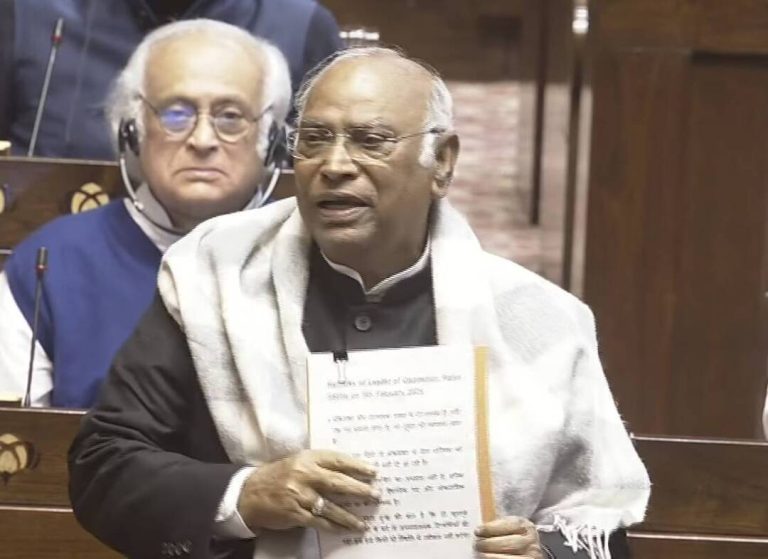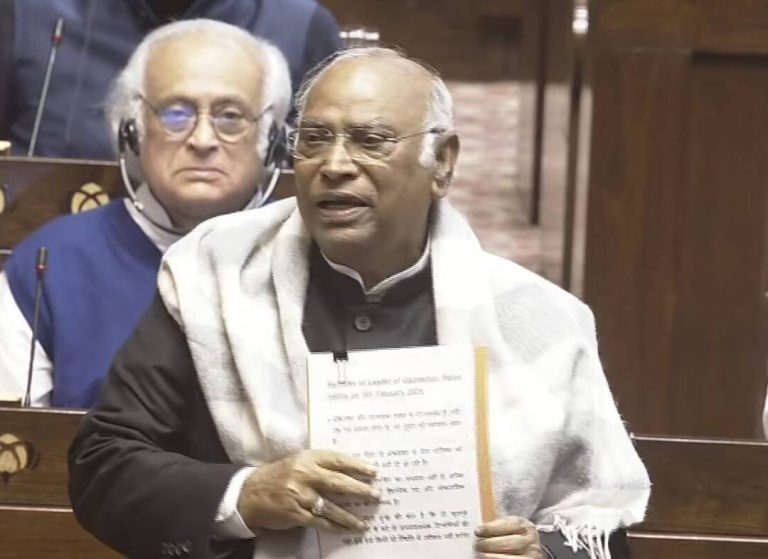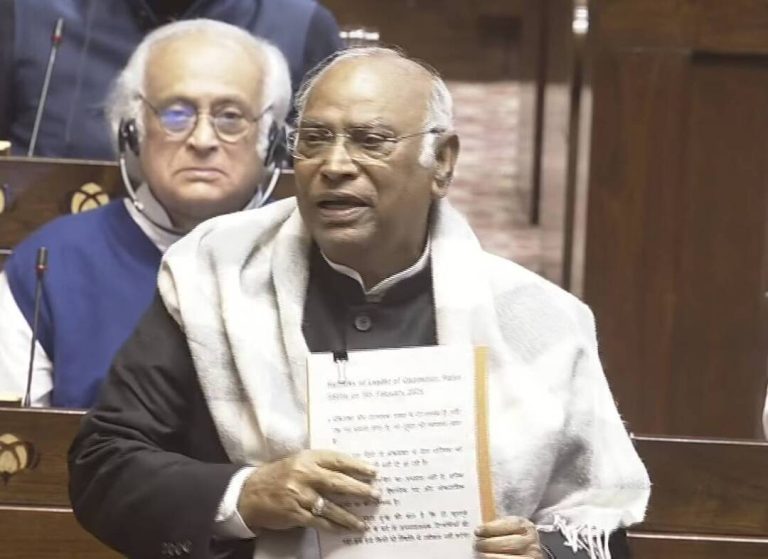
Kharge stopped from quoting book in Rajya Sabha, Opp’n walks out
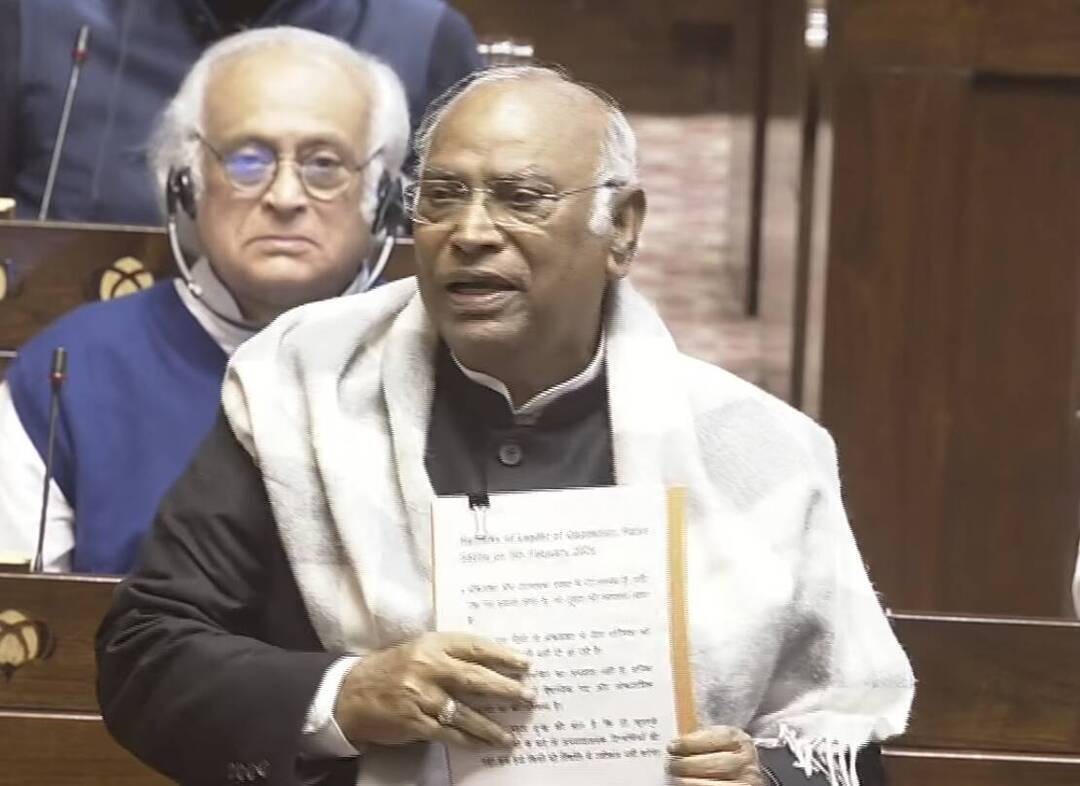
The Indian Parliament has been witnessing a series of dramatic events in recent times, with the latest incident sparking a major controversy. On a day marked by intense debates and discussions, Congress MP Mallikarjun Kharge was stopped from quoting an unpublished memoir by former Army Chief General Manoj Mukund Naravane in the Rajya Sabha. This incident led to a walkout by the Opposition MPs, who expressed their strong disagreement with the decision.
The controversy began when Kharge raised the issue of Congress MP Rahul Gandhi not being allowed to quote the same book in the Lok Sabha. Kharge, who is a senior leader of the Congress party, wanted to bring attention to the fact that Gandhi was not permitted to reference the book in the lower house of Parliament. However, his attempts to do so were thwarted by Rajya Sabha Chairman CP Radhakrishnan, who stopped him from quoting the book.
The unpublished memoir by General Naravane has been making headlines in recent times, with many speculating about its contents. The book is expected to provide a unique insight into the workings of the Indian Army and the country’s defense establishment. However, the fact that it is still unpublished has raised questions about its authenticity and the motivations behind its release.
Kharge’s attempt to quote the book was seen as an attempt to highlight the inconsistencies in the government’s approach to freedom of speech and expression. The Congress MP argued that if Rahul Gandhi was not allowed to quote the book in the Lok Sabha, then it was only fair that he be allowed to do so in the Rajya Sabha. However, the Chairman’s decision to stop him sparked a heated debate, with the Opposition MPs staging a walkout in protest.
The walkout was led by the Congress party, with other Opposition parties such as the Trinamool Congress and the DMK also joining in. The MPs expressed their strong disagreement with the Chairman’s decision, arguing that it was an attempt to stifle freedom of speech and expression. The incident has sparked a major controversy, with many questioning the government’s commitment to democratic values and principles.
The incident has also raised questions about the role of the Parliament in promoting freedom of speech and expression. The Indian Constitution guarantees the right to freedom of speech and expression, but the incident has highlighted the challenges in implementing this right in practice. The Parliament is expected to be a platform where MPs can express their views and opinions freely, but the incident has shown that there are still many restrictions and limitations in place.
The controversy has also sparked a debate about the role of the Chairman in regulating the proceedings of the Rajya Sabha. The Chairman is expected to be impartial and neutral, but the incident has raised questions about his bias and partiality. The Opposition MPs have argued that the Chairman’s decision to stop Kharge from quoting the book was motivated by a desire to protect the government’s interests.
In conclusion, the incident has highlighted the challenges and complexities of promoting freedom of speech and expression in the Indian Parliament. The controversy has sparked a major debate about the role of the Parliament, the Chairman, and the government in regulating freedom of speech and expression. As the country moves forward, it is essential to ensure that the Parliament remains a platform where MPs can express their views and opinions freely, without fear of censorship or retribution.
The incident has also raised questions about the government’s commitment to democratic values and principles. The government must ensure that the Parliament remains a platform where freedom of speech and expression is promoted and protected. The Opposition MPs have a crucial role to play in holding the government accountable and ensuring that the Parliament remains a vibrant and dynamic institution.
As the controversy continues to unfold, it is essential to remember that the Parliament is a sacred institution that represents the will of the people. The MPs have a responsibility to uphold the dignity and integrity of the Parliament, and to ensure that it remains a platform where freedom of speech and expression is promoted and protected. The incident has highlighted the challenges and complexities of promoting democratic values and principles, but it has also shown that the Parliament remains a vital and essential institution in Indian democracy.
News source: https://x.com/PTI_News/status/2019299438746091906
About the Author