It hurts me: Rekha on AAP’s memes targeting her over verbal slips
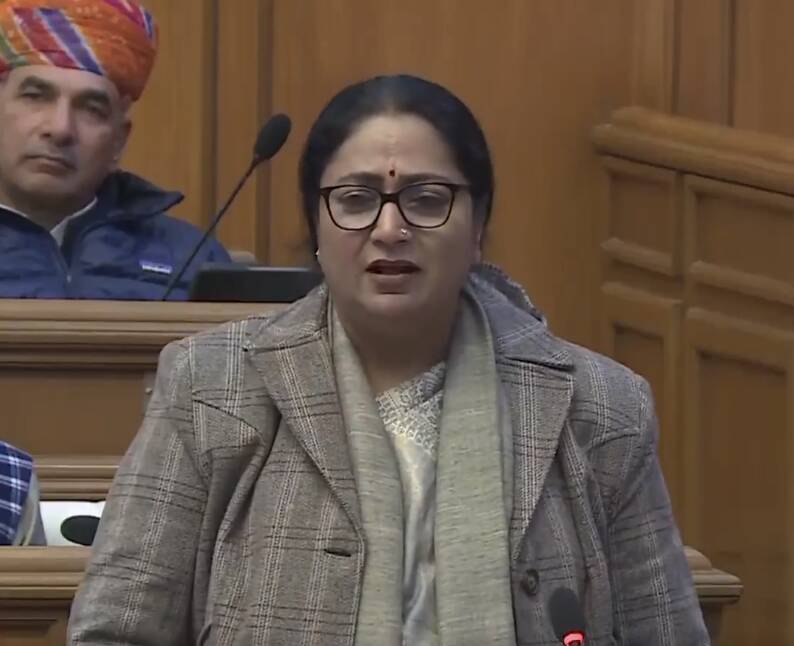
In a recent statement, Delhi Chief Minister Rekha Gupta expressed her disappointment and hurt over the constant mocking and meme-making by the Aam Aadmi Party (AAP) regarding her verbal slips. The Chief Minister stated that she feels deeply hurt when a word slips from her mouth by mistake, and the AAP makes memes on it and mocks her. This reaction from the Delhi CM has sparked a debate about the limits of political criticism and the impact of social media on public discourse.
Rekha Gupta, known for her straightforward and honest approach to politics, has been a subject of AAP’s criticism and mockery for some time now. The AAP, which has been a strong opposition to the Delhi government, has been using social media platforms to highlight the Chief Minister’s verbal slips and mistakes. However, Rekha Gupta feels that this approach is not only unbecoming but also hurtful.
The Chief Minister specifically mentioned two instances where she was mocked by the AAP for her verbal slips. In one instance, she mispronounced AQI (Air Quality Index) as “AIQ,” and in another instance, she accidentally said “Congress” instead of “British” during a speech. These mistakes, although minor, were quickly picked up by the AAP and turned into memes and jokes on social media.
Rekha Gupta expressed her disappointment over the fact that the AAP is more focused on mocking her mistakes rather than engaging in constructive criticism or debate. She stated that as a public figure, she is not immune to making mistakes, but she expects a certain level of respect and dignity from her opponents. The Chief Minister feels that the constant mocking and meme-making is not only hurtful but also undermines the dignity of the office she holds.
The use of social media to mock and criticize politicians is not new, and it has become a common practice in Indian politics. However, the question remains whether this approach is effective in engaging with the public and addressing the real issues. While social media can be a powerful tool for political parties to connect with their constituents and raise awareness about important issues, it can also be used to spread misinformation and personalize attacks.
In the case of Rekha Gupta, the AAP’s approach to mocking her verbal slips has raised questions about the limits of political criticism. While it is understandable that the opposition party would want to highlight the Chief Minister’s mistakes, the constant mocking and meme-making can be seen as unbecoming and hurtful. It is essential for political parties to maintain a level of dignity and respect in their criticism, even if they disagree with their opponents.
The impact of social media on public discourse is also a significant concern. Social media platforms can amplify even the smallest mistakes, making them seem more significant than they actually are. This can create a culture of mockery and ridicule, where politicians are more focused on avoiding mistakes rather than engaging in meaningful discussions. It is essential for politicians and the public to be aware of the potential risks of social media and to use these platforms responsibly.
In conclusion, the statement by Delhi Chief Minister Rekha Gupta highlights the need for a more constructive and respectful approach to political criticism. While it is understandable that the AAP would want to highlight the Chief Minister’s mistakes, the constant mocking and meme-making can be seen as hurtful and unbecoming. It is essential for political parties to maintain a level of dignity and respect in their criticism, even if they disagree with their opponents. By doing so, they can engage in meaningful discussions and address the real issues that matter to the public.
As the debate surrounding the AAP’s approach to mocking Rekha Gupta’s verbal slips continues, it is essential to remember that politicians are human beings who can make mistakes. Rather than amplifying these mistakes, it is crucial to focus on the issues that matter and to engage in constructive criticism. By doing so, we can create a more respectful and dignified public discourse, where politicians can engage in meaningful discussions without fear of being mocked or ridiculed.
About the Author