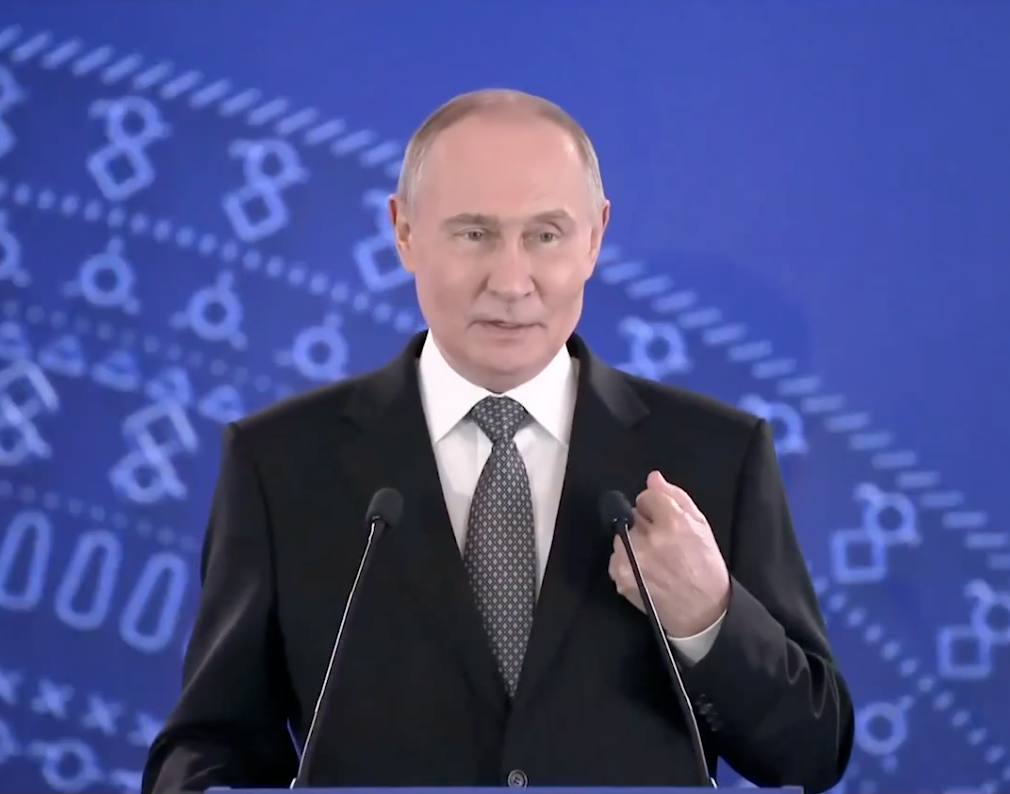
India changed since Raj Kapoor’s era but friendship remains: Putin
The world has witnessed significant transformations over the years, and one of the most notable changes has been the rapid growth and development of India. From a struggling economy to a thriving nation, India has come a long way since the era of the legendary filmmaker Raj Kapoor. Recently, Russian President Vladimir Putin, during his visit to India, highlighted the enduring friendship between the two nations, invoking Raj Kapoor’s legacy to emphasize the strength of their bond.
Putin’s statement, “India’s economy has changed dramatically since Raj Kapoor’s era, but one thing has remained constant: friendship and shared commitment to cooperation,” resonated deeply with the Indian audience. The Russian President’s words not only acknowledged the significant economic progress India has made but also underscored the importance of the friendship between the two nations. This friendship, which has been a cornerstone of their relationship for decades, has withstood the test of time and has continued to flourish despite the changing global landscape.
Raj Kapoor, often referred to as the “Clark Gable of the Indian film industry,” was a cinematic legend who left an indelible mark on Indian cinema. His films, such as ‘Awaara’ (1951), ‘Shree 420’ (1955), and ‘Mera Naam Joker’ (1970), were not only immensely popular in India but also gained a massive following in the USSR. The Soviet Union, as it was known then, had a deep appreciation for Indian cinema, and Raj Kapoor’s films were among the most beloved and widely watched.
The popularity of Raj Kapoor’s films in the USSR can be attributed to their universal themes, which transcended cultural and linguistic barriers. His movies often dealt with issues of social justice, equality, and the struggles of the common man, resonating deeply with the Soviet audience. The USSR’s appreciation for Indian cinema was not limited to Raj Kapoor’s films alone; other Indian filmmakers, such as Satyajit Ray and Mrinal Sen, also gained recognition and acclaim in the Soviet Union.
The friendship between India and the USSR, which has continued to grow and strengthen over the years, has been built on a foundation of mutual respect, trust, and cooperation. The two nations have collaborated on various fronts, including trade, defense, space exploration, and culture. The Soviet Union, and later Russia, has been a significant partner for India, providing critical support and assistance in various fields.
One of the most notable examples of Indo-Soviet cooperation is in the field of space exploration. The USSR played a crucial role in helping India develop its space program, and the two nations collaborated on several projects, including the launch of India’s first satellite, Aryabhata, in 1975. This cooperation has continued to the present day, with Russia remaining a key partner for India in its space endeavors.
In addition to cooperation in space exploration, India and Russia have also collaborated on defense projects. The two nations have a long history of defense cooperation, with Russia being one of India’s largest suppliers of defense equipment. The Soviet Union, and later Russia, has provided India with critical military hardware, including fighter jets, submarines, and tanks.
The cultural exchange between India and the USSR, which began in the 1950s and 1960s, has also played a significant role in strengthening the bond between the two nations. Indian artists, writers, and musicians have been widely acclaimed in the Soviet Union, and Soviet cultural troupes have performed in India to great applause. This cultural exchange has helped to promote mutual understanding and appreciation between the two nations, fostering a sense of friendship and cooperation.
In recent years, India and Russia have continued to deepen their cooperation, with a focus on trade, energy, and defense. The two nations have set a target of increasing their bilateral trade to $30 billion by 2025, and have identified areas such as pharmaceuticals, IT, and agriculture as potential sectors for cooperation. Russia has also emerged as a significant partner for India in the energy sector, with the two nations collaborating on projects such as the Sakhalin-1 oil and gas field.
In conclusion, the friendship between India and Russia has remained a constant in an ever-changing world. Despite the significant economic and political transformations that have taken place since Raj Kapoor’s era, the bond between the two nations has continued to grow and strengthen. As Putin noted, “India’s economy has changed dramatically since Raj Kapoor’s era, but one thing has remained constant: friendship and shared commitment to cooperation.” This enduring friendship, built on a foundation of mutual respect, trust, and cooperation, will continue to play a vital role in shaping the future of Indo-Russian relations.
News Source: https://x.com/DDNewslive/status/1997262500354744821
About the Author