Gogoi says can’t drive at 130km/h due to bad roads, Gadkari reacts
The condition of roads in India has been a topic of discussion for a long time. While the government has been investing heavily in infrastructure development, the quality of roads remains a major concern. Recently, Congress leader Gaurav Gogoi highlighted the poor condition of roads in Assam, stating that people are unable to drive at speeds of 100-130km/h due to the bad condition of the roads. This statement has sparked a reaction from Union Minister Nitin Gadkari, who acknowledged the issue and promised to address it.
Gogoi’s statement came as a response to the deplorable condition of National Highway 37 (NH-37) in Assam, which connects Jorhat to Dibrugarh. According to Gogoi, the road is in a “bad state” and people are being forced to pay tolls without getting quality roads in return. This is a concern that resonates with many citizens who travel on this route regularly. The poor condition of the road not only causes inconvenience but also poses a risk to the safety of drivers and passengers.
Gogoi’s statement is not an isolated incident, as many parts of the country are plagued by poor road conditions. The lack of maintenance and inadequate infrastructure have led to a situation where driving at high speeds is not only impossible but also dangerous. The government’s efforts to improve the road network have been slow, and the results are yet to be seen. The fact that people are paying tolls without getting quality roads in return is a clear indication of the mismatch between the government’s promises and the reality on the ground.
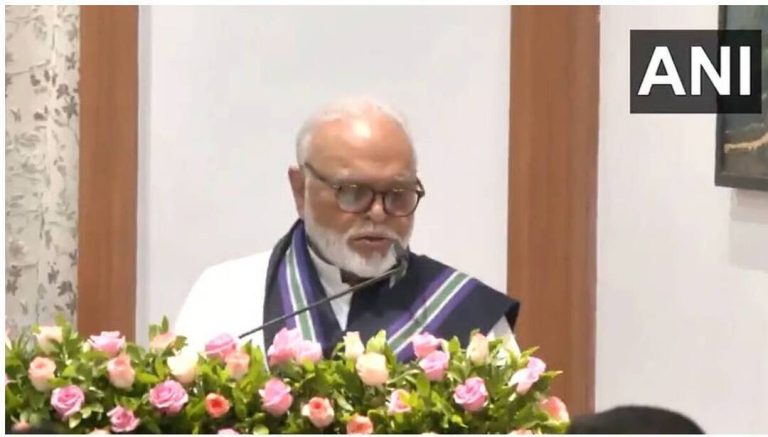
Union Minister Nitin Gadkari’s response to Gogoi’s statement is a welcome acknowledgment of the issue. Gadkari stated that the road was damaged after the rains and that it will be restored to its original condition within six months. While this is a positive assurance, it is essential to ensure that the government follows through on its promises and delivers on its commitments. The people of Assam, and indeed the entire country, deserve better roads and infrastructure that can support high-speed travel.
The issue of poor road conditions is not limited to Assam or NH-37. Many parts of the country are struggling with similar problems, and it is essential to address these issues on a war footing. The government needs to invest in modernizing the road network, improving maintenance, and ensuring that citizens get quality roads in return for the tolls they pay. This is not only a matter of convenience but also a critical aspect of economic development and growth.
In recent years, the government has launched several initiatives to improve the road network, including the Bharatmala Pariyojana, which aims to develop a network of highways and roads across the country. While these initiatives are welcome, it is essential to ensure that they are implemented effectively and that the results are visible on the ground. The government needs to work with state governments, local authorities, and other stakeholders to ensure that the road network is developed and maintained in a manner that supports high-speed travel and economic growth.
In conclusion, Gogoi’s statement and Gadkari’s response highlight the critical issue of poor road conditions in India. While the government has acknowledged the problem and promised to address it, it is essential to ensure that these promises are kept and that citizens get quality roads in return for the tolls they pay. The development of a modern road network is critical for economic growth, and it is essential to invest in this sector to support high-speed travel and connectivity. As the government works to address the issue of poor road conditions, it is essential to keep the citizens informed and involved in the process to ensure that their concerns are heard and addressed.
Source: https://x.com/OfficeOfNG/status/1996489566979817577
About the Author