Gogoi says can’t drive at 130km/h due to bad roads, Gadkari reacts
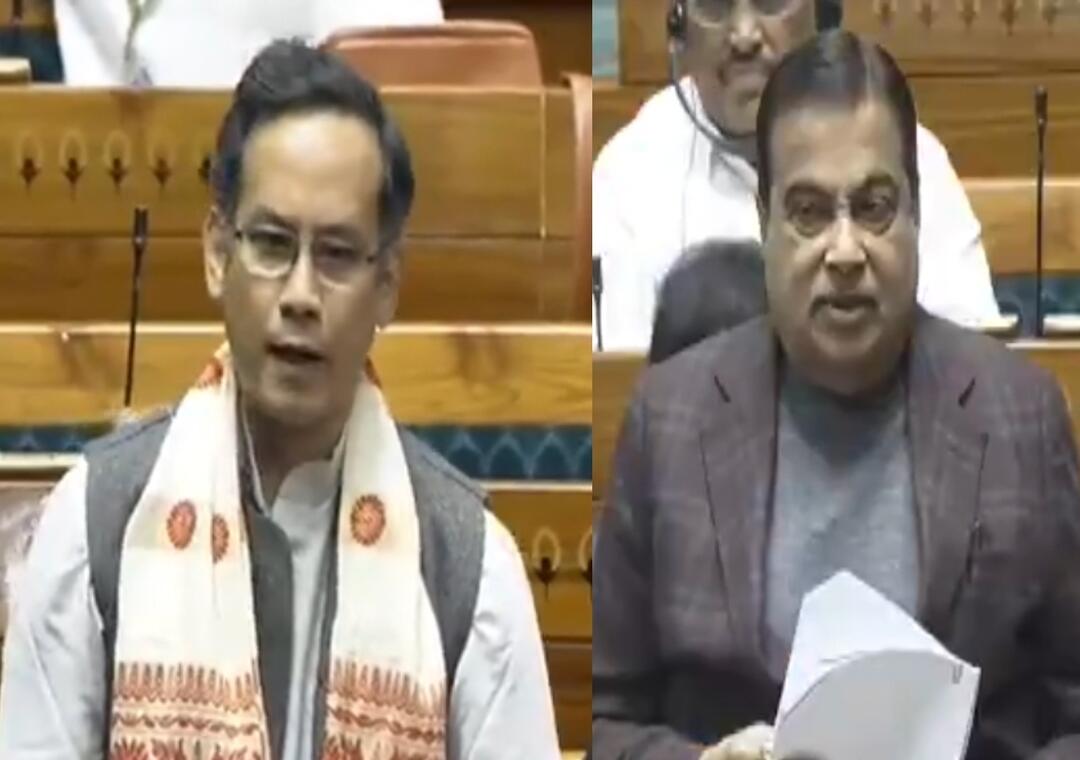
The condition of roads in India has long been a topic of discussion, with many citizens expressing frustration over the poor state of infrastructure. Recently, Congress leader Gaurav Gogoi highlighted the issue of bad roads in Assam, stating that people are unable to drive at speeds of 100-130km/h due to the poor condition of the roads. Gogoi’s comments sparked a reaction from Union Minister Nitin Gadkari, who acknowledged the problem and promised that the situation would improve in the near future.
Gogoi’s comments were specifically directed at the condition of National Highway 37 (NH-37) in Assam, which connects Jorhat to Dibrugarh. He stated that the road is in a “bad state,” making it difficult for people to drive safely. The Congress leader also pointed out that people are paying tolls to use the roads, but are not receiving the quality of infrastructure that they deserve. This is a common complaint among Indian citizens, who often feel that they are being forced to pay for subpar services.
The issue of bad roads is not limited to Assam, but is a widespread problem across India. Many of the country’s roads are in disrepair, with potholes, cracks, and other hazards making it difficult for people to drive safely. This is not only a nuisance, but also a serious safety concern, as accidents caused by bad roads can be devastating. According to statistics, a significant number of road accidents in India are caused by poor road conditions, resulting in loss of life and property.
Gogoi’s comments were likely motivated by a desire to highlight the need for improved infrastructure in Assam and across India. By pointing out the poor state of the roads, he is hoping to put pressure on the government to take action and invest in improving the country’s infrastructure. This is a critical issue, as good roads are essential for economic development, public safety, and quality of life.
In response to Gogoi’s comments, Union Minister Nitin Gadkari acknowledged that the road in question was indeed in a bad state. However, he explained that the damage was caused by recent rains and that the situation would improve in six months. Gadkari’s response is likely to be seen as a positive development, as it suggests that the government is aware of the problem and is taking steps to address it.
Gadkari’s promise to improve the road in six months is ambitious, but it is unclear whether it is realistic. The process of repairing and maintaining roads is complex and time-consuming, and it often requires significant resources and investment. However, if the government is able to follow through on its promises, it could have a major impact on the lives of people in Assam and across India.
The issue of bad roads is not just a matter of convenience, but also has significant economic implications. Good roads are essential for the transportation of goods and people, and are critical for the development of industries such as logistics and tourism. In addition, good roads can also help to reduce traffic congestion, air pollution, and other negative externalities associated with poor infrastructure.
In conclusion, the issue of bad roads in India is a serious one that requires immediate attention. Gaurav Gogoi’s comments highlighting the poor state of roads in Assam are a reminder that this is a widespread problem that affects people across the country. The response from Union Minister Nitin Gadkari is a positive development, but it remains to be seen whether the government will be able to follow through on its promises. As the country continues to grow and develop, it is essential that the government prioritizes the improvement of its infrastructure, including its roads.
The government must take a multi-faceted approach to addressing the issue of bad roads, including increasing investment in road maintenance and repair, improving the quality of road construction, and enhancing the overall efficiency of the transportation system. This will require coordination and cooperation among different government agencies, as well as with private sector stakeholders.
Ultimately, the improvement of India’s roads will require a sustained effort and commitment from the government and other stakeholders. It is a complex and challenging task, but it is essential for the country’s economic development, public safety, and quality of life. As Gogoi and Gadkari’s exchange highlights, this is an issue that affects people across the country, and it is one that requires immediate attention and action.
News source: https://x.com/OfficeOfNG/status/1996489566979817577
About the Author