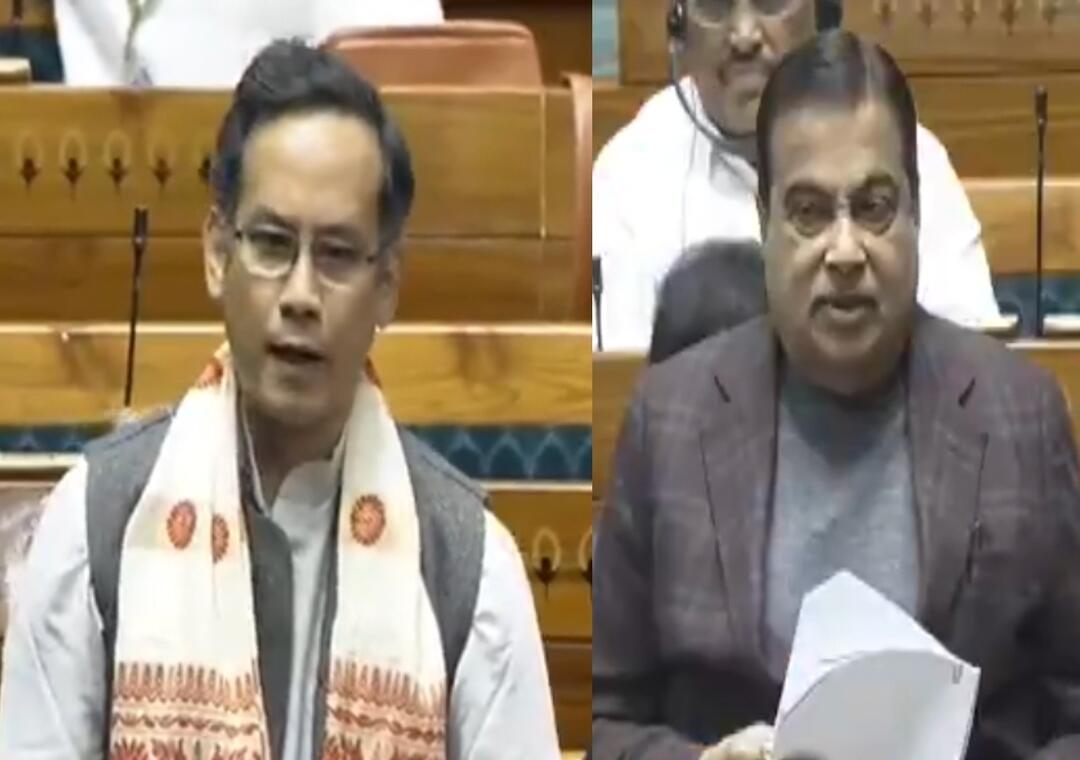
Gogoi says can’t drive at 130km/h due to bad roads, Gadkari reacts
The state of roads in India has been a topic of discussion for a long time. While the government has been working towards improving the road infrastructure, there are still many areas where the condition of roads is deplorable. Recently, Congress leader Gaurav Gogoi highlighted the poor condition of roads in Assam, stating that people are unable to drive at speeds of 100-130km/h due to the bad roads. This statement has sparked a reaction from Union Minister Nitin Gadkari, who acknowledged the issue and promised that it will be resolved soon.
Gogoi’s statement came as a response to the poor condition of National Highway 37 (NH-37) in Assam, which connects Jorhat to Dibrugarh. He stated that despite people paying tolls, they are not getting quality roads. “Especially from Jorhat to Dibrugarh, NH-37 is in a bad state,” he added. This is not just a matter of convenience, but also a safety concern. Bad roads can lead to accidents, damage to vehicles, and even loss of life.
The issue of bad roads is not limited to Assam or NH-37. Many parts of the country are plagued by poor road infrastructure, which hinders economic growth, increases travel time, and affects the overall quality of life. The government has been working towards improving the road network, but it seems that there is still a long way to go.
Union Minister Nitin Gadkari, who is in charge of the Ministry of Road Transport and Highways, reacted to Gogoi’s statement. He acknowledged that the road was damaged after the rains and assured that it will be fine in six months. While this is a positive response, it is essential to ensure that the work is completed within the given timeframe.
Gadkari’s response is a testament to the government’s commitment to improving the road infrastructure. However, it is crucial to ensure that the work is done efficiently and effectively. The government needs to work towards finding a long-term solution to the problem of bad roads, rather than just providing temporary fixes.
The issue of bad roads is not just a matter of infrastructure; it also has economic implications. Good roads can boost trade, commerce, and tourism, while bad roads can hinder economic growth. In Assam, the poor condition of NH-37 can affect the state’s economy, as it is a vital connectivity link between different parts of the state.
Furthermore, the issue of tolls is also a contentious one. While tolls are necessary to maintain and improve the road infrastructure, it is essential to ensure that the money collected is being used effectively. People are willing to pay tolls if they are getting quality roads in return. However, if the roads are in a bad state, it can lead to frustration and resentment among the public.
In conclusion, the issue of bad roads in Assam, particularly on NH-37, is a serious concern that needs to be addressed. While Union Minister Nitin Gadkari’s response is a positive one, it is essential to ensure that the work is completed within the given timeframe. The government needs to work towards finding a long-term solution to the problem of bad roads, rather than just providing temporary fixes. The public needs to be assured that their money is being used effectively, and that they are getting quality roads in return for the tolls they pay.
As the government works towards improving the road infrastructure, it is essential to involve the public in the process. Feedback from the public can help identify areas that need improvement, and ensure that the work is being done effectively. Additionally, the government needs to ensure that the contractors and agencies responsible for maintaining the roads are held accountable for their work.
Ultimately, the goal should be to create a road network that is safe, efficient, and convenient for all users. This will not only improve the quality of life but also boost economic growth and development. As the country moves forward, it is essential to prioritize the improvement of road infrastructure, and ensure that the public is getting the quality roads they deserve.
Source: https://x.com/OfficeOfNG/status/1996489566979817577
About the Author