Gogoi says can’t drive at 130km/h due to bad roads, Gadkari reacts
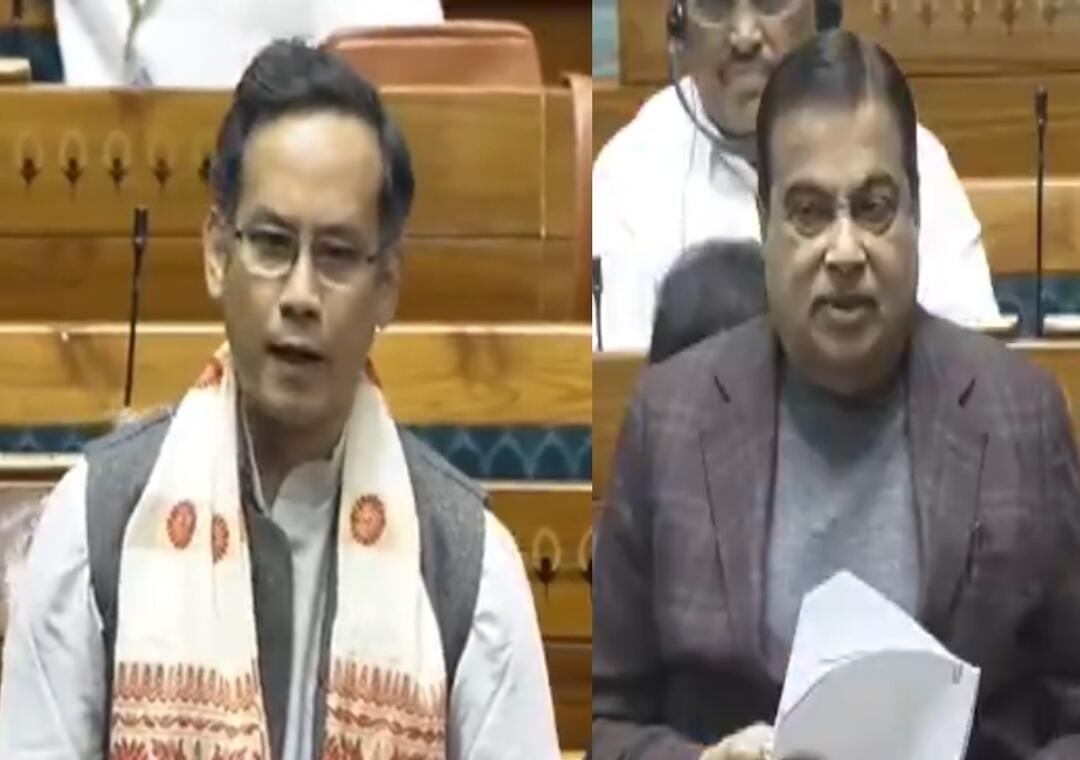
The condition of roads in India has been a topic of discussion for a long time. While the government has been working to improve the infrastructure, there are still many areas where the roads are in a deplorable state. Recently, Congress leader Gaurav Gogoi highlighted the poor condition of roads in Assam, stating that people are unable to drive at speeds of 100-130km/h due to the bad roads. This statement has sparked a reaction from Union Minister Nitin Gadkari, who acknowledged the issue and promised a solution.
Gogoi’s statement came as a response to the poor condition of roads in Assam, particularly on the National Highway 37 (NH-37) that connects Jorhat to Dibrugarh. He stated that the road is in a bad state, making it impossible for people to drive at high speeds. “Especially from Jorhat to Dibrugarh, NH-37 is in a bad state,” he added. This is not just a matter of convenience, but also a safety concern. Bad roads can lead to accidents and damage to vehicles, causing financial losses and putting lives at risk.
The issue of bad roads is not limited to Assam, but is a widespread problem across the country. Many roads in India are plagued by potholes, cracks, and uneven surfaces, making it difficult for people to drive safely. The problem is further exacerbated by the lack of maintenance and repair work, which leads to a deterioration of the road conditions over time.
Gogoi also pointed out that people are paying tolls to use these roads, but are not getting the quality they deserve. This is a valid concern, as the purpose of tolls is to maintain and improve the roads. However, if the roads are not being maintained, then the tolls are essentially being wasted. This is a matter of accountability, and the government needs to ensure that the tolls are being used effectively to improve the road conditions.
In response to Gogoi’s statement, Union Minister Nitin Gadkari acknowledged that the road was damaged after the rains and promised that it will be fine in six months. While this is a positive response, it is essential to ensure that the repair work is done promptly and effectively. The government needs to take concrete steps to address the issue of bad roads, rather than just making promises.
The condition of roads in India is a complex issue, and there is no easy solution. However, the government can take several steps to improve the situation. Firstly, it needs to increase the budget for road maintenance and repair work. This will ensure that the roads are regularly maintained and repaired, reducing the risk of accidents and damage to vehicles.
Secondly, the government needs to implement a system of accountability, where the tolls collected are used effectively to improve the road conditions. This can be done by setting up a separate fund for road maintenance, which can be used to repair and maintain the roads.
Thirdly, the government needs to invest in new technologies and materials to improve the quality of roads. This can include the use of advanced materials, such as concrete and asphalt, which can withstand heavy traffic and extreme weather conditions.
Finally, the government needs to engage with the public and take their feedback into consideration. This can be done by setting up a complaint system, where people can report issues with the roads and suggest improvements. This will help to identify the areas that need the most attention and ensure that the government is working to address the concerns of the public.
In conclusion, the issue of bad roads in India is a serious concern that needs to be addressed. The government needs to take concrete steps to improve the road conditions, including increasing the budget for road maintenance, implementing a system of accountability, investing in new technologies and materials, and engaging with the public. By working together, we can create a safer and more efficient transportation system that benefits everyone.
Source: https://x.com/OfficeOfNG/status/1996489566979817577
About the Author