Gogoi says can’t drive at 130km/h due to bad roads, Gadkari reacts
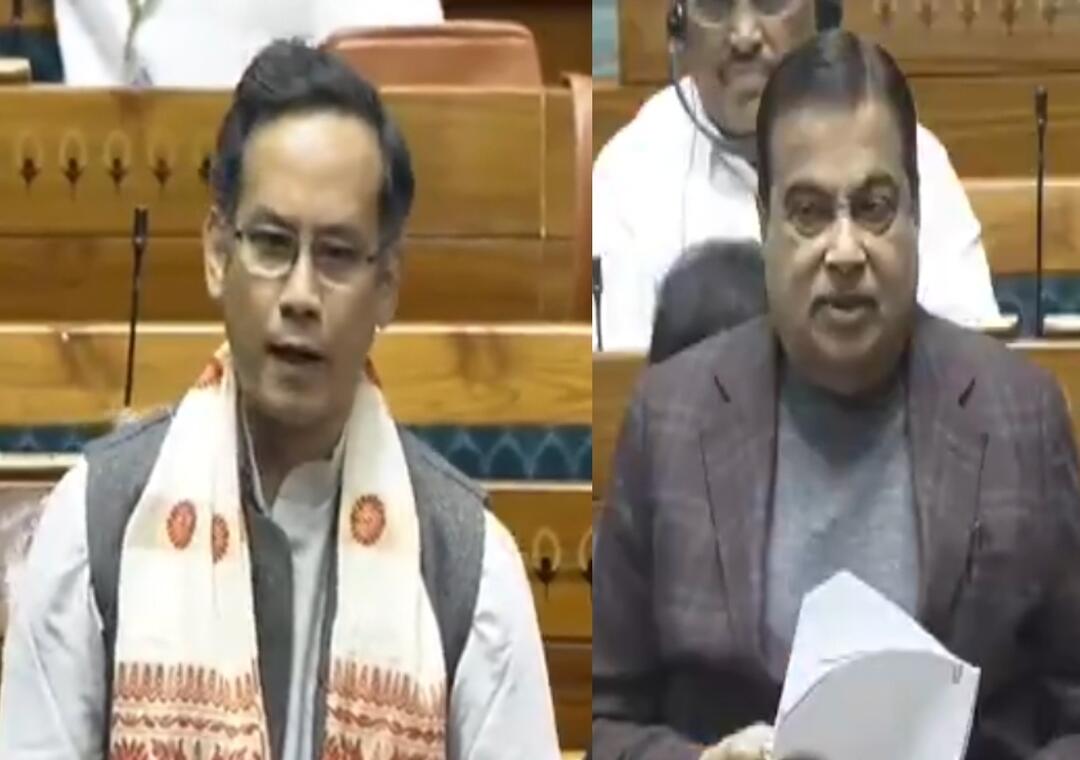
The condition of roads in India has been a topic of discussion for a long time. While the government has been working to improve the infrastructure, there are still many areas where the roads are in a deplorable state. Recently, Congress leader Gaurav Gogoi highlighted the issue of bad roads in Assam, stating that people are unable to drive at high speeds due to the poor condition of the roads.
Gogoi specifically mentioned that people are unable to drive at speeds of 100-130km/h in Assam due to the bad roads. He also pointed out that despite paying tolls, people are not getting quality roads. This is a significant issue, as good roads are essential for the economic development of a region. Gogoi’s statement sparked a reaction from Union Minister Nitin Gadkari, who acknowledged that the road in question was indeed in a bad state.
The road that Gogoi was referring to is the NH-37, which connects Jorhat to Dibrugarh. This road is a crucial artery for the region, and its poor condition has been causing problems for commuters and traders alike. Gogoi stated that the road is in a particularly bad state, especially from Jorhat to Dibrugarh. This stretch of road is not only important for the local economy but also for the overall development of the region.
Gadkari’s response to Gogoi’s statement was prompt, and he acknowledged that the road was indeed damaged after the rains. However, he also assured that the road would be fine in six months. This is a significant assurance, as it indicates that the government is aware of the issue and is working to resolve it. Gadkari’s statement also highlights the challenges that the government faces in maintaining the roads, especially during the monsoon season.
The issue of bad roads is not limited to Assam; it is a problem that affects many parts of the country. The poor condition of roads can have significant consequences, including increased travel time, higher fuel consumption, and a greater risk of accidents. Moreover, bad roads can also have a negative impact on the local economy, as it can discourage businesses from setting up operations in the area.
The government has been working to improve the road network in the country, with initiatives such as the Bharatmala Pariyojana and the National Highways Development Project. These initiatives aim to improve the condition of the roads, increase the speed limits, and reduce travel time. However, despite these efforts, there is still much work to be done to address the issue of bad roads.
Gogoi’s statement highlights the need for the government to prioritize the maintenance of roads, especially in areas that are prone to heavy rainfall. The government must work to ensure that the roads are designed and built to withstand the heavy rainfall and flooding that occurs during the monsoon season. This can be achieved by using high-quality materials, implementing proper drainage systems, and conducting regular maintenance.
In addition to the government’s efforts, it is also important for the public to take an active role in maintaining the roads. This can be done by reporting any damage or issues to the authorities, participating in community-led initiatives to clean up the roads, and supporting organizations that work to improve the road network.
In conclusion, the issue of bad roads is a significant problem that affects many parts of the country. Gogoi’s statement highlights the need for the government to prioritize the maintenance of roads, especially in areas that are prone to heavy rainfall. Gadkari’s response indicates that the government is aware of the issue and is working to resolve it. However, it is also important for the public to take an active role in maintaining the roads and supporting initiatives that aim to improve the road network.
As the government continues to work on improving the road network, it is essential to ensure that the roads are designed and built to withstand the heavy rainfall and flooding that occurs during the monsoon season. This can be achieved by using high-quality materials, implementing proper drainage systems, and conducting regular maintenance. By working together, we can create a better road network that is safe, efficient, and reliable.
Source: https://x.com/OfficeOfNG/status/1996489566979817577
About the Author