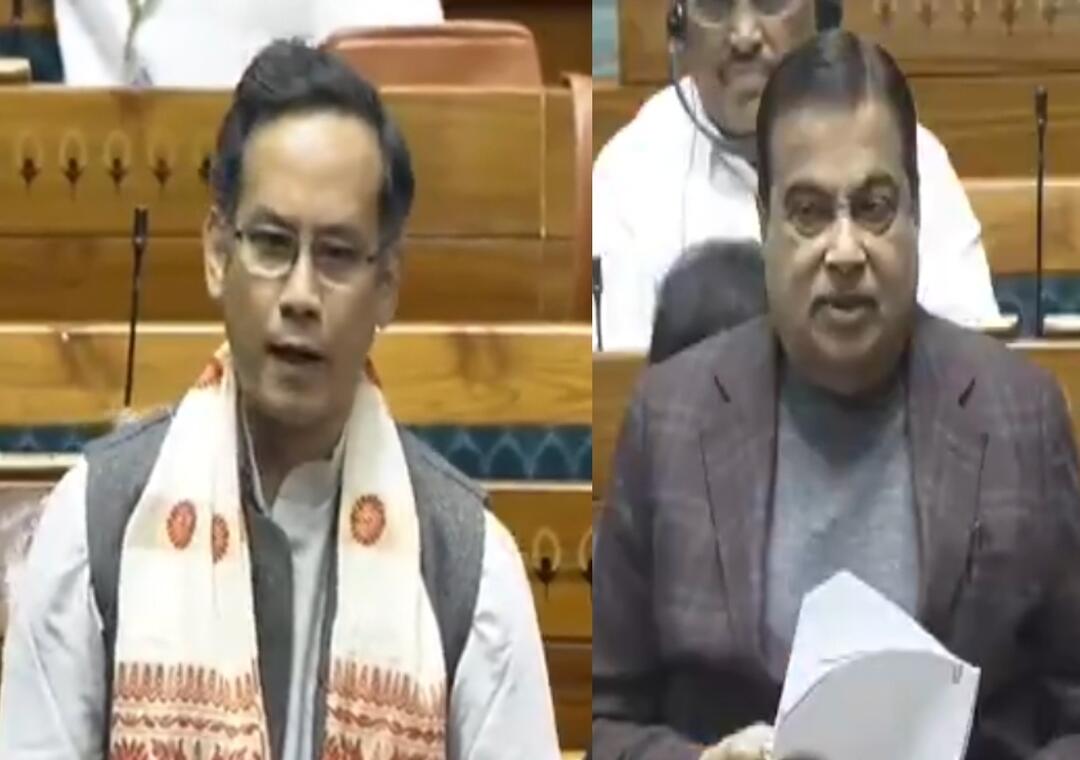
Gogoi says can’t drive at 130km/h due to bad roads, Gadkari reacts
The state of roads in India has been a topic of discussion for a long time, with many citizens complaining about the poor condition of highways and roads in various parts of the country. Recently, Congress leader Gaurav Gogoi highlighted the issue of bad roads in Assam, stating that people are unable to drive at speeds of 100-130km/h due to the poor condition of the roads. He specifically mentioned the National Highway 37 (NH-37) that connects Jorhat to Dibrugarh, saying that it is in a bad state.
Gogoi’s statement came as a response to the government’s claim of providing good quality roads in the country. He pointed out that despite paying tolls, people are not getting the quality of roads that they deserve. This is a common complaint among citizens, who feel that they are being forced to pay for services that are not being delivered. The issue of bad roads is not only a matter of convenience but also a safety concern, as potholes and uneven roads can lead to accidents and damage to vehicles.
Gogoi’s comments were not just a criticism of the government’s policies but also a reflection of the reality on the ground. Many parts of the country are struggling with poor road conditions, and Assam is no exception. The state’s roads have been in a bad state for a long time, and despite promises from the government to improve them, little has been done to address the issue.
However, Union Minister Nitin Gadkari has reacted to Gogoi’s comments, saying that the Congress leader is right about the condition of the roads. Gadkari attributed the poor condition of the roads to the recent rains, which have caused damage to the infrastructure. He assured that the roads will be repaired and will be in good condition within six months.
While Gadkari’s response is a welcome acknowledgement of the problem, it is unclear whether the government will be able to deliver on its promise of repairing the roads within the given timeframe. The government has made similar promises in the past, but the results have been slow to materialize. It remains to be seen whether the government will be able to live up to its commitment and provide the people of Assam with the quality of roads that they deserve.
The issue of bad roads is not just a local problem but a national one. Many parts of the country are struggling with poor road conditions, and it is affecting not just the citizens but also the economy. Good quality roads are essential for the movement of goods and people, and poor road conditions can lead to delays, accidents, and damage to vehicles.
In recent years, the government has launched several initiatives to improve the road network in the country. The Bharatmala Pariyojana, for example, is a flagship program aimed at developing and improving the national highways in the country. The program has been successful in improving the road network in some parts of the country, but there is still a long way to go.
The government needs to take a more proactive approach to addressing the issue of bad roads. This includes not just repairing and maintaining the existing roads but also building new ones to meet the growing demand. The government also needs to ensure that the roads are built to last and can withstand the heavy traffic and extreme weather conditions that are common in many parts of the country.
In conclusion, the issue of bad roads in Assam and other parts of the country is a serious one that needs to be addressed urgently. While the government has acknowledged the problem and has promised to repair the roads, it remains to be seen whether it will be able to deliver on its promise. Citizens like Gaurav Gogoi are right to demand better quality roads, and it is the government’s responsibility to provide them.
As the country continues to grow and develop, the need for good quality roads will only increase. The government needs to take a long-term approach to addressing the issue and work towards building a road network that is safe, efficient, and reliable. This will not only improve the lives of citizens but also boost the economy and help the country to achieve its development goals.
Source: https://x.com/OfficeOfNG/status/1996489566979817577
About the Author