Gogoi says can’t drive at 130km/h due to bad roads, Gadkari reacts
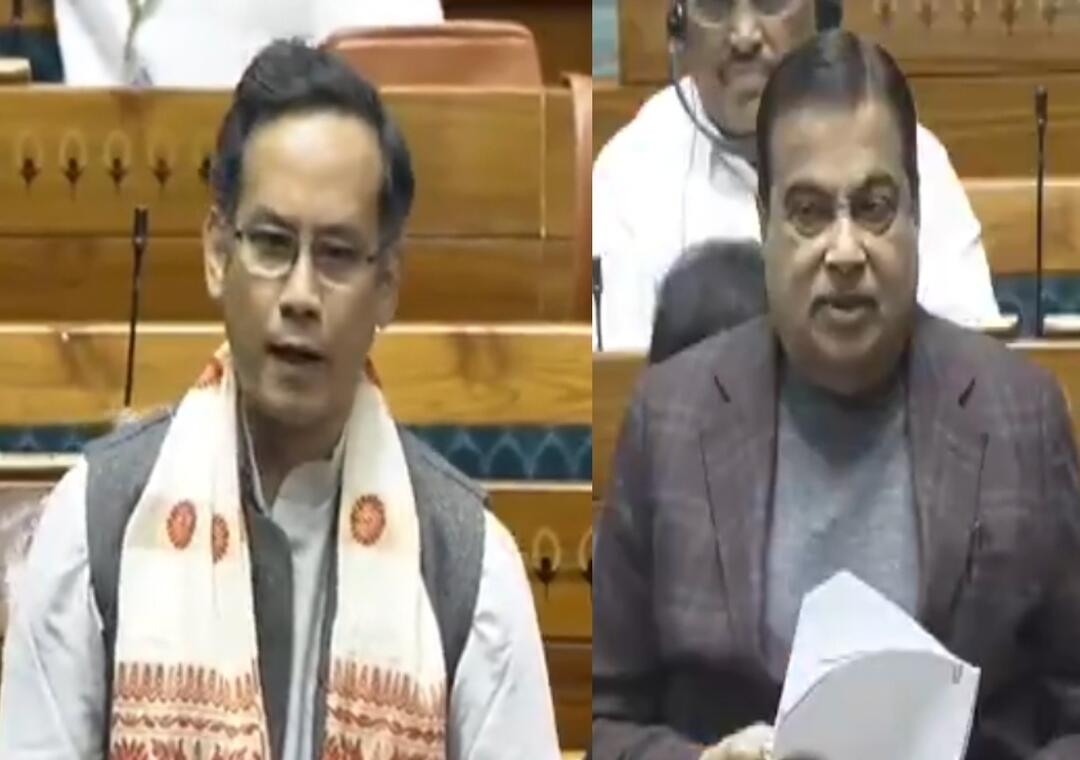
The condition of roads in India has been a topic of discussion for a long time. While the government has been investing heavily in the development of infrastructure, including roads, the reality on the ground is often different. Recently, Congress leader Gaurav Gogoi highlighted the poor state of roads in Assam, particularly on the National Highway 37 (NH-37) that connects Jorhat to Dibrugarh. According to Gogoi, the roads are so bad that people are unable to drive at speeds of 100-130 km/h, despite paying tolls for using these roads.
Gogoi’s comments were made in reference to the deplorable condition of NH-37, which is a vital connectivity link between the two major cities of Jorhat and Dibrugarh in Assam. The Congress leader pointed out that the road is in a “bad state” and that people are being forced to pay tolls without getting the quality of roads they deserve. This is a classic case of the government’s inability to deliver on its promises, and it is the common people who are suffering as a result.
The issue of bad roads is not just limited to Assam or the NH-37. It is a widespread problem that affects many parts of the country. The lack of proper maintenance and upkeep of roads has resulted in a significant number of accidents and fatalities on Indian roads. According to official statistics, India accounts for a staggering 11% of the world’s total road traffic accidents, with a large number of these accidents occurring due to poor road conditions.
In response to Gogoi’s comments, Union Minister Nitin Gadkari acknowledged that the road in question was indeed in a bad state. However, he attributed the poor condition of the road to damage caused by heavy rainfall in the region. Gadkari assured that the road would be restored to its original condition within six months, which is a welcome relief for the people of Assam.
While Gadkari’s response is reassuring, it is essential to recognize that the problem of bad roads is a complex one that requires a more comprehensive solution. Simply repairing the damaged road is not enough; the government needs to adopt a more proactive approach to road maintenance and upkeep. This includes regular inspections, timely repairs, and the use of advanced technologies to improve road safety.
Moreover, the government needs to ensure that the tolls collected from road users are being utilized effectively. The public has a right to know how their money is being spent, and it is the government’s responsibility to provide transparency and accountability in this regard. In the case of NH-37, it is clear that the tolls being collected are not being used to maintain the road, which is a clear case of injustice to the people who are using the road.
The issue of bad roads is not just a matter of convenience; it has significant economic implications as well. Poor road conditions can lead to increased travel times, fuel consumption, and vehicle maintenance costs. This can have a ripple effect on the economy, impacting industries such as logistics, transportation, and tourism. Therefore, it is essential that the government takes a holistic approach to addressing the problem of bad roads, rather than just focusing on short-term repairs.
In conclusion, the issue of bad roads in India is a pressing concern that requires immediate attention from the government. The comments made by Gaurav Gogoi and the response from Nitin Gadkari highlight the need for a more comprehensive approach to road maintenance and upkeep. While the government has made significant investments in infrastructure development, it is essential to ensure that these investments are being utilized effectively. The public has a right to demand better roads, and it is the government’s responsibility to deliver on this promise.
Source: https://x.com/OfficeOfNG/status/1996489566979817577
About the Author