Gogoi says can’t drive at 130km/h due to bad roads, Gadkari reacts
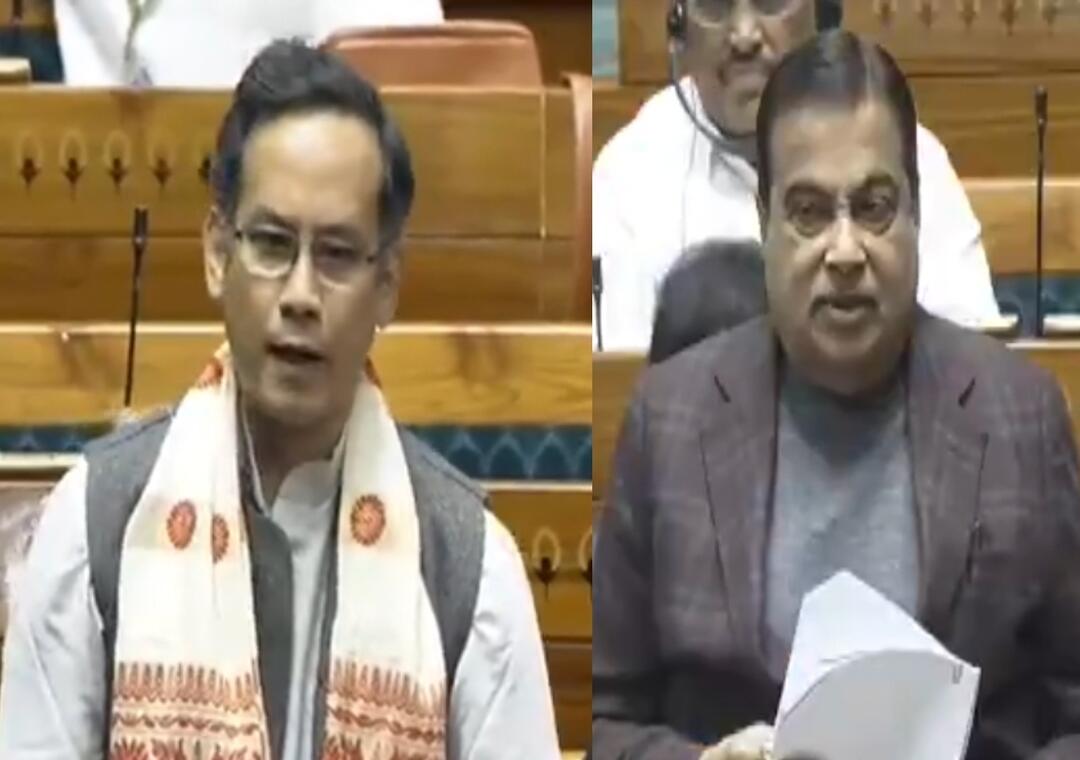
The condition of roads in India has been a topic of discussion for a long time, with many parts of the country struggling with poor infrastructure. Recently, Congress leader Gaurav Gogoi highlighted the issue of bad roads in Assam, stating that people are unable to drive at high speeds due to the poor condition of the roads. Gogoi’s comments sparked a reaction from Union Minister Nitin Gadkari, who acknowledged the problem and promised a solution.
Gogoi’s statement came as a response to the common perception that Indian roads are not suitable for high-speed driving. He said that people are unable to drive at speeds of 100-130km/h in Assam due to the bad condition of the roads. He further stated that despite paying tolls, people are not getting quality roads, which is a major concern. Gogoi specifically mentioned the National Highway 37 (NH-37) that connects Jorhat to Dibrugarh, saying that it is in a “bad state.”
The condition of NH-37 has been a subject of concern for the people of Assam, with many complaining about the poor maintenance of the road. The highway is a crucial connectivity link between the two major cities of Jorhat and Dibrugarh, and its poor condition has been causing inconvenience to commuters. Gogoi’s statement highlighted the need for immediate attention to be given to the road, to ensure that it is safe and convenient for travelers.
Union Minister Nitin Gadkari reacted to Gogoi’s statement, acknowledging that the road was indeed in a bad state. However, he attributed the poor condition of the road to the recent rains, which had caused damage to the infrastructure. Gadkari assured that the road would be restored to its original condition within six months, and that the necessary repairs would be carried out to ensure that it is safe for high-speed driving.
Gadkari’s response is a positive indication that the government is taking the issue of bad roads seriously. The Minister’s assurance that the road would be repaired within six months is a welcome move, and it is expected that the necessary work would be carried out to ensure that the road is safe and convenient for commuters.
However, the issue of bad roads is not limited to Assam, and it is a problem that is prevalent in many parts of the country. The poor condition of roads is not only a matter of convenience, but it also has a significant impact on the economy. According to a report by the World Bank, the poor condition of roads in India results in a loss of approximately 4-6% of the country’s GDP.
The issue of bad roads is also a major safety concern, as it can lead to accidents and fatalities. According to the National Crime Records Bureau, a significant number of road accidents in India are caused by poor road conditions. The lack of proper maintenance of roads, combined with the increasing number of vehicles on the road, has made Indian roads one of the most dangerous in the world.
In order to address the issue of bad roads, the government needs to take a multi-pronged approach. This includes increasing the budget allocation for road maintenance, implementing strict quality control measures, and ensuring that contractors are held accountable for the quality of work. Additionally, the government needs to encourage public-private partnerships to invest in road infrastructure, which can help to improve the condition of roads and reduce the burden on the government.
In conclusion, the issue of bad roads is a serious concern that needs to be addressed urgently. Gogoi’s statement highlighting the poor condition of roads in Assam is a wake-up call for the government to take immediate action. Gadkari’s response is a positive indication that the government is taking the issue seriously, and it is expected that the necessary work would be carried out to ensure that the roads are safe and convenient for commuters. However, the issue of bad roads is not limited to Assam, and it is a problem that needs to be addressed at the national level.
As the government works to improve the condition of roads, it is essential that the public is kept informed about the progress. The government needs to be transparent about the allocation of funds, the quality of work, and the timelines for completion. This will help to build trust and confidence among the public, and ensure that the issue of bad roads is addressed effectively.
Source: https://x.com/OfficeOfNG/status/1996489566979817577
About the Author