Gogoi says can’t drive at 130km/h due to bad roads, Gadkari reacts
In a recent statement, Congress leader Gaurav Gogoi highlighted the deplorable condition of roads in Assam, particularly on the National Highway 37 (NH-37) that connects Jorhat to Dibrugarh. Gogoi expressed his concern that despite paying tolls, people are not getting the quality roads they deserve. He specifically mentioned that the road from Jorhat to Dibrugarh is in a bad state, making it impossible for drivers to maintain speeds of 100-130 km/h.
The issue of bad roads in India is not a new one. For years, citizens have been complaining about the poor condition of highways and roads, which not only causes inconvenience but also poses a significant risk to safety. The problem is exacerbated by the fact that people are being forced to pay tolls for using these roads, without getting the promised quality in return. Gogoi’s statement has brought attention to this critical issue, and it is essential to examine the situation and the response from the government.
Gogoi’s comment was not just a random statement; it was based on the reality of the situation. The road from Jorhat to Dibrugarh is indeed in a bad state, with potholes and cracks making it difficult for drivers to navigate. The condition of the road is not only frustrating for drivers but also poses a significant risk to safety. The fact that people are paying tolls for using this road makes it even more unacceptable. It is the responsibility of the government to ensure that the roads are well-maintained and safe for use.
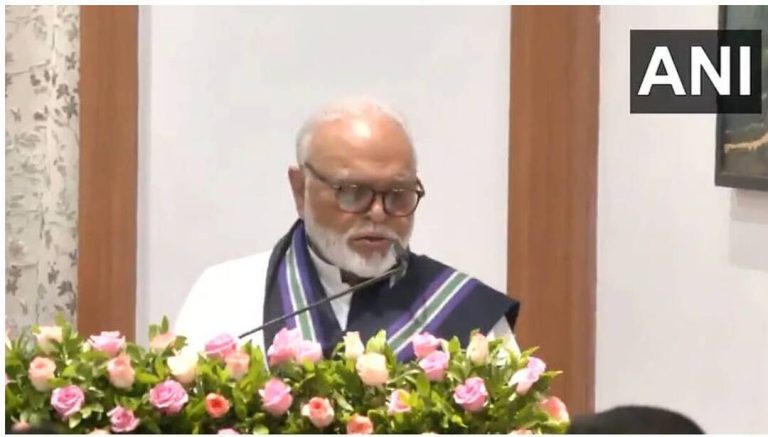
In response to Gogoi’s statement, Union Minister Nitin Gadkari acknowledged that the road was damaged after the rains and assured that it would be restored to its original condition within six months. While Gadkari’s response is a positive step, it raises several questions. Why did it take so long for the government to acknowledge the problem, and what measures are being taken to prevent such situations in the future?
The issue of bad roads in India is a complex one, and it requires a multi-faceted approach to solve. It is not just about repairing the roads; it is about ensuring that the infrastructure is designed and built to withstand the elements and the heavy traffic. It is also about ensuring that the government is accountable for the maintenance of the roads and that citizens are getting the quality they deserve for the tolls they pay.
Gadkari’s assurance that the road will be restored to its original condition within six months is a welcome step, but it is essential to ensure that the government follows through on its promise. The citizens of Assam, particularly those who use the NH-37 regularly, will be watching closely to see if the government delivers on its promise.
In conclusion, Gogoi’s statement has highlighted the critical issue of bad roads in Assam, and Gadkari’s response has provided some assurance that the government is taking steps to address the problem. However, it is essential to ensure that the government follows through on its promise and that citizens are getting the quality roads they deserve. The issue of bad roads is not just a local problem; it is a national issue that requires a comprehensive approach to solve. As the government works to improve the condition of the roads, it is essential to remember that the safety and convenience of citizens should be the top priority.
The conversation around the condition of roads in India is an ongoing one, and it is essential to continue to push for better infrastructure and accountability from the government. As citizens, it is our right to demand quality roads, and it is the government’s responsibility to deliver. We hope that the government will take concrete steps to address the issue of bad roads in Assam and across the country, and that citizens will soon be able to enjoy safe and convenient travel.
Source: https://x.com/OfficeOfNG/status/1996489566979817577
About the Author