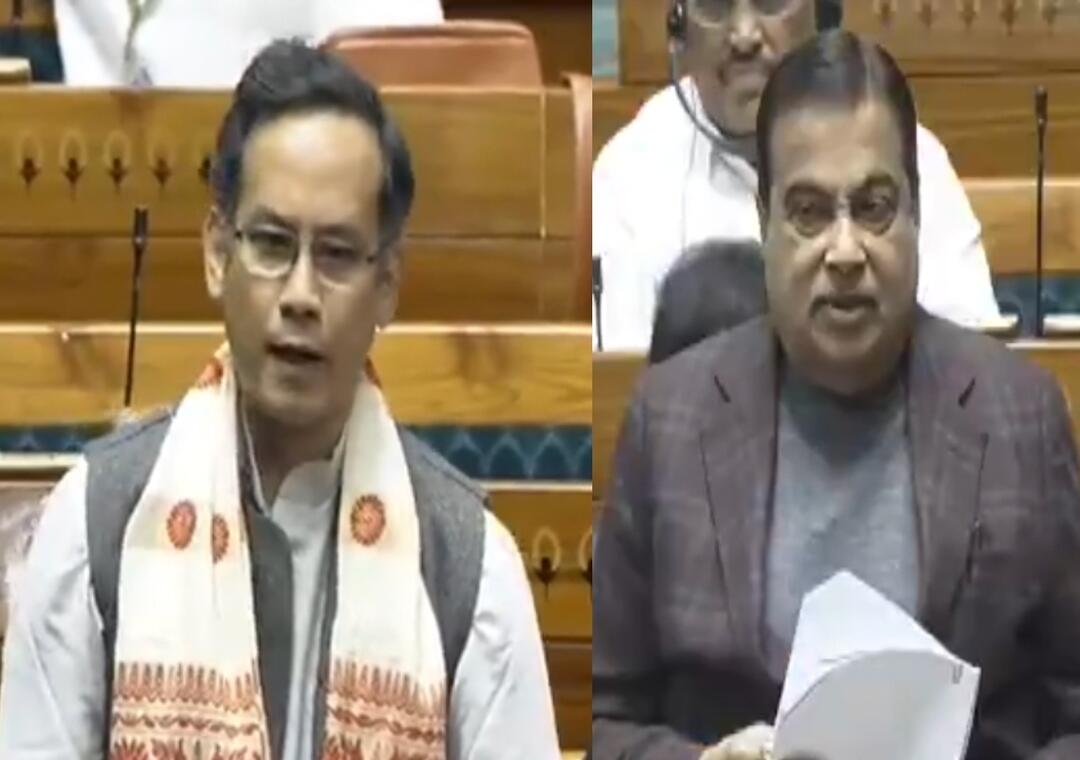
Gogoi says can’t drive at 130km/h due to bad roads, Gadkari reacts
The condition of roads in India has been a topic of discussion for a long time. While the government has been working towards improving the infrastructure, there are still many areas where the roads are in a deplorable state. Recently, Congress leader Gaurav Gogoi highlighted the issue of bad roads in Assam, stating that people are unable to drive at speeds of 100-130km/h due to the poor condition of the roads.
Gogoi specifically mentioned the National Highway 37 (NH-37) that connects Jorhat to Dibrugarh, saying that it is in a very bad state. He also pointed out that people are paying tolls to use the roads, but they are not getting the quality they deserve. This is a valid concern, as tolls are collected from commuters to maintain and improve the roads, but if the roads are not up to the mark, it is unfair to the people who are paying to use them.
The issue of bad roads is not limited to Assam, but it is a problem that is prevalent in many parts of the country. The poor condition of the roads can be attributed to a variety of factors, including lack of maintenance, inadequate funding, and the increasing number of vehicles on the road. The government has been working towards improving the road infrastructure, but it is a massive task that requires a lot of time, effort, and resources.
In response to Gogoi’s statement, Union Minister Nitin Gadkari acknowledged that the road in question was damaged due to rains and assured that it will be restored to its original condition within six months. While this is a positive assurance, it is essential to note that the problem of bad roads is not just limited to one particular road or region. It is a nationwide issue that requires a comprehensive solution.
Gadkari’s response to Gogoi’s statement is a step in the right direction, as it shows that the government is taking the issue of bad roads seriously. However, it is crucial to ensure that the government follows through on its promises and takes concrete actions to improve the road infrastructure. This includes allocating sufficient funds for road maintenance and repair, implementing effective traffic management systems, and ensuring that the roads are designed and built to withstand the increasing number of vehicles on the road.
The issue of bad roads is not just a matter of convenience; it also has significant economic and social implications. Poor road conditions can lead to increased travel times, higher fuel costs, and a greater risk of accidents. This can have a negative impact on businesses, industries, and individuals who rely on the roads for transportation. Furthermore, bad roads can also exacerbate social issues, such as poverty and inequality, by limiting access to education, healthcare, and employment opportunities.
In addition to the economic and social implications, the condition of the roads also has a significant impact on the environment. The increasing number of vehicles on the road, coupled with the poor condition of the roads, can lead to higher levels of air pollution, noise pollution, and other environmental problems. This can have a devastating impact on public health, as well as the overall quality of life.
To address the issue of bad roads, the government needs to take a multi-faceted approach that involves not just the construction and maintenance of roads, but also the implementation of effective traffic management systems, the promotion of sustainable transportation options, and the enforcement of traffic laws and regulations. This requires a coordinated effort from various government agencies, as well as the private sector and civil society organizations.
In conclusion, the issue of bad roads in India is a complex and multifaceted problem that requires a comprehensive solution. While the government has been working towards improving the road infrastructure, there is still a lot of work to be done. The statement by Gaurav Gogoi highlighting the poor condition of roads in Assam is a reminder that the government needs to do more to address this issue. The response by Nitin Gadkari is a positive step, but it is essential to ensure that the government follows through on its promises and takes concrete actions to improve the road infrastructure.
The people of India deserve better roads, and it is the responsibility of the government to ensure that they get them. By working together, we can create a better transportation system that is safe, efficient, and sustainable. This will not only improve the quality of life for millions of people but also have a positive impact on the economy and the environment.
Source: https://x.com/OfficeOfNG/status/1996489566979817577
About the Author